Last updated October 31, 2026
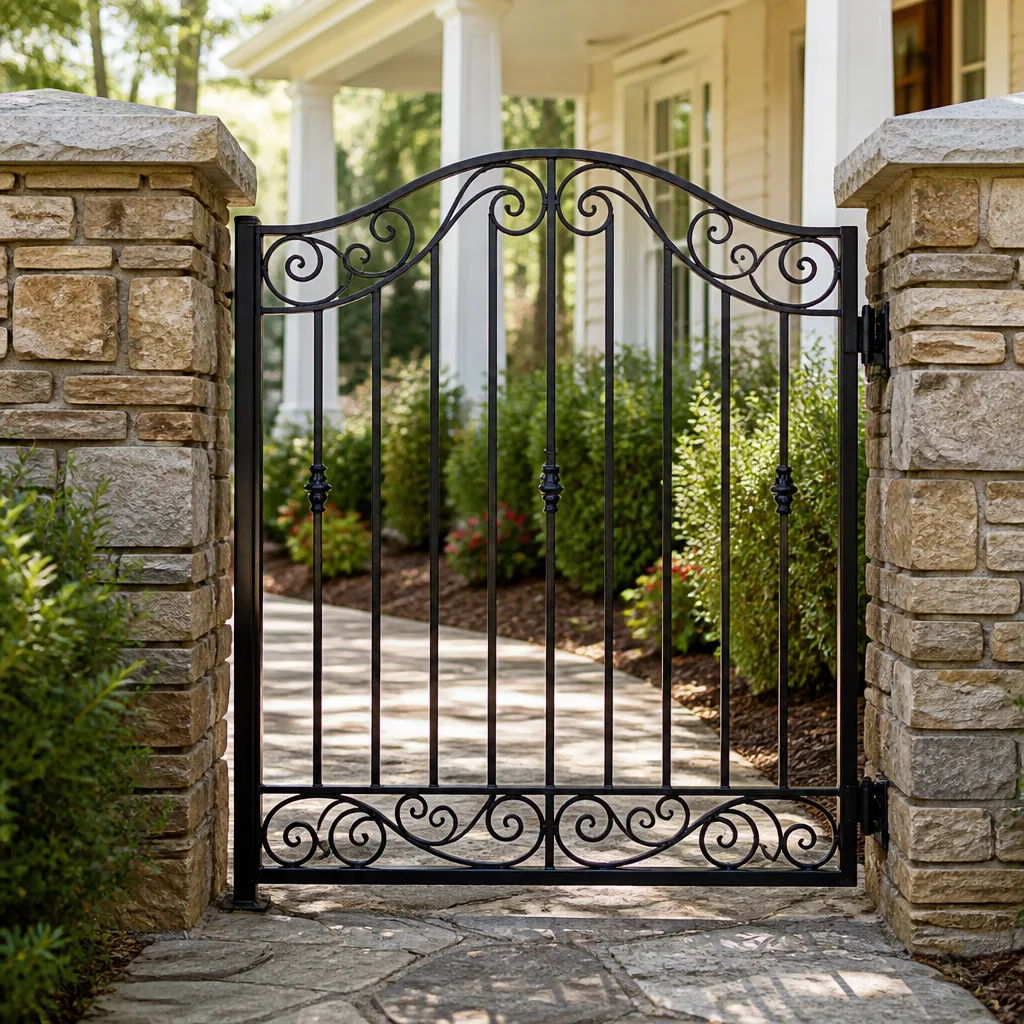 Wrought iron
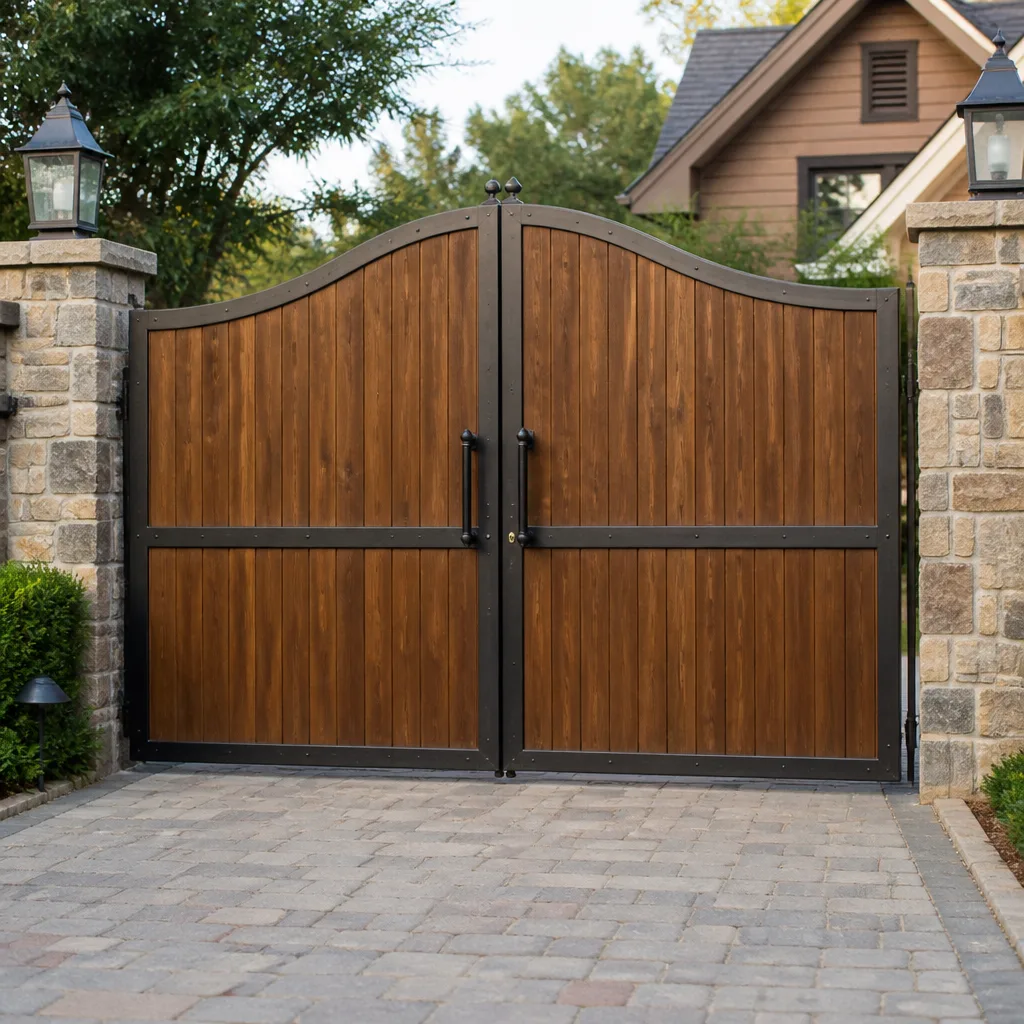 Wood & steel frame
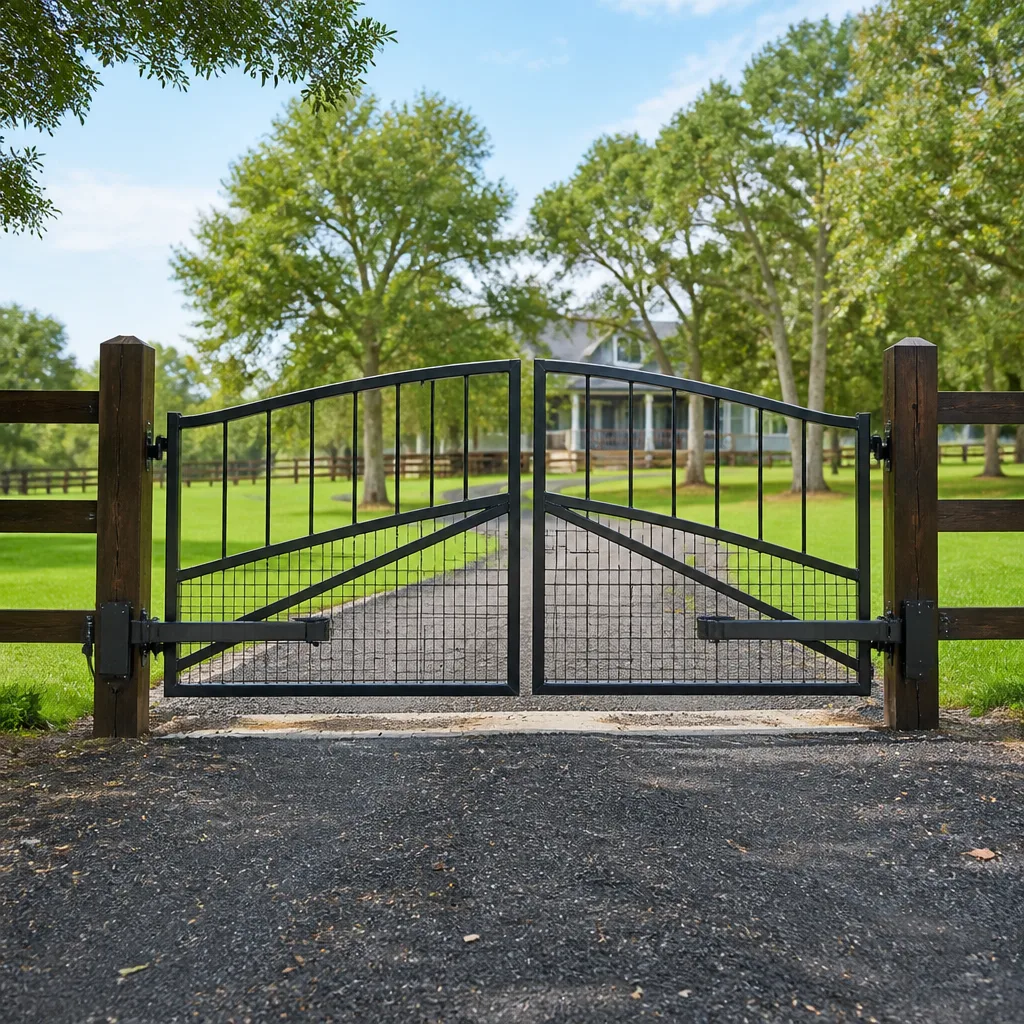 Farm & ranch
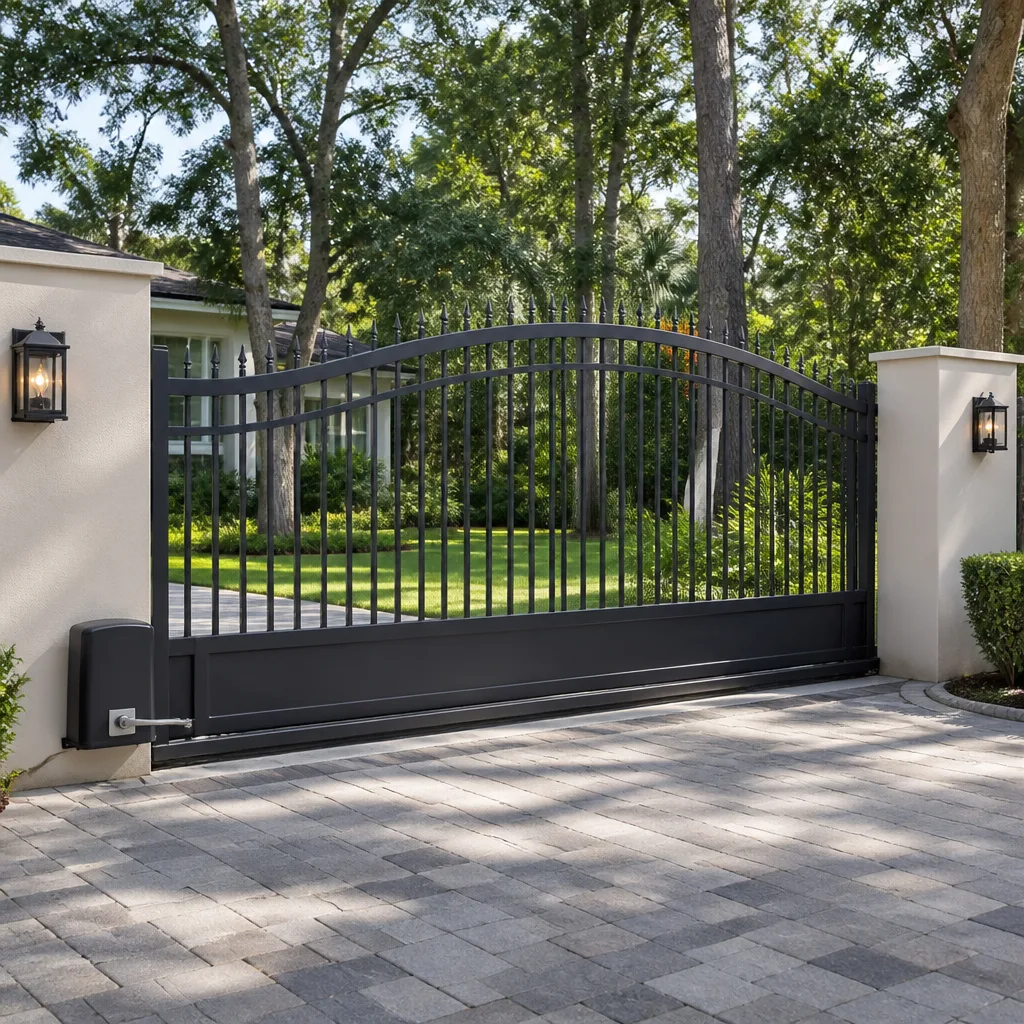 Sliding driveway gates
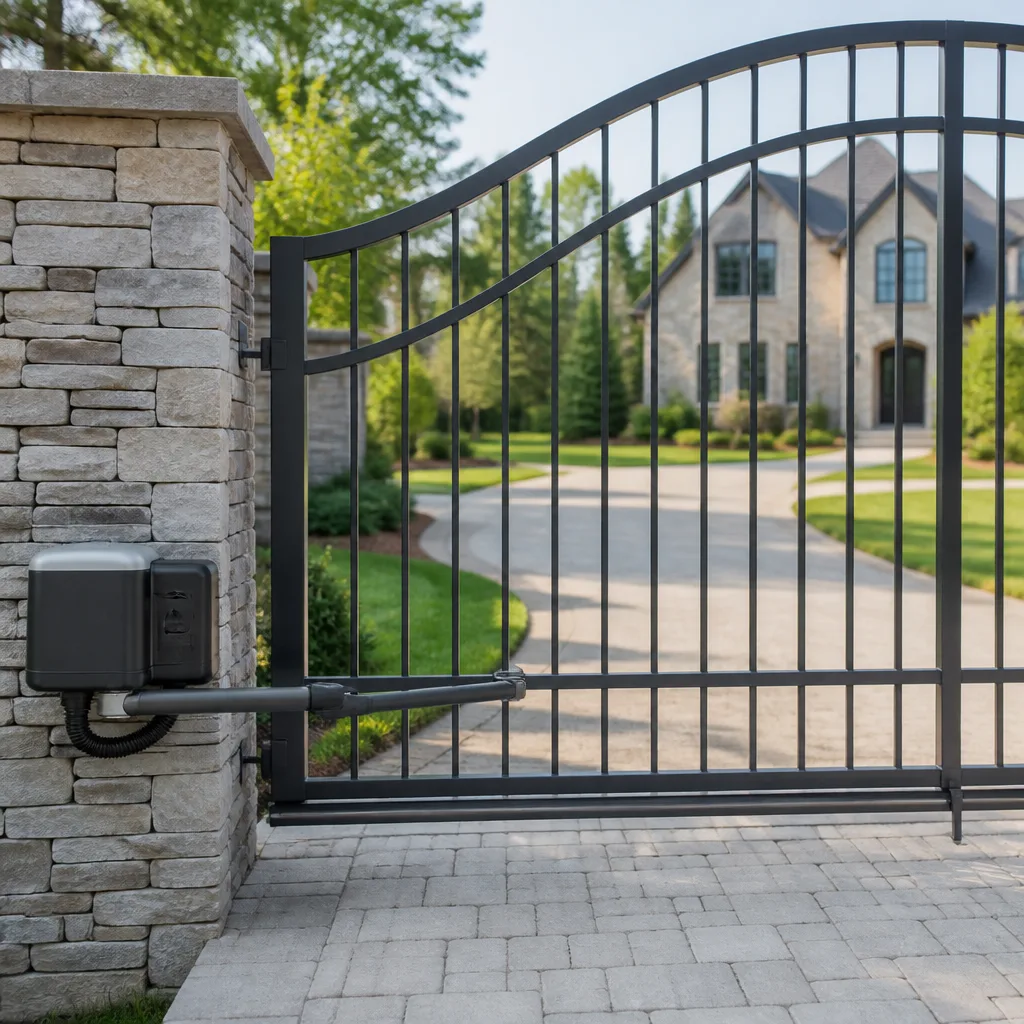 LiftMaster operators
Free on-site gate assessment - hinges, posts, and your LiftMaster or Nice gate operator checked before anything is quoted
The assessment is free and the quote is the invoice.
Get your free estimateHow to Hire a Gate Repair Contractor in Tampa: A Step-by-Step Guide
A contractor who lists “gate repair” as one of fourteen services on their website has almost certainly never touched the specific operator brand on your property. That’s not a guess, it’s a pattern we see across Tampa’s service market. This guide—along with our more guides & resources—gives you the exact vetting script and questions that separate a genuine gate specialist from a generalist who will figure it out on your driveway. You’ll learn what to ask about brands, licensing, warranties, and written scopes, plus the specific traps that catch Tampa homeowners every single month.
Styles & brands we work with
Quick Answer
To hire a gate repair contractor in Tampa, verify their Florida license on the DBPR database, ask which specific operator brands their technicians are trained on by name, and require a written scope of repair that itemizes parts, labor, and warranty coverage before any work begins. A legitimate gate specialist will name brands like LiftMaster, FAAC, DoorKing, or Viking without hesitation. The best time to vet a contractor is before your gate fails, not while it’s stuck open at 9pm.
Table of Contents
- Why Brand-Specific Experience Matters More Than Years in Business
- How to Verify a Florida Gate Contractor’s License in Real Time
- The Written Scope of Repair: What a Legitimate Quote Must Include
- The 12 Questions to Ask Before You Book
- Tampa-Specific Red Flags: Storm Chasers and Seasonal Pop-Ups
- How to Evaluate a Warranty Offer: Parts vs. Labor and What 90 Days Actually Means
- Repair vs. Replace: When a Specialist Should Tell You to Stop Patching
- The Step-by-Step Hiring Process
- Common Mistakes to Avoid
- When to Call a Professional
- Frequently Asked Questions
- The Bottom Line
Why Brand-Specific Experience Matters More Than Years in Business
Here’s the uncomfortable truth about the gate repair trade: a contractor can claim twenty years in business and still have never touched a Viking operator, a Ghost Controls actuator, or a DoorKing control board. Experience is only valuable when it’s relevant to the equipment on your property.
Tampa homes run a specific mix of gate operators. Many homeowners inherit whatever brand the developer installed, whether that’s a Linear swing opener in Westchase or a Ghost Controls kit on a Davis Islands driveway. Each brand has its own control board logic, its own limit-switch calibration method, and its own known failure modes. A technician who knows LiftMaster’s error codes cold but has never opened a FAAC panel is going to spend your first service hour reading the manual.
So ask the question directly: “Which brands do your technicians service on a daily basis?” Listen for specificity. A specialist should rattle off names without pausing. A generalist will say “all of them” or “whatever you’ve got.” The latter answer sounds confident but actually signals the opposite. No shop, including ours at Kingston Gate Repair, is qualified across every operator ever manufactured. We work on nine specific brands: LiftMaster, FAAC, BFT, Linear, Viking, Ghost Controls, DoorKing, Elite, and Mighty Mule. That’s the list we know, stock parts for, and train on. Within that range we can give you honest repair-vs-replace guidance without loyalty to any single manufacturer, because we’ve seen how all of them age in Tampa’s salt air and humidity.
Why does this matter for you? Faster diagnosis, fewer return visits, and a technician who arrives with the right part on the truck instead of ordering it after the first trip. Brand-specific experience is the single strongest predictor of a one-visit repair.
How to Verify a Florida Gate Contractor’s License in Real Time
Florida treats gate installation and certain types of gate repair as specialty contracting work. Depending on the scope, a contractor may need a license from the Florida Department of Business and Professional Regulation, known commonly as the DBPR. You don’t need to memorize the statute; you need to know where to check.
Here’s the verification process, step by step:
- Go to the Florida DBPR website and open the “Verify a License” search tool.
- Search by the business name or the individual contractor’s name exactly as it appears on their estimate or website.
- Check the license category. For gate work, relevant categories include specialty structure contractors, general contractors, or in some cases a specialty license tied to fencing and access systems.
- Look at the license status. Active is what you want. Anything marked inactive, delinquent, or expired should end the conversation immediately.
- Check the original license date. A newly minted license in the wake of a hurricane is a textbook storm-chaser pattern.
In Tampa, this verification takes three minutes and costs nothing. It’s the closest thing to a free background check you’ll ever get. If the contractor hesitates when you ask for a license number, that’s an answer in itself. Any legitimate gate company in Florida has this information on their estimates and their website. At Kingston Gate Repair, we’ll provide our information on request, and we encourage you to run the search. Contractors who are licensed in good standing don’t fear the DBPR database.
One nuance worth understanding: a handyman who replaces a gate hinge is entering a different regulatory space than a contractor who wires a new automatic operator and installs safety loops. The latter almost certainly requires licensed electrical work. If your repair involves control boards, actuators, or anything tied to the power supply, require a licensed contractor for that portion of the work. We cover this extensively in our Electric Gate Repair in Tampa service page, because electrical gate failures are where unlicensed work causes the most damage.
The Written Scope of Repair: What a Legitimate Quote Must Include
A verbal estimate is a rough guess. A written scope of repair is a contract. The difference matters when a $350 repair turns into an $1,800 invoice because “extra work came up.” Tampa homeowners deserve better than surprise line items.
A legitimate written quote for gate repair should include, at minimum:
- Specific diagnosis, not symptoms. “Gate won’t open, repair as needed” is not a scope. “Replace right-side actuator arm on Ghost Controls swing opener, part #AXS-2, including new clevis pins and cotter pins” is a scope.
- Parts itemized by name and brand. If the quote says “gate operator” without specifying the brand and model, ask why. Generic parts sourcing is how cheap aftermarket components end up on expensive operators.
- Labor quoted as a fixed number or a bounded estimate. A range with a clear ceiling is acceptable for exploratory work. An open-ended “time and materials” quote without a cap is a blank check.
- Warranty terms in writing. How long, what’s covered, and whether labor is included. More on this below.
- Safety equipment noted. For automatic gates, the quote should mention photo eyes, safety loops, or edge sensors if any are being replaced or recalibrated.
- The agreed price stated as the maximum you’ll pay. At Kingston Gate Repair, every repair price is quoted and agreed before any work starts. You should demand that standard from any contractor you hire.
What about the cost itself? In Tampa, gate repairs span a wide range. A hinge replacement or limit-switch adjustment might run $150 to $350. A new control board for a DoorKing commercial operator could exceed $800 in parts alone. The exact number depends on your brand, the age of the system, and whether parts are still in production for it. Describing the symptom in detail when you call is the single best way to get an accurate estimate range up front.
The 12 Questions to Ask Before You Book
Here’s the full vetting script. You don’t need to ask all twelve in sequence like an interrogation, but every gate contractor you consider should get most of these, and the answers should come easily.
- “Are you licensed in Florida, and what’s your license number?” Then verify it on the DBPR database. Don’t settle for “yes, we’re licensed.”
- “Which operator brands do your technicians service on a daily basis?” Listen for named brands, not “all of them.”
- “Will the technician who comes out be the one doing the repair, or is it a sales call first?” Some companies send a salesperson who quotes and then schedules a different crew. Ask about this up front.
- “Do you carry parts for my brand on the truck?” This is the difference between a one-visit repair and a two-visit repair.
- “Is there a diagnostic fee, and is it waived if I approve the repair?” Standard practice varies. Get the number in writing.
- “Will the price change if the job takes longer than expected?” The answer should be no, with rare documented exceptions.
- “What exactly is covered under your warranty, and does it include labor?” More on this in the next section.
- “Who handles my specific type of gate, swing or slide?” Both are common in Tampa, but they fail differently and require different expertise.
- “Do you work on manual gates too, or only automatic ones?” A real gate specialist does both.
- “What’s your process if a part is backordered?” Does the company provide temporary manual operation, or is your gate stuck until parts arrive?
- “Can you give me references from other work in my neighborhood?” In Tampa, neighborhoods like Seminole Heights, Carrollwood, and Brandon each have distinct gate styles and common failure patterns. Local references matter.
- “When can you document the repair for my records?” A professional provides a receipt that itemizes the parts and work done. This protects you later if a different company services the same gate.
If a contractor answers all of these comfortably, you’re likely dealing with a specialist. If questions 2, 4, or 7 get vague answers, keep looking.
Tampa-Specific Red Flags: Storm Chasers and Seasonal Pop-Ups
Tampa’s gate repair market has a seasonal problem. After a hurricane or a bad tropical storm season, out-of-state contractors flood the area, set up a temporary phone line, and start quoting gate repairs at suspiciously low prices. They’re called storm chasers, and they leave town as soon as the demand dries up.
Here’s how to spot them:
- No local track record. Ask for a Tampa address, not a PO box, and check how long they’ve been operating here. A brand-new company with no local history and a big advertising push after a storm is a pattern, not a coincidence.
- Out-of-state plates or a dispatcher who can’t name Tampa neighborhoods. This sounds trivial, but local familiarity is a proxy for local accountability. A contractor who has worked in Carrollwood, Ybor City, and New Tampa knows what salt air does to gate hinges near the bay versus what heat does to control boards inland.
- Quotes that are dramatically lower than everyone else’s. A new control board for a Linear operator costs what it costs. If someone quotes you half the going rate, they’re either using aftermarket parts they won’t disclose or planning to pad the invoice later.
- No warranty or a “we’ll be back if there’s a problem” promise. Storm chasers aren’t coming back. If the warranty isn’t in writing and the company isn’t local, the warranty doesn’t exist.
- Cash-only or deposit-only payment demands. Legitimate gate repair businesses in Tampa take standard payment methods and don’t require large upfront deposits for small repairs.
The climate itself creates specific failure patterns that local experience helps with. Tampa’s humidity accelerates corrosion on gate hinges near the coast. The summer afternoon thunderstorms create their own set of electrical issues for automatic gates. A technician who’s worked through multiple Tampa summers knows which sealant to use, which connectors resist corrosion, and which control boards are prone to humidity failures. That knowledge transfers directly to a longer-lasting repair. You’ll find more detail about these local failure patterns on our Gate Repair in Tampa page.
How to Evaluate a Warranty Offer: Parts vs. Labor and What 90 Days Actually Means
Gate repair warranties in Tampa break into two categories: parts-only and parts-plus-labor. The difference is the difference between a real guarantee and a marketing line.
A parts-only warranty covers the replacement component if it fails within the warranty window. That sounds reasonable until you realize the part that failed is rarely the only cost. Labor to remove the failed part and install the replacement can run $100 to $300 depending on the repair. If you’re not covered for labor, a “warrantied” part can still cost you a service call. Always ask: “When you say 90 days, does that include the labor or just the part?”
Here’s how to read common warranty offers in the gate trade:
- 30 days parts-only: This is close to no warranty at all. It protects against a manufacturer defect that shows up immediately, nothing more.
- 90 days parts and labor: This is a reasonable baseline for hinge work, limit-switch adjustments, and minor mechanical repairs.
- 1 year parts, 90 days labor: Common for control board replacements and actuator repairs. The part is covered longer because manufacturer warranties on those components typically exceed one year, but the labor commitment is shorter.
- Full coverage without a written document: This does not exist. If it’s not on the invoice, you have no protection.
In our experience at Kingston Gate Repair, honest warranty conversations happen before the repair, not when something fails later. We tell you exactly what’s covered and for how long, and we put it on the invoice. That’s the standard you should hold any contractor to, whether you work with us or someone else. A contractor who gets defensive about warranty questions is telling you something useful about how they handle problems.
Repair vs. Replace: When a Specialist Should Tell You to Stop Patching
A gate specialist’s most valuable skill isn’t fixing things. It’s knowing when to stop fixing things and recommend replacement instead. That honesty is rare in this trade, and it’s exactly what separates a consultant from a commission-driven technician.
Here are the signals that indicate repair may no longer be the right call:
- Your operator brand is no longer manufactured or supported. If you’re holding a 15-year-old gate operator from a brand that’s been discontinued, parts are going to get scarce and expensive. Each repair buys you time, but the clock is running.
- You’ve had the same component fail twice in twelve months. That’s not coincidence; it’s a symptom of a deeper problem. The second repair on the same part is often the point where replacement becomes the more economical choice.
- Your gate’s structural frame is compromised. Operators and hinges can be replaced. A gate that’s rusted through or sagging at the weld points needs a different conversation entirely.
- The repair cost exceeds 40% of replacement cost. This is a rough threshold, not a rule. But when a repair quote starts approaching half the price of a new gate or operator, you should at least get the replacement number to compare.
For a deeper breakdown of the factors that go into gate replacement costs and timing, including what a full installation includes, see our Gate Installation in Tampa page. The key point here is that a contractor who always recommends repair is just as bad as one who always pushes replacement. The right answer is the one that serves your property, not the one that maximizes the invoice.
The Step-by-Step Hiring Process
Here’s the entire hiring sequence distilled into a process you can follow from first search to final invoice:
- Document your gate’s specifics. Write down the operator brand and model if you can find it. Note whether it’s swing or slide. Record what the gate is doing wrong, in specific terms: “won’t open,” “grinding noise when closing,” “closes halfway then reverses.” This information helps the contractor arrive prepared.
- Create a shortlist of three contractors. Use the vetting questions above. A dedicated gate specialist is worth paying a small diagnostic fee for if it means the repair is done right. Avoid any company that lists gate repair as a minor line item among fifteen other trades.
- Call each shortlisted company and ask the brand question first. “Do your techs service Viking operators daily?” This single question eliminates most generalists in under a minute.
- Verify licensing on the DBPR database for the remaining candidates. Takes three minutes per contractor. Do it every time.
- Schedule a diagnostic visit and ask about the fee structure. Get confirmation in writing that the diagnostic fee is credited toward the repair if you approve the work.
- Review the written scope and warranty terms. Refuse any quote that doesn’t itemize parts, labor, and warranty coverage. A verbal number is not protection.
- Approve the repair only when the written price matches what you discussed. Price should be agreed before work starts, never discovered after.
- Get the completed work documented. Ask for an itemized receipt that lists the components replaced, the brand and part numbers, and the warranty period in writing.
Between the gate’s diagnosis and the final repair, this process protects you from the three most common ways Tampa homeowners get overcharged: vague scopes, inflated parts pricing, and warranty promises that dissolve at the first problem.
Common Mistakes to Avoid
- Hiring the first contractor who answers the phone. An emergency gate repair feels urgent, but spending forty-five minutes vetting two companies can save you hundreds of dollars and a second service call. The urgency is exactly what some less-scrupulous operators count on.
- Choosing the cheapest quote without comparing scopes. A lower price that covers fewer line items often ends up more expensive when the missing work shows up as a surprise invoice. Compare scopes, not just numbers.
- Accepting “we work on all brands” as an answer. No shop is qualified across every operator ever manufactured. This answer tells you the contractor hasn’t thought about your specific equipment at all.
- Skipping the DBPR license check. Three minutes online is the highest-value verification step in the entire hiring process. Skipping it is how unlicensed contractors stay in business in Tampa.
- Not asking about parts availability. If your gate needs a part that isn’t in stock and isn’t commonly shipped, your repair timeline can stretch from days to weeks. Ask before you book so you can plan around the answer.
- Accepting a parts-only warranty without understanding what it means. Every warranty that excludes labor costs you money if the part fails. The question to ask is simple: “Does your warranty include labor, and for how long?”
- Hiring a storm chaser after hurricane season. The low quote disappears along with the contractor when the next town needs repairs. Local accountability isn’t a nice-to-have; it’s the only enforcement mechanism you have.
When to Call a Professional
Some gate problems are safe to inspect on your own, like a loose hinge or a tripped breaker. Many are not. If your gate involves high-tension springs, electrical wiring, or a control board handling line voltage, do not attempt the repair yourself. Automatic gate operators carry enough stored mechanical energy to cause serious injury when released incorrectly, and electrical work on a wet Tampa afternoon is not a place for experimentation. A trained gate specialist has the tools and the training to do this work safely.
Specific situations that always justify a professional call include: your gate has stopped responding to the remote or keypad entirely, the operator makes grinding noises when moving, the gate reverses direction unexpectedly, or you see visible damage to the operator arm or hinge welds. These are not adjustment issues. They’re component failures that need diagnosis and replacement.
Kingston Gate Repair offers free estimates in Tampa. Call (877) 752-3303 and describe what you’re seeing. We’ll tell you whether it’s a simple fix, a complex repair, or a situation where replacement makes more sense.
Frequently Asked Questions
Gate repair in Tampa typically costs between $150 and $1,200 depending on the failure. Simple hinge replacements and limit-switch adjustments run $150 to $350, while control board replacements for brands like DoorKing or Viking often exceed $600 in parts alone. The specific cost depends on your operator brand, the age of your system, and whether the failed component is still in production. Call (877) 752-3303 for an exact quote, estimates are free.
Same-day repair depends on the specific failure and part availability. Simple mechanical repairs are often handled in a single visit, while control board and actuator replacements sometimes require ordering a specific part. Asking the contractor about their on-truck parts inventory before you book is the best way to gauge whether you’re looking at a one-trip or two-trip repair.
Most gate repairs do not require a permit, but significant changes to an automatic gate system may require electrical work that falls under licensed contractor requirements. The Florida DBPR database is the authoritative source for verifying that a contractor is licensed for the scope of work they’re proposing. If your repair involves control boards, actuators, or new electrical runs, verify the license before work begins.
We service nine specific gate operator brands: LiftMaster, FAAC, BFT, Linear, Viking, Ghost Controls, DoorKing, Elite, and Mighty Mule. This range covers everything from entry-level residential operators to commercial systems with access control integration. If your brand is outside this list, we’ll tell you honestly rather than send a technician who would be learning on your driveway.
A legitimate gate repair quote includes a specific diagnosis, itemized parts with brand and part numbers, labor quoted as a fixed number or capped range, warranty terms in writing, and a stated maximum price that you agree to before work starts. Vague language like “repair as needed” or unlisted “miscellaneous parts” is a signal to ask for more detail or walk away.
Your gate is a replacement candidate when the same component fails twice in a year, when parts for your operator brand are no longer manufactured, or when the repair estimate exceeds roughly 40% of the cost of replacement. A gate specialist should give you both numbers and let you decide with full information, as explained in our Choosing the Right Gate Repair Brand: A Buyer’s Guide for Tampa. Call (877) 752-3303 for a free assessment and we’ll provide honest repair-vs-replace guidance.
The Bottom Line
Hiring a gate repair contractor in Tampa is a three-part process: verify the license, confirm brand-specific experience, and require a written scope before any work begins. Every other question in this guide supports those three pillars. A contractor who is licensed, who can name the exact brands they service daily, and who puts prices and warranties in writing is the right choice. Anyone who fails on any of those three is a risk you don’t need to take. Automatic gates are security equipment and moving heavy machinery at the same time. The stakes are higher than a garage door; the vetting should match.
Need gate repair in Tampa? We service nine operator brands, we put our pricing and warranty terms in writing, and our estimates are free. Call (877) 752-3303.
Written by the team at Kingston Gate Repair, serving Tampa since 2013.
See the difference
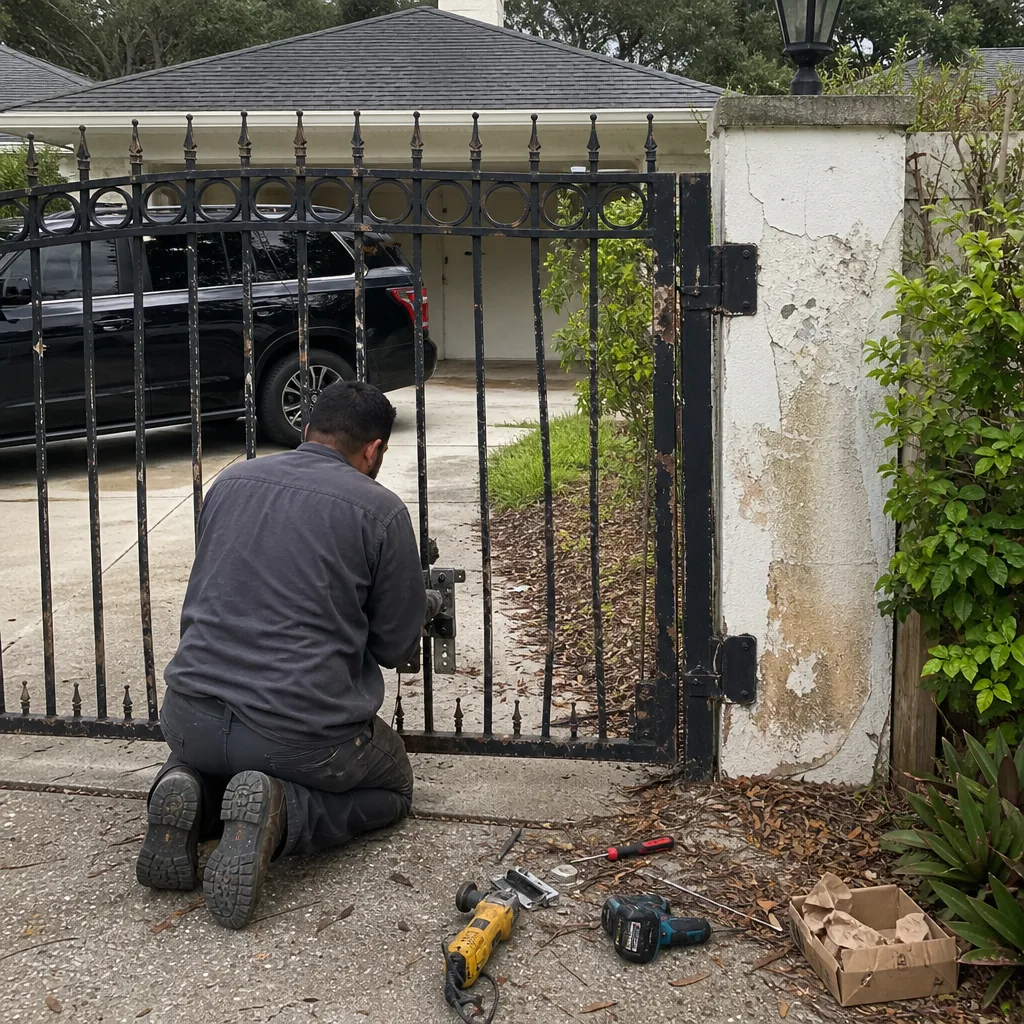 Before
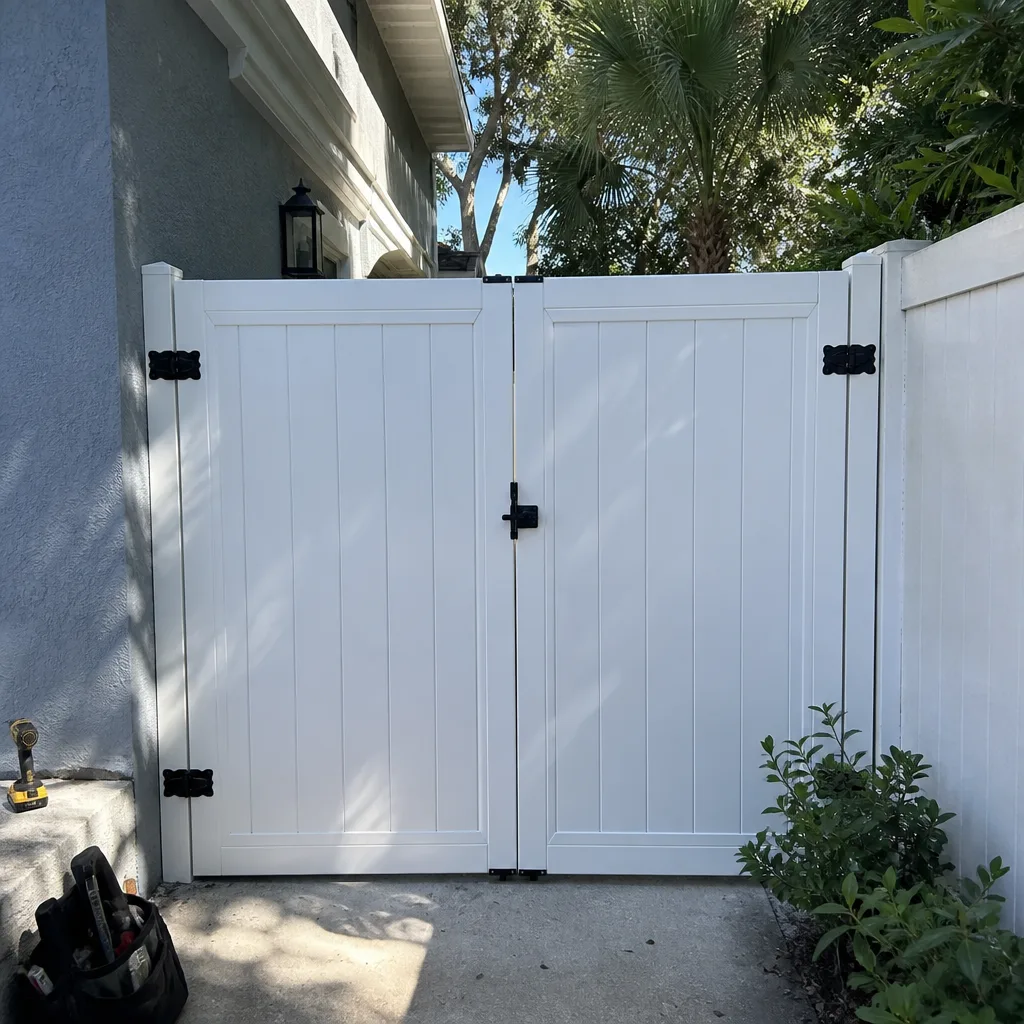 After
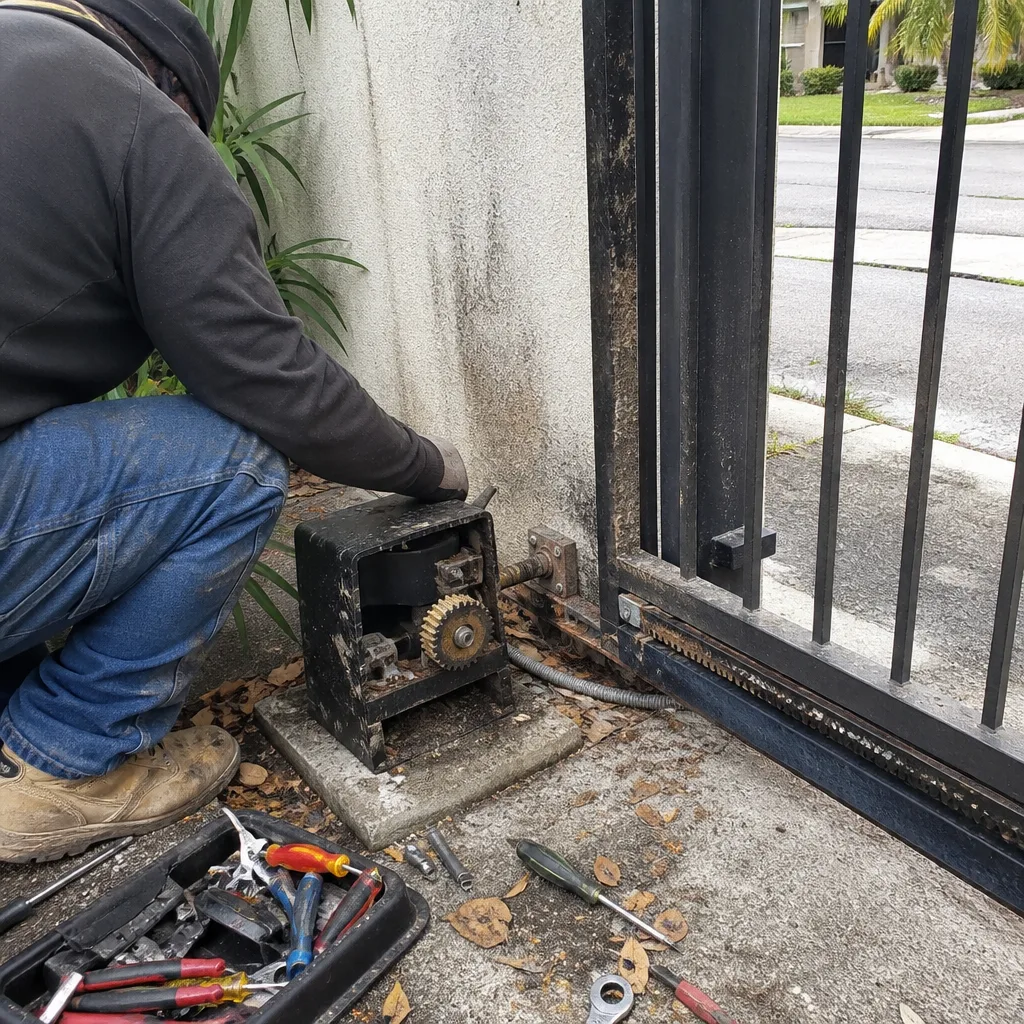 Before
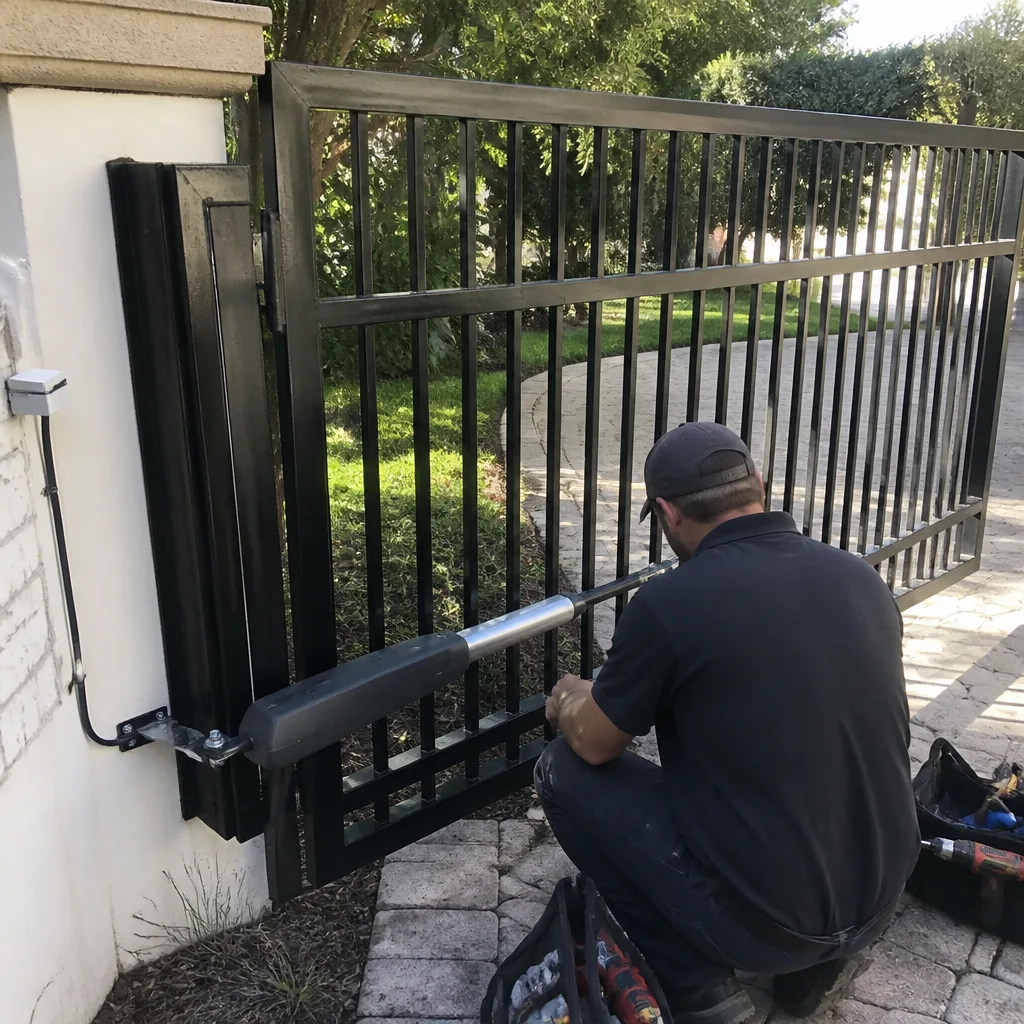 After
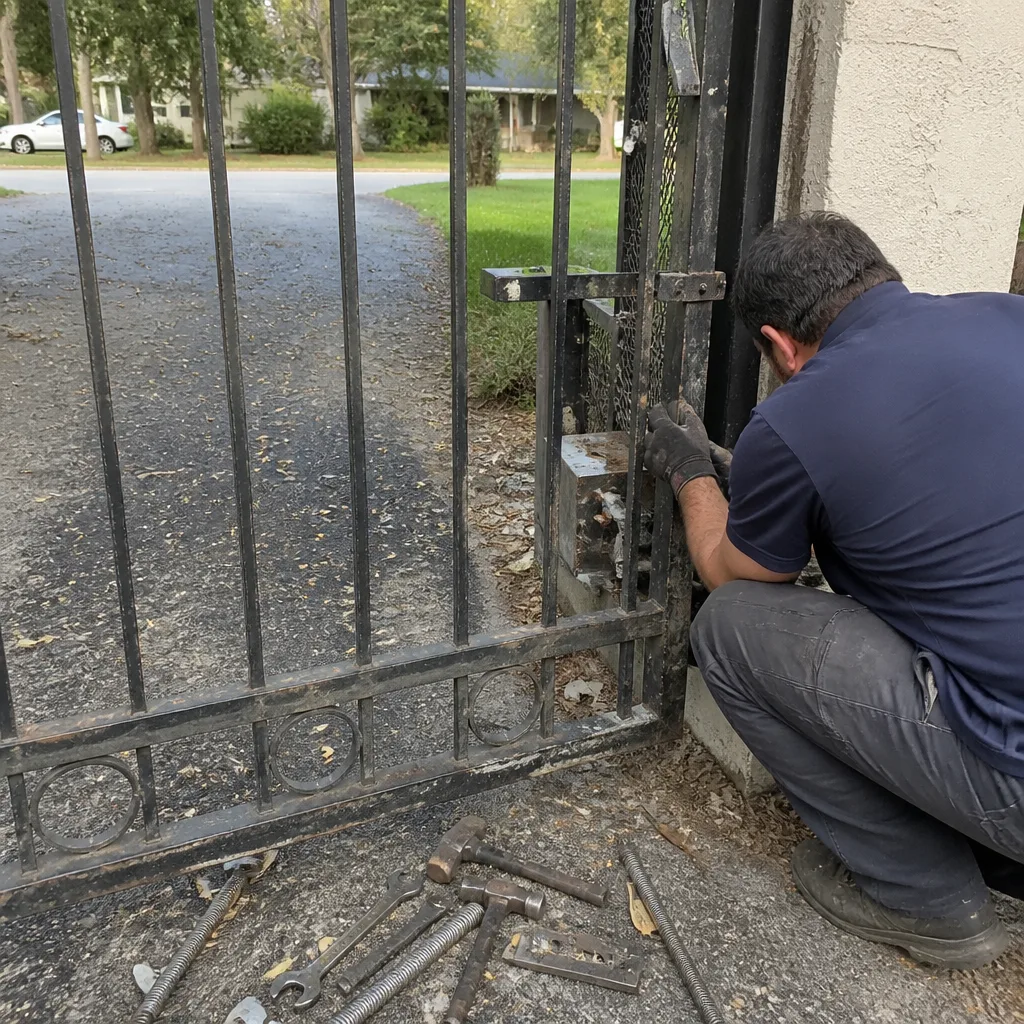 Before
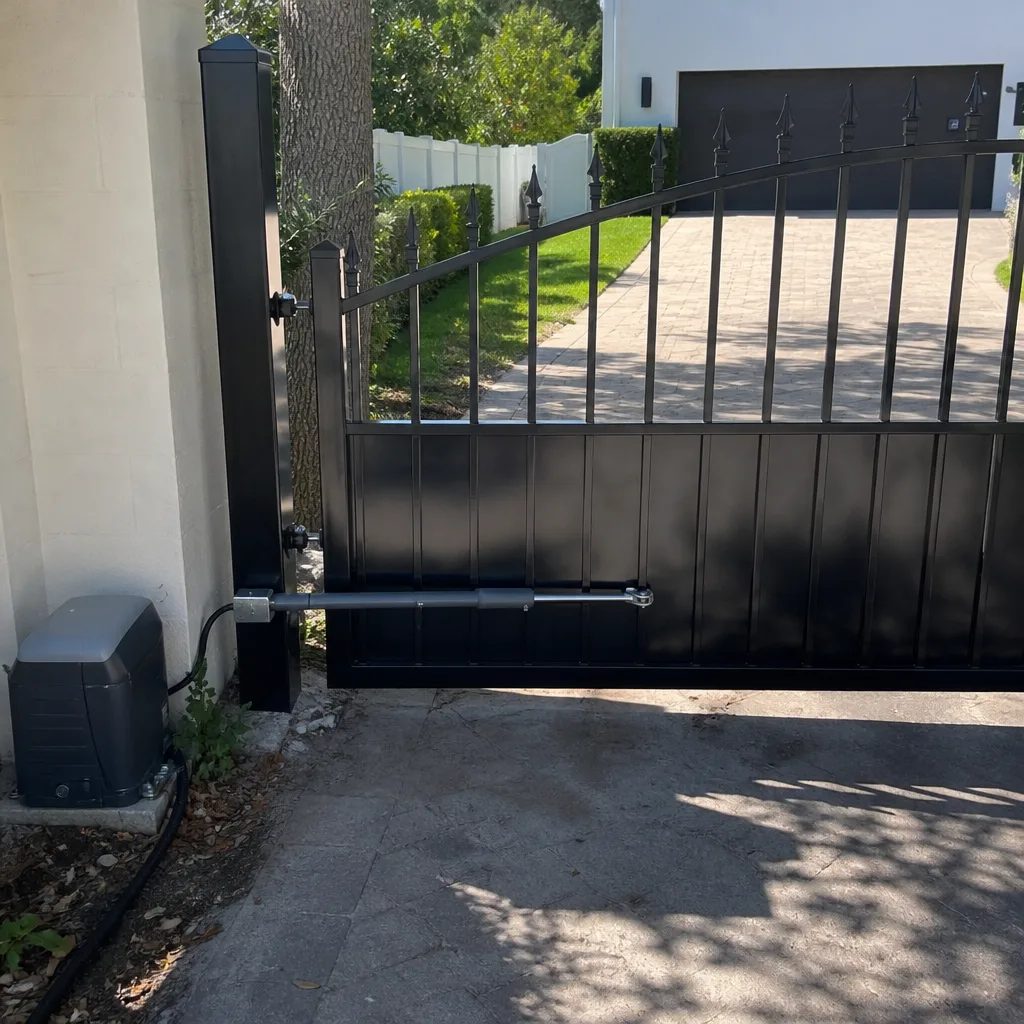 After