Last updated October 31, 2026
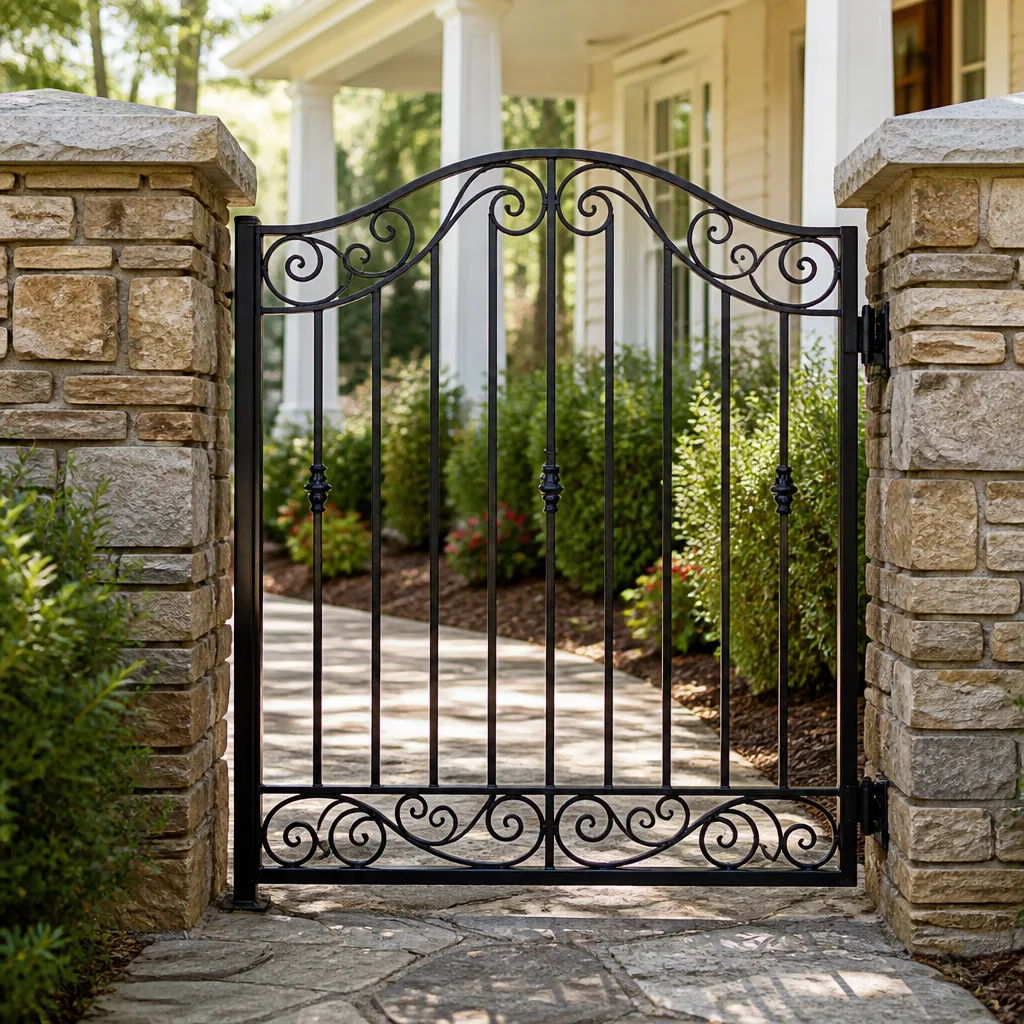 Wrought iron
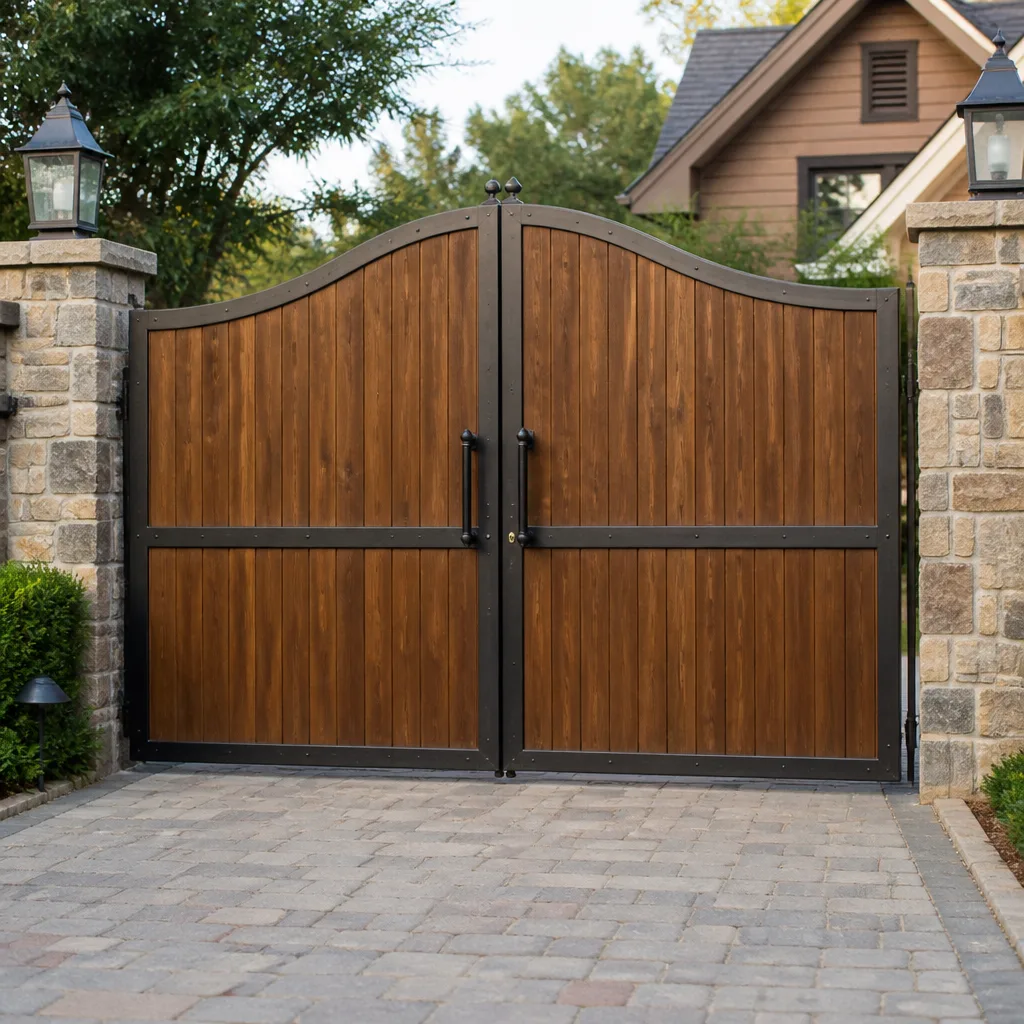 Wood & steel frame
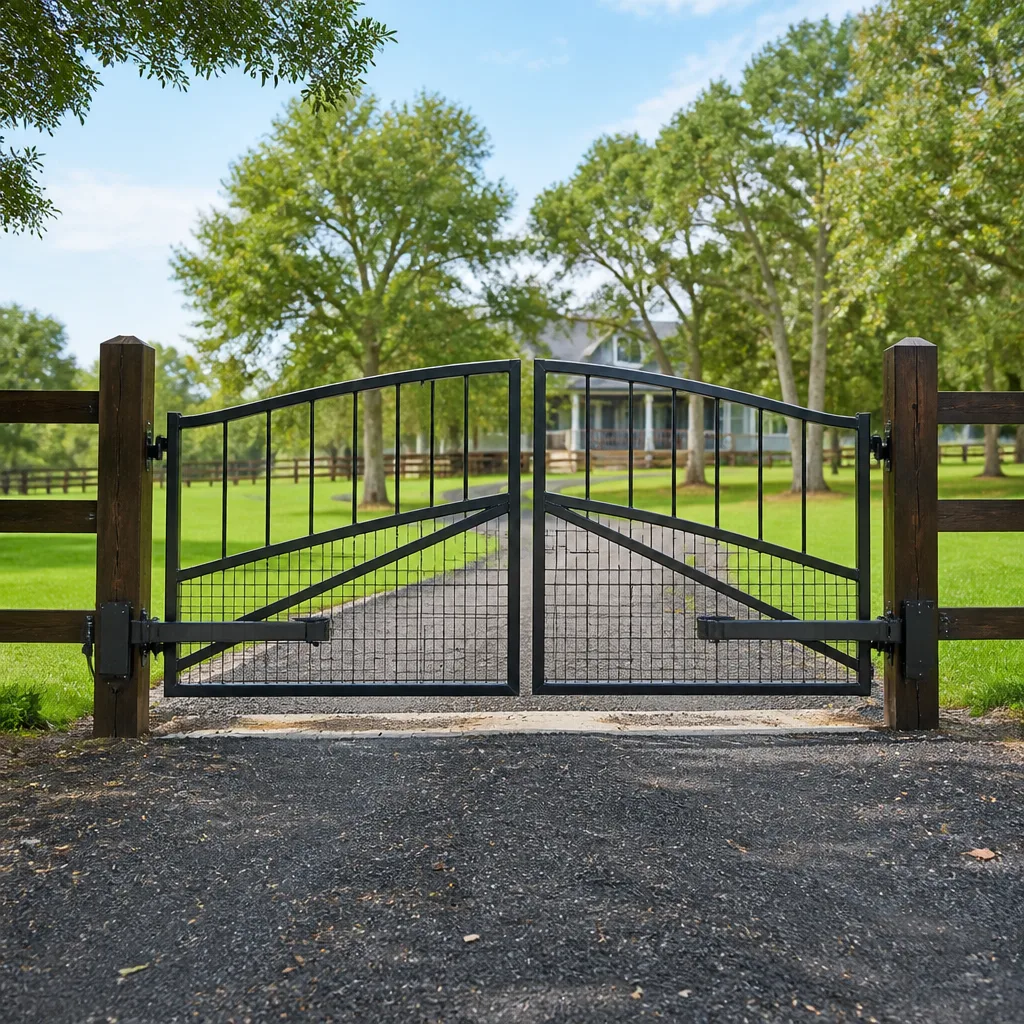 Farm & ranch
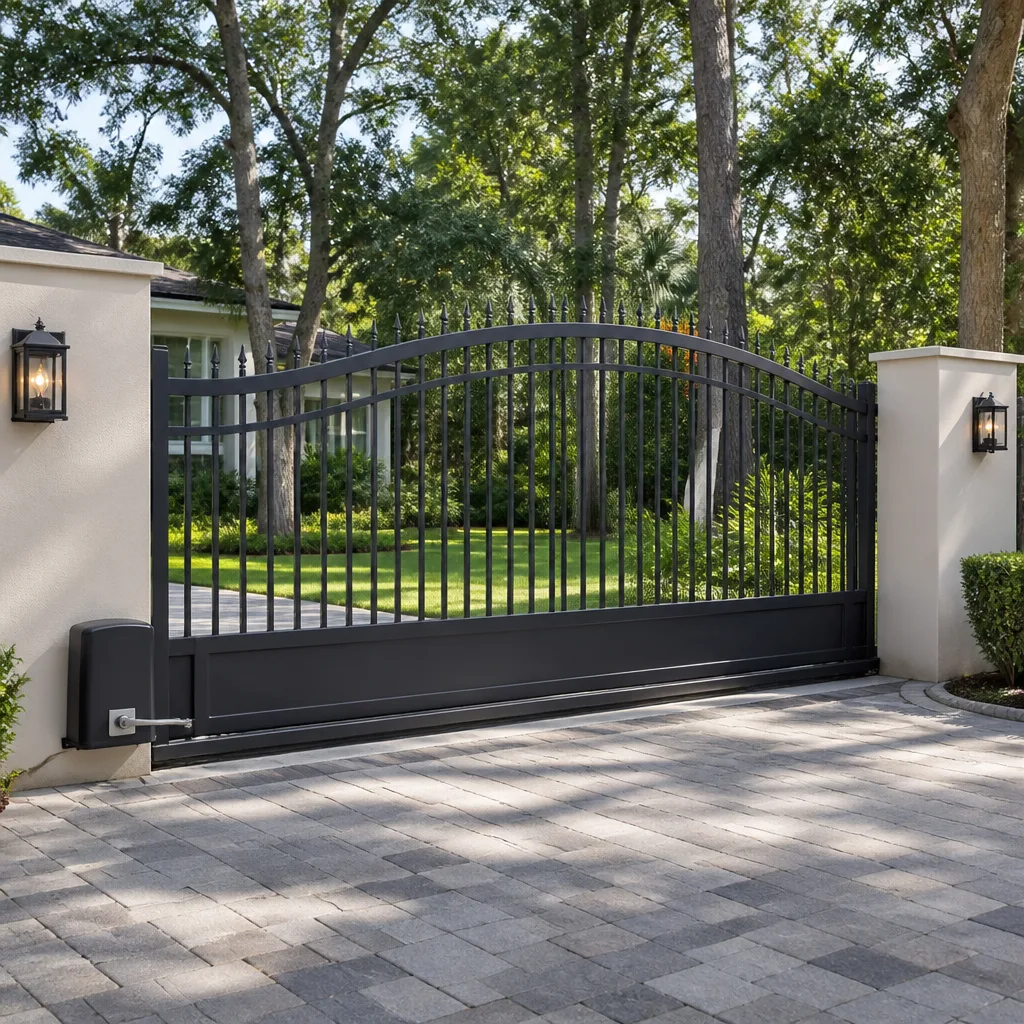 Sliding driveway gates
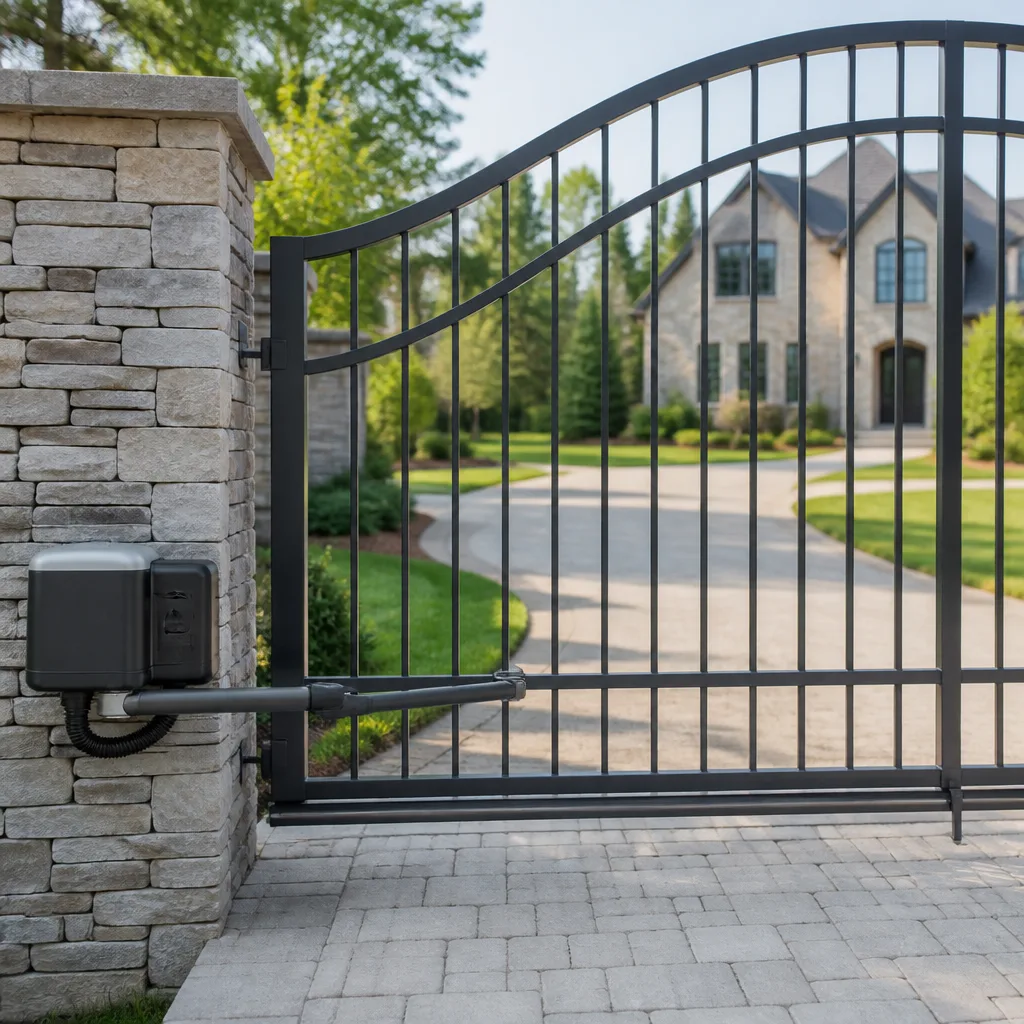 LiftMaster operators
Free on-site gate assessment - hinges, posts, and your LiftMaster or Nice gate operator checked before anything is quoted
The assessment is free and the quote is the invoice.
Get your free estimateThe Complete Gate Repair Guide for Tampa Homeowners
The corrosion pattern on a gate hinge in South Tampa after eighteen months looks like what a Midwest gate looks like after five years. Yet most gate repair guides are written for a generic climate that does not exist here. This guide treats Tampa conditions as the baseline, not a footnote. You’ll learn why your gate fails faster here than the manufacturer’s manual suggests, what you can safely handle yourself, what requires a licensed technician under Florida code, and how to time repairs around hurricane season instead of getting caught mid-July with a gate stuck open.
Quick Answer
Gate repair in Tampa costs between $185 and $800 for most residential fixes, with electric gate control board replacements running $450 to $1,200 depending on the operator brand. The Tampa-specific issue most homeowners miss is salt-air corrosion accelerating hinge, weld, and circuit board failure far faster than manufacturer maintenance schedules anticipate. A gate that gets inspected once before hurricane season and once after will outlast a gate that only gets touched when it stops moving.
Styles & brands we work with
Table of Contents
- Why Tampa’s Climate Destroys Gate Hardware Faster
- The 7 Most Common Gate Failures in Tampa (And What Actually Causes Them)
- What a Tampa Homeowner Can Safely Fix vs. What Florida Code Requires a Pro to Touch
- A Tampa-Specific Seasonal Gate Maintenance Schedule
- Gate Materials and Operator Ratings That Hold Up in Coastal Tampa vs. Inland Areas
- Documenting Your Gate Before Hurricane Season for Insurance
- Brand-Specific Repairs: What You Need to Know About Your Operator
- Repair vs. Replace: A Tampa Gate Owner’s Decision Framework
Why Tampa’s Climate Destroys Gate Hardware Faster
The single biggest factor in Tampa gate failures is not wear from use. It’s corrosion from environment. We’re talking about a city where the relative humidity sits above 70 percent for most of the year, where salt-laden air from Tampa Bay and the Gulf travels miles inland, and where a daily summer thunderstorm cycle soaks outdoor metal and then bakes it dry under 92-degree sun. That cycle, repeated three hundred times a year, is a corrosion engine.
Here’s what that means in practical terms. A powder-coated steel gate in Carrollwood or Westchase might last twelve to fifteen years before showing structural rust. That same gate in South Tampa, Davis Islands, or Beach Park, where salt exposure increases dramatically, may show hinge rust within two years and structural weakening by year six. The difference is not the gate quality. It’s the microclimate.
Three climate-specific failure points we see regularly across Tampa:
- Hinge rust and seizure. Salt air accelerates oxidation on the hinge pin and bearing surface. A hinge that squeaks in April may be seized solid by August. This is the most common gate repair call we field in South Tampa and Hyde Park.
- Circuit board corrosion on electric gates. Humidity does not stay outside. It gets inside the operator housing through cable conduits and breather vents. Once inside, it condenses on the control board when temperatures swing. Over time, corrosion builds on contact points and the board fails. LiftMaster and Mighty Mule operators are particularly susceptible when the enclosure gasket has aged.
- Weld cracking at stress points. The constant thermal expansion and contraction from Tampa’s heat-cool cycle, plus the extra stress of wind load during afternoon storms, concentrates fatigue at welded joints. A gate that gets pushed by 40 mph gusts every afternoon for four months is accumulating stress no manufacturer’s cycle rating accounts for.
What all this means: your maintenance schedule should be built around Tampa’s weather clock, not a generic “check your gate twice a year” list that some national website published. The specifics of that schedule are covered below in the seasonal maintenance section.
The 7 Most Common Gate Failures in Tampa (And What Actually Causes Them)
Understanding why gates fail is useful because it tells you whether you’re fixing the symptom or the cause. In Tampa, the cause is almost always environmental stress plus deferred maintenance. Here are the seven failures we see most often, ranked roughly by frequency.
1. Gate Won’t Open or Close at All
The gate has power but does not respond to the remote, keypad, or push button. In Tampa, the cause is usually not a dead motor. It’s a control board that has been compromised by humidity intrusion, a blown fuse from a lightning-adjacent surge during summer storms, or a safety loop that has failed and put the operator into lockdown. Before assuming the worst, check your breaker box: a power surge from an afternoon lightning strike can trip the gate circuit without damaging anything.
2. Gate Opens But Won’t Close (or Reverses Mid-Cycle)
This nearly always points to a safety sensor issue. The photo-eye sensors near the gate’s path may be misaligned, dirty, or corrupted by moisture. In Tampa’s rainy season, water gets into sensor housings and causes false obstruction readings. The gate thinks something is in the way and refuses to close. Reversing mid-cycle without an actual obstruction is the same root cause. Cleaning the sensor lenses and making sure their alignment is true fixes about half of these calls.
3. Gate Moves Slowly or Strains Under Load
A gate that used to open in eight seconds and now takes twenty, or that makes a grinding sound while moving, has a mechanical resistance problem. In Tampa, that usually means rusted hinges or a gunked-up wheel track on slide gates. The motor is working harder than it should. Left alone for a season, the added strain burns out the motor or strips the gearbox. This is the classic case where a $75 hinge replacement in March prevents a $600 motor replacement in September.
4. Gate Has Visible Rust or Structural Corrosion
Rust is not cosmetic on a gate. Once oxidation penetrates the coating and reaches the steel underneath, it compromises structural integrity. In coastal Tampa zip codes (33606, 33609, 33611, 33629), visible rust at the hinge plate or bottom rail means the clock is running. Address it with a rust treatment and re-coating while the damage is surface-level. Wait too long and the only fix is cutting out the section and welding in new steel, or replacing the gate leaf entirely.
5. Gate Makes Grinding, Squeaking, or Clanking Noises
Noises are diagnostic. A squeak is a dry or corroded hinge asking for lubrication or replacement. A grind from the operator housing means a gear or chain inside is wearing, and in Tampa’s humidity, often wearing dry because the factory grease has broken down. A clank when the gate starts or stops means a loose mounting bolt or a hinge with play in it. None of these are emergency calls by themselves, but all of them are cheaper to fix before the stressed component fails completely.
6. Remote or Keypad Stopped Working
If the gate operates with the wall button but not the remote, the issue is in the transmitter or receiver, not the gate itself. Humidity can short out keypad contacts, especially on exterior-mounted keypads that have cracked or yellowed housings. Remote batteries die faster in Florida heat, another recurring cause. If no input method works, you’re back to a control board issue or a power issue at the outlet.
7. Gate Drifts Off the Track or Out of Alignment
Slide gates ride on a track that accumulates sand, pine needles, and organic debris in Tampa. The wheels wear. The track shifts with soil movement after heavy rains. A gate that starts scraping, or a swing gate that starts sagging and dragging at the latch point, is an alignment problem that usually traces back to degraded rollers, hinge wear, or post movement. The fix is mechanical adjustment or component replacement, not electronics.
What a Tampa Homeowner Can Safely Fix vs. What Florida Code Requires a Pro to Touch
Let’s be direct about this. Automatic gates involve electricity, moving mechanical parts that weigh several hundred pounds, and safety sensors that exist to prevent a gate from crushing a person or vehicle. Florida building and electrical codes treat automatic gate systems as regulated installations. Some maintenance is legitimately DIY. Other work legally and practically requires a licensed technician.
Maintenance You Can Do Yourself
- Lubricate hinges, rollers, and chain or screw drives. Use a silicone-based or lithium-based lubricant. Apply to hinge pins, roller bearings, and the gate track. This is the single highest-value maintenance task a homeowner can do, and in Tampa’s climate it should be done every three months, not annually.
- Clean safety sensors and photo-eyes. Wipe the lenses with a dry or slightly damp cloth. Clean away spider webs and insect nests that accumulate in sensor housings during Tampa’s humid months.
- Clear the gate track and path. Remove sand, leaves, and debris from slide gate tracks and the sweep path of swing gates. After heavy rains, check that soil has not washed into the track channel.
- Inspect visually for rust, loose bolts, and wear. You don’t need a certification to look at your gate and notice that a hinge is rusting or a bolt is backing out. Document what you see.
- Replace remote and keypad batteries. If the only problem is a dead remote battery, you can fix that in ninety seconds with a screwdriver. Buy the correct battery type from the remote’s model number.
Repairs That Require a Licensed Professional
Under Florida law, any wiring work on an automatic gate operator that connects to line voltage (not low-voltage control wiring) requires an electrical contractor’s license. Beyond the legal line, there’s a practical one:
- Control board replacement or repair. This is line-voltage work inside the operator housing, and a miswired board can create a shock hazard or a gate that moves unpredictably.
- Motor, gearbox, or drive system replacement. These components are under spring or mechanical tension. A gate operator motor swap is not like swapping a car battery; the gate leaf must be secured before the operator is removed.
- Safety loop installation or repair. In-ground induction loops are wired into the operator’s control system. Cutting into concrete to install one is a specialized job with tools most homeowners don’t own.
- Hinge replacement on heavy gates. Replacing a hinge on a 400-pound steel gate requires supporting the gate leaf safely. An unsupported gate that slips while disassembled can cause serious injury. This is not a two-person weekend job.
- Any repair involving high-tension springs or torsion rods. These components store energy. If they release it unexpectedly, the consequences are severe. We don’t give step-by-step instructions for this kind of work, because even experienced techs treat it with respect.
A Tampa-Specific Seasonal Gate Maintenance Schedule
Generic gate maintenance guides tell you to inspect your gate in spring and fall. That’s a calendar built for climates with four seasons. Tampa has two real seasons: dry season (October through May) and rainy season (June through September), with hurricane season (June 1 through November 30) layered on top. Here’s the schedule that actually makes sense for a Tampa gate owner.
February to March: Post-Storm Recovery and Dry Season Tune-Up
- Inspect all structural components for rust that developed over the winter, especially on salt-exposed properties near the Bay. Treat surface rust now.
- Lubricate hinges, rollers, and drive components with a silicone or lithium lubricant. Wipe away excess to prevent sand from sticking.
- Check operator housing gaskets and cable entry points for gaps where humid air can enter.
- Test the auto-reverse mechanism by placing an object in the gate’s path. If the gate doesn’t reverse, the safety system needs professional attention.
- Verify the manual release mechanism works so you can operate the gate by hand during a power outage.
May: Pre-Hurricane Readiness Check
- Complete the full insurance documentation routine described in the next section of this guide.
- Tighten all visible bolts and mounting hardware. Loose hardware fails faster under hurricane-force wind load.
- Check that gate posts and foundations show no new cracking or settling.
- Confirm the battery backup system (if installed) holds a charge and switches over when power is cut.
- Clear drainage paths around the gate so heavy rain doesn’t pool at the base and accelerate corrosion.
June through September: Rainy Season Vigilance
- After heavy afternoon storms, clear debris from slide gate tracks and sensor areas.
- Wipe down sensor lenses monthly, or more often if you notice the gate hesitating or reversing unexpectedly.
- Watch for fresh rust at the bottom rail and hinge plates, where standing water and humidity concentrate.
- If your gate operator trips its breaker after a storm, call a professional rather than repeatedly resetting it. A tripping breaker is a symptom, not a nuisance.
October to November: Post-Hurricane Season Assessment
- After the last storm threat has passed, do a full structural inspection. Even a near-miss hurricane can subject a gate to hours of sustained wind stress.
- Document any new damage photographically and compare against your pre-season documentation.
- Schedule any deferred repairs now, while conditions are dry and before the winter holidays create scheduling backlogs.
Gate Materials and Operator Ratings That Hold Up in Coastal Tampa vs. Inland Areas
If you’re building or replacing a gate in Tampa, your zip code should drive your material choices. The salt exposure gradient across Hillsborough County is real. A gate in Apollo Beach or Westchase faces very different conditions than one in Brandon or Lutz.
Gate Frame Materials
- Galvanized steel with powder coating: Good for inland Tampa areas. The zinc layer provides sacrificial protection, and the powder coat seals it. Expect a 10 to 15 year cosmetic lifespan inland.
- Aluminum: The right choice for coastal zip codes. Aluminum does not rust the way steel does, though it can develop white surface corrosion. An aluminum gate with stainless steel hardware is the longest-lived combination for properties within two miles of the Bay.
- Wrought iron (true wrought iron): Rare and expensive. What most people call wrought iron is actually tubular steel that’s been formed and welded. Distinguish between the two when a contractor quotes you.
- Wood with steel frame: Common in Tampa’s ranch and craftsman neighborhoods. The wood is cosmetic; the steel frame does the structural work. In coastal areas, the steel frame needs to be galvanized, not raw, inside the wood cladding.
Hardware and Fasteners
This is where coastal Tampa gates fail first. Standard zinc-plated fasteners last two to three years near the Bay. Stainless steel fasteners last a decade or more. If you’re replacing a hinge or hardware on a coastal property, specify stainless steel. The price difference is small. The lifespan difference is not.
Operator Enclosure Ratings
Electric gate operators carry NEMA ratings that describe enclosure protection. A NEMA 3R enclosure is rated for outdoor use against rain and snow. A NEMA 4 enclosure adds protection against hose-directed water and some corrosion resistance. A NEMA 4X enclosure adds corrosion resistance specifically for salt environments. For coastal Tampa properties, a NEMA 4X-rated operator or an operator installed inside a weather-tight enclosure box is the difference between a control board that lasts three years and one that lasts ten. When you’re shopping for a new operator, ask the installer what enclosure rating it has and whether it’s appropriate for your property’s salt exposure.
Documenting Your Gate Before Hurricane Season for Insurance
Almost every insurance guide mentions photographing your roof, your windows, and your belongings before hurricane season. Almost none mention your gate. But in Tampa, an automatic gate is a covered structure on most homeowner policies, and if a named storm damages it, your claim is dramatically easier if you have pre-storm documentation. Here’s the process we recommend to every Tampa gate owner.
- Photograph the entire gate system in early May. Front and back of each gate leaf, both hinges on each leaf, the latch assembly, the operator housing, the keypad or intercom, the safety sensors, and the gate posts. Take wide shots and close-ups.
- Photograph the operator’s identification plate. This plate has the brand, model, serial number, and electrical specifications. If the operator is destroyed in a storm, this photo is the proof you need for replacement value.
- Keep service records with dates. If you’ve lubricated hinges, replaced a control board, or had a technician service the gate, keep the invoice or note. Insurance adjusters look favorably on maintained equipment.
- Store the documentation in at least two places. Cloud storage plus a local copy. If the storm damages your home, your phone or computer might be compromised too.
- Repeat the process after any major storm that came close. Post-storm documentation creates a new baseline and catches damage that might not become obvious until months later.
This routine takes about fifteen minutes once a year. If a storm does real damage, it can mean the difference between a smooth claim and a disputed one. It also gives you a documented maintenance history that helps any gate technician diagnose issues faster.
Brand-Specific Repairs: What You Need to Know About Your Operator
Not all gate operators fail the same way. The brand on your housing tells a technician a lot about what to check first, and it tells you something about what to expect from a repair. We service nine major gate operator brands, including electric gate repair work on DoorKing, Elite, Mighty Mule, and LiftMaster systems. Here’s what Tampa homeowners should know about the operators most common on residential properties in this area.
LiftMaster and Elite: The Residential Workhorses
LiftMaster and Elite operators are common on Tampa residential gates because they’re reliable, widely available, and supported by a large parts network. In Tampa’s humidity, the weak point on these units is usually the control board, especially if the operator housing gasket has degraded or the unit was installed with the cable entry facing upward where water can run in. A LiftMaster operator that has been properly sealed and maintained can run for a decade in the Tampa climate. One that hasn’t can develop board corrosion within three years.
Mighty Mule and Ghost Controls: DIY-Installable, But With Limits
Mighty Mule is the most common brand on Tampa gates that a homeowner installed themselves. These units are designed for consumer installation and work well for lighter residential gates. But they’re also the operators most likely to be under-spec’d for their application. A Mighty Mule rated for a 550-pound gate will struggle and fail early if it’s actually moving an 800-pound steel gate, which is common when a homeowner replaces an old manual gate with an automatic operator. Ghost Controls occupies a similar niche. These systems are serviceable, but they reveal their limitations quickly in Tampa conditions if they’re not installed with proper sealing and enclosure protection.
DoorKing: The Commercial-Grade System on Residential Estates
DoorKing operators are built for higher cycle counts and heavier gates. We see them on Tampa estate properties, gated communities, and small commercial properties. They’re robust but also more complex. There is a reason their control wiring is more involved than a consumer unit. If a DoorKing system fails, the diagnosis is seldom simple; it’s usually a combination of a safety loop issue, a limit switch, or a control board that has been stressed by power surges. DoorKing operators on Tampa properties should have surge protection installed as standard practice, given this area’s frequent lightning activity.
Why Brand Familiarity Matters for Tampa Homeowners
When you call for gate repair in Tampa, the technician’s familiarity with your specific operator brand directly affects how fast the diagnosis goes and whether the fix happens in one visit. A technician who has never opened a DoorKing has to learn the wiring on your driveway, and you pay for that learning time. A technician who services your brand regularly already knows the common failure points, carries the parts, and can usually diagnose the issue within the first ten minutes on site. That is the practical value of working with a gate specialist rather than a generalist who does fences, garage doors, and gates on the same truck.
Repair vs. Replace: A Tampa Gate Owner’s Decision Framework
Every gate reaches a point where continued repairs cost more than replacement. The question is when. Here’s the framework we use with Tampa homeowners to make that call honestly.
Repair Makes Sense When:
- The gate structure (frame, posts, foundation) is sound and the problem is isolated to one component: a hinge, a sensor, a remote receiver, a control board.
- The repair cost is less than 40 percent of the replacement cost and it restores the gate to a reliable state with no known secondary issues.
- The operator is less than eight years old and is a brand that’s still supported with parts.
- The gate has no structural rust, only surface corrosion that can be treated and re-coated.
Replace Makes Sense When:
- The gate frame or posts have structural rust or cracks. Welding patches onto heavily corroded steel extends life by months, not years, especially in coastal Tampa salt air.
- The operator is over twelve years old and parts are discontinued, forcing you into used or rebuilt components.
- You’ve spent more than the replacement cost in repairs over the past three years.
- The gate was undersized for the application from the start and has been failing repeatedly. This is common with gates that were originally manual and later automated without a full gate installation evaluation.
One additional Tampa-specific factor: if the gate must be replaced, choose materials rated for your specific location. A Home Depot-grade steel gate that lasted five years in Brandon will not last five years on Davis Islands. Coastal salt exposure justifies the incremental cost of aluminum and stainless hardware. The replacement is the opportunity to install correctly for this climate.
Common Mistakes to Avoid
- Ignoring a squeaking hinge. In Tampa, a squeak is the first audible sign of corrosion. Lubricating a squeaking hinge costs nothing and takes five minutes. Replacing a seized hinge that has taken a gate out of alignment costs hundreds.
- Using WD-40 on gate hinges or operator chains. WD-40 is a water displacer, not a lubricant. It washes away in Tampa’s rain and leaves metal dry. Use silicone or lithium grease.
- Painting over rust without treating it first. Paint seals rust in, and the oxidation continues underneath until the paint bubbles off. You’re buying time, and very little of it. Remove rust, treat with a rust converter, then paint.
- Forcing a gate that has stopped moving. If an electric gate stops responding, manually overriding it and forcing it open by hand can damage the gearbox or strip the drive mechanism. Fix the reason it stopped, don’t muscle through it.
- Skipping surge protection on electric gate operators. Tampa is the lightning capital of North America. An unprotected operator is a standing target for power surges that fry control boards. A surge protector costs under $100 to add.
- Buying parts by description rather than model number. “It looks the same” is not the same. Operator parts are model-specific. Buy by the number on the identification plate, not by a photo match on an online marketplace.
- Delaying post-storm inspection. Small storm damage compounds. A bent bracket that goes unrepaired for a season becomes a broken bracket and a gate that drops. Inspect after any named storm passes within fifty miles of Tampa.
See the difference
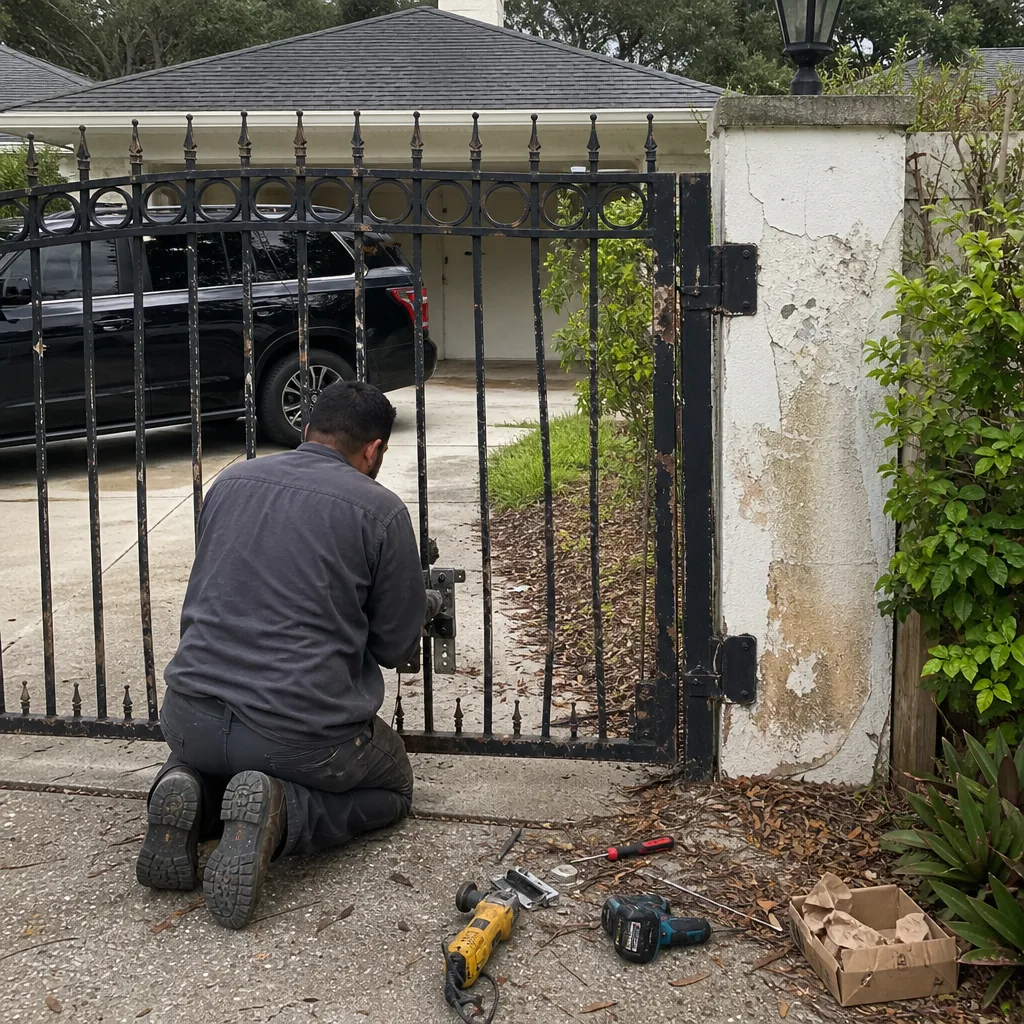 Before
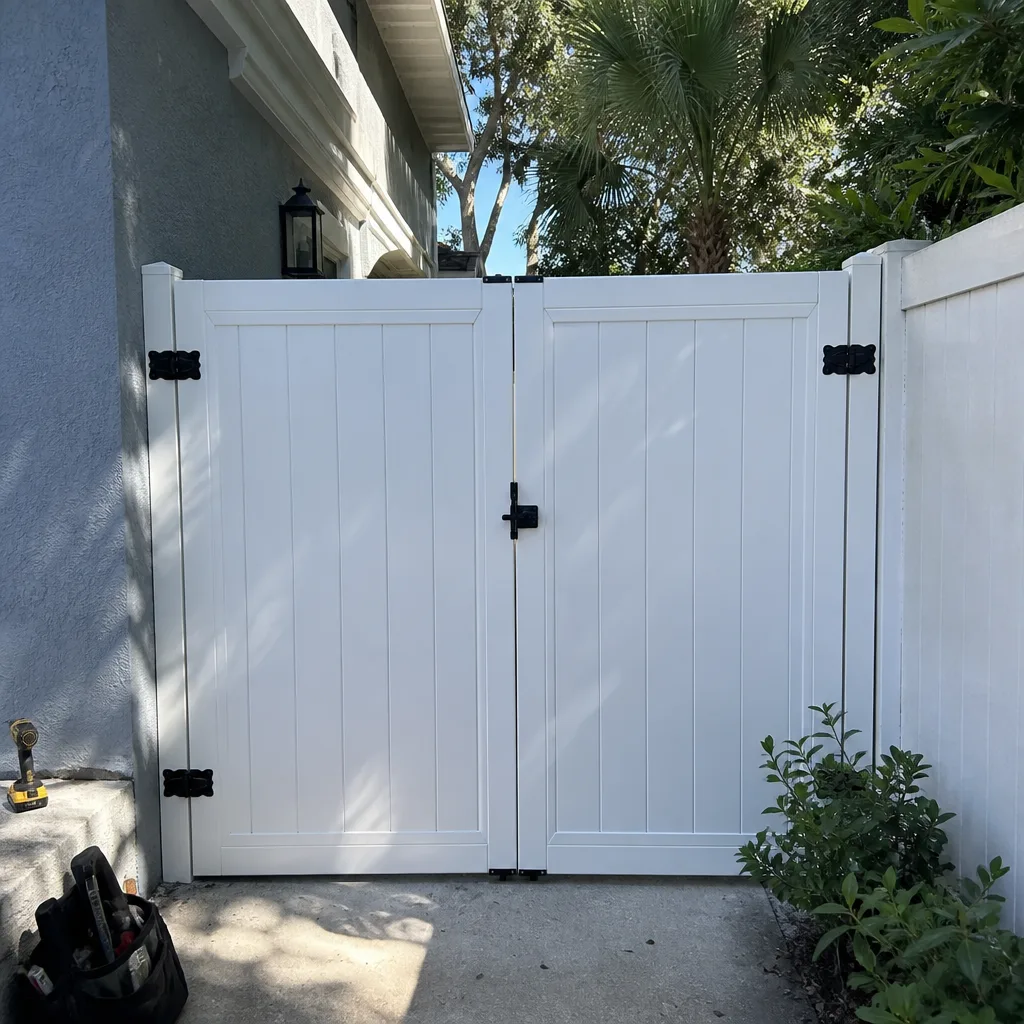 After
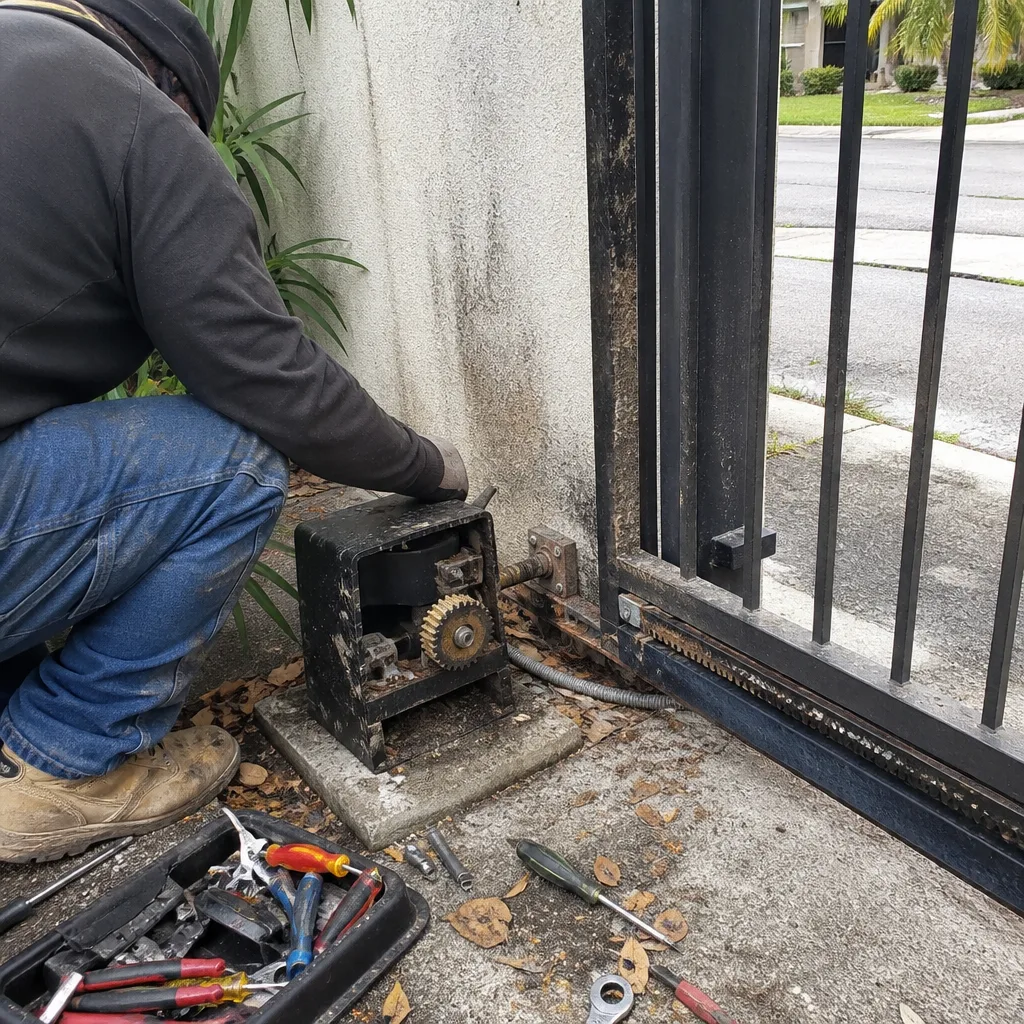 Before
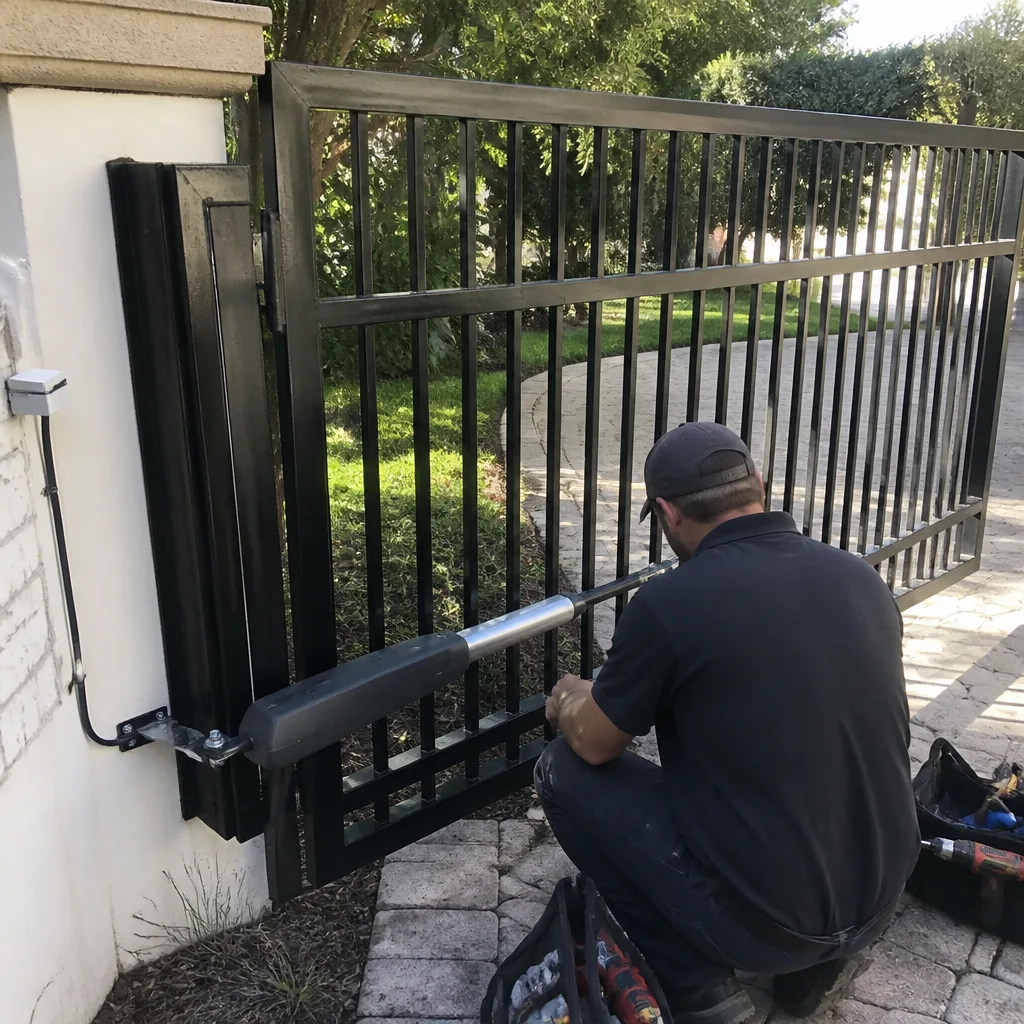 After
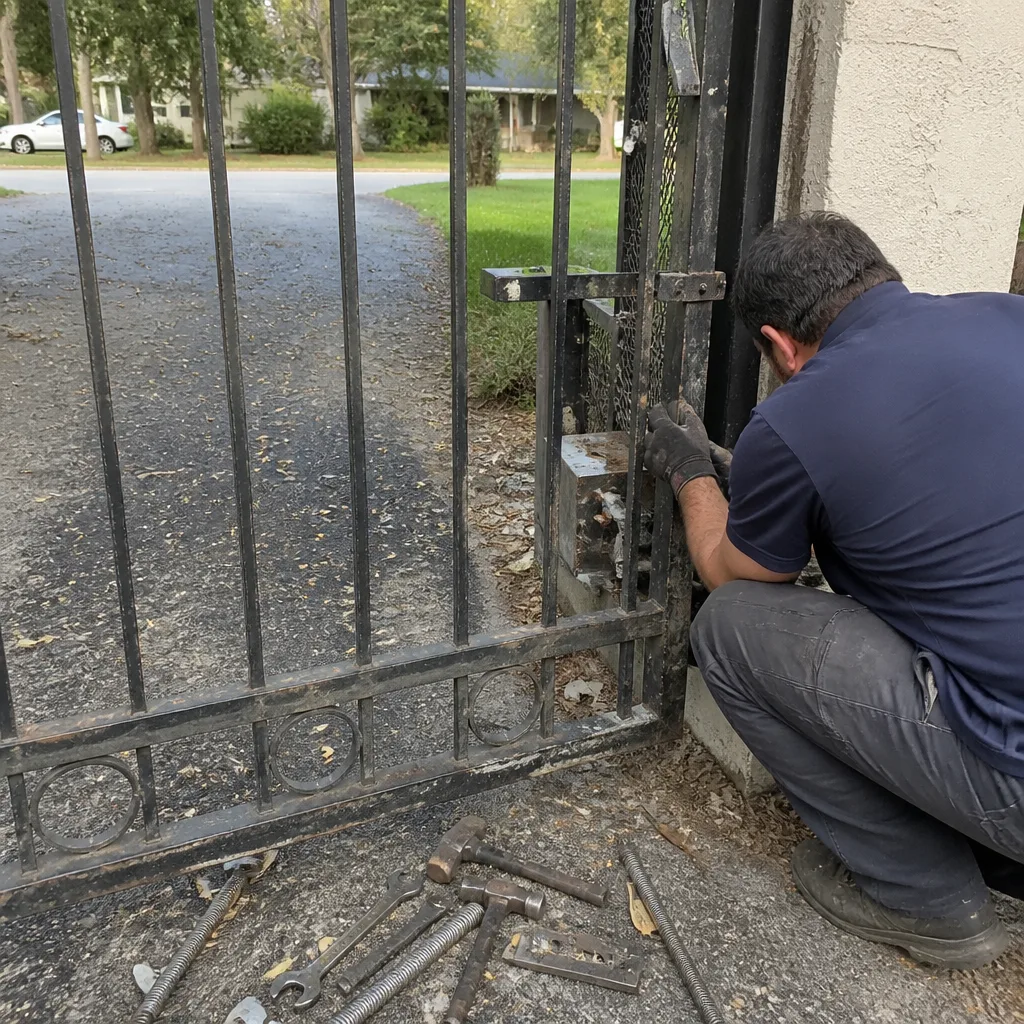 Before
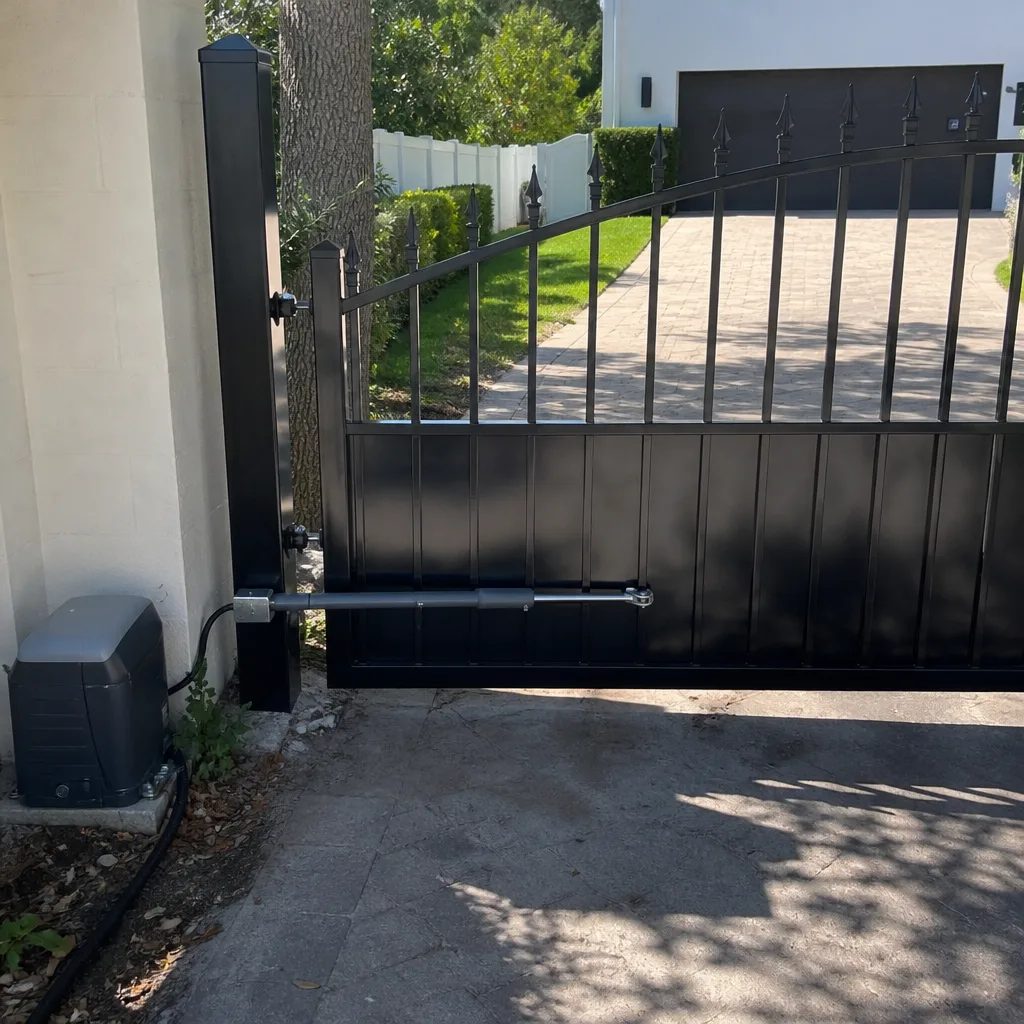 After
When to Call a Professional
Call a gate specialist when the problem involves line-voltage wiring, control boards, motor replacement, high-tension components, or a gate that’s heavy enough to injure someone if it shifts during disassembly. Those are not DIY situations. Call also when you’ve diagnosed the problem but don’t have the specialized tools to execute the fix safely, or when a repair keeps recurring, which suggests the root cause hasn’t been found. For Tampa homeowners, our gate repair service in Tampa covers everything from hinge replacement to full operator rebuilds. Kingston Gate Repair offers free estimates in Tampa, call (877) 752-3303.
Frequently Asked Questions
Gate repair in Tampa typically costs $185 to $800 for most residential mechanical and electrical fixes, with control board replacement running $450 to $1,200 depending on the operator brand. Simple hinge lubrication or sensor realignment sits at the low end. Motor or gearbox replacements sit at the high end. Every job gets a written quote before work starts, so call (877) 752-3303 for an exact number on your gate.
For mechanical failures like a broken hinge or a seized roller, same-day or next-day service is often possible depending on parts availability. Control board and motor failures may require ordering a model-specific part, which typically takes one to three business days. Tampa-area scheduling is tight during rainy season, so calling early in the week gives you the best shot at a same-week appointment. Call (877) 752-3303 to check current availability.
A properly installed operator with a weather-rated enclosure and a surge protector will usually survive a hurricane, though the gate leaf itself may take structural damage from sustained wind load and flying debris. The most common post-storm gate damage in Tampa is bent gate leaves, broken hinge welds, and water intrusion into operator housings. After any named storm passes within fifty miles, do a visual inspection before relying on the automatic function.
Every three months. Tampa’s humidity and frequent rain wash away lubrication faster than the annual schedule manufacturers publish. Use a silicone or lithium-based lubricant on hinges, rollers, and chain or screw drives. This is the single cheapest maintenance task that extends gate life, and it takes under ten minutes.
Yes, and the effect is measurable. Properties within two miles of Tampa Bay or the Gulf experience noticeably faster corrosion on steel gates, hinges, and fasteners than properties inland in Brandon or Lutz. The fix is not to avoid steel entirely, but to use galvanized steel, stainless fasteners, and corrosion-rated operator enclosures in coastal zip codes.
We service nine major gate operator brands, including LiftMaster, FAAC, BFT, Linear, Viking, Ghost Controls, DoorKing, Elite, and Mighty Mule. That covers entry-level consumer units through heavy-duty commercial systems. If your operator is a different brand, call (877) 752-3303 and we’ll tell you honestly whether we can service it or point you to someone who can.
The Bottom Line
Tampa gate ownership is not like gate ownership anywhere else. The climate dictates the maintenance schedule, the material choices, and the expected lifespan of every component. The homeowners who treat gate maintenance as a seasonal task, tied to hurricane prep and rainy season, spend less on repairs than the homeowners who wait for failure. The homeowners who document their gate before storm season are better protected when damage happens. And the homeowners who call a specialist who already knows their operator brand get diagnosed and repaired faster, with fewer return visits. That is what electric gate repair in Tampa should look like. Kingston Gate Repair handles gate repair, electric gate work, and new gate installation in Tampa. Call (877) 752-3303 for a free estimate.
Written by the team at Kingston Gate Repair, serving Tampa since 2013.