
Last updated October 31, 2026
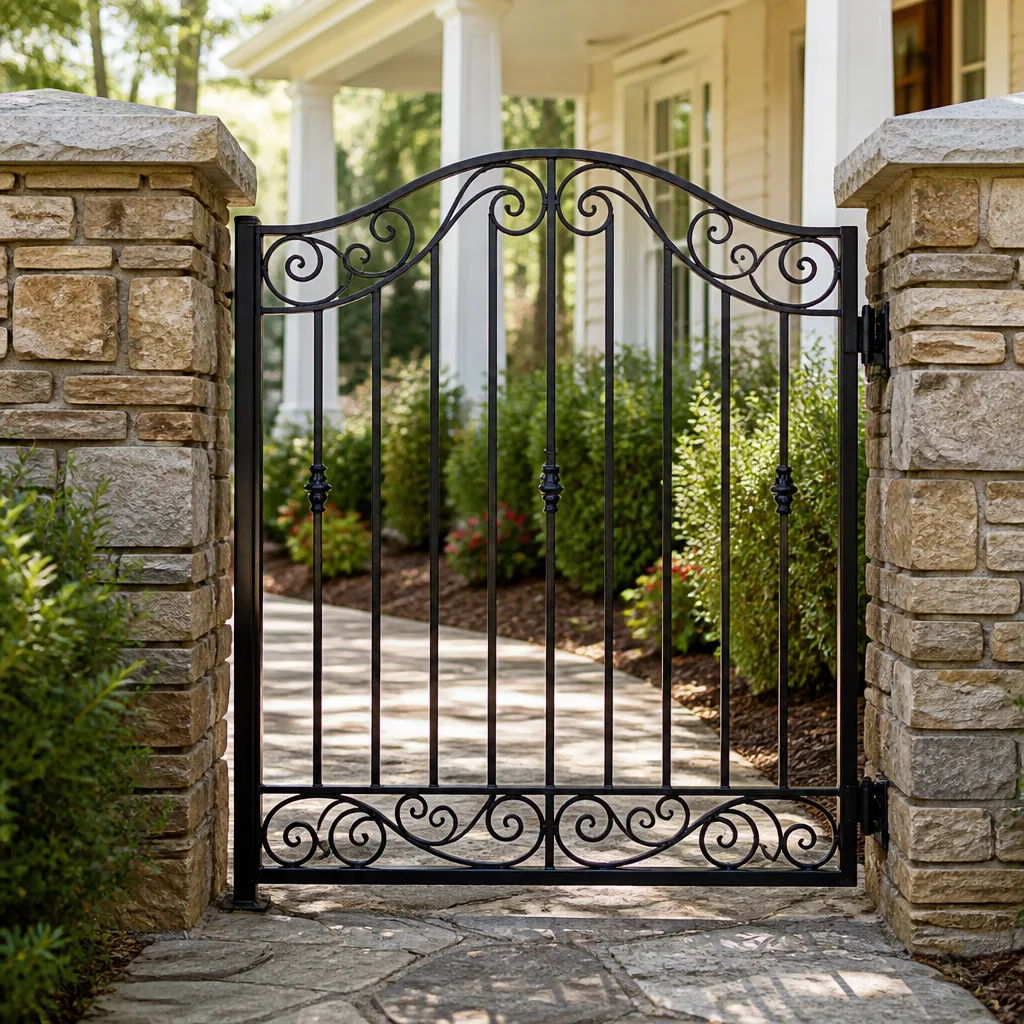 Wrought iron
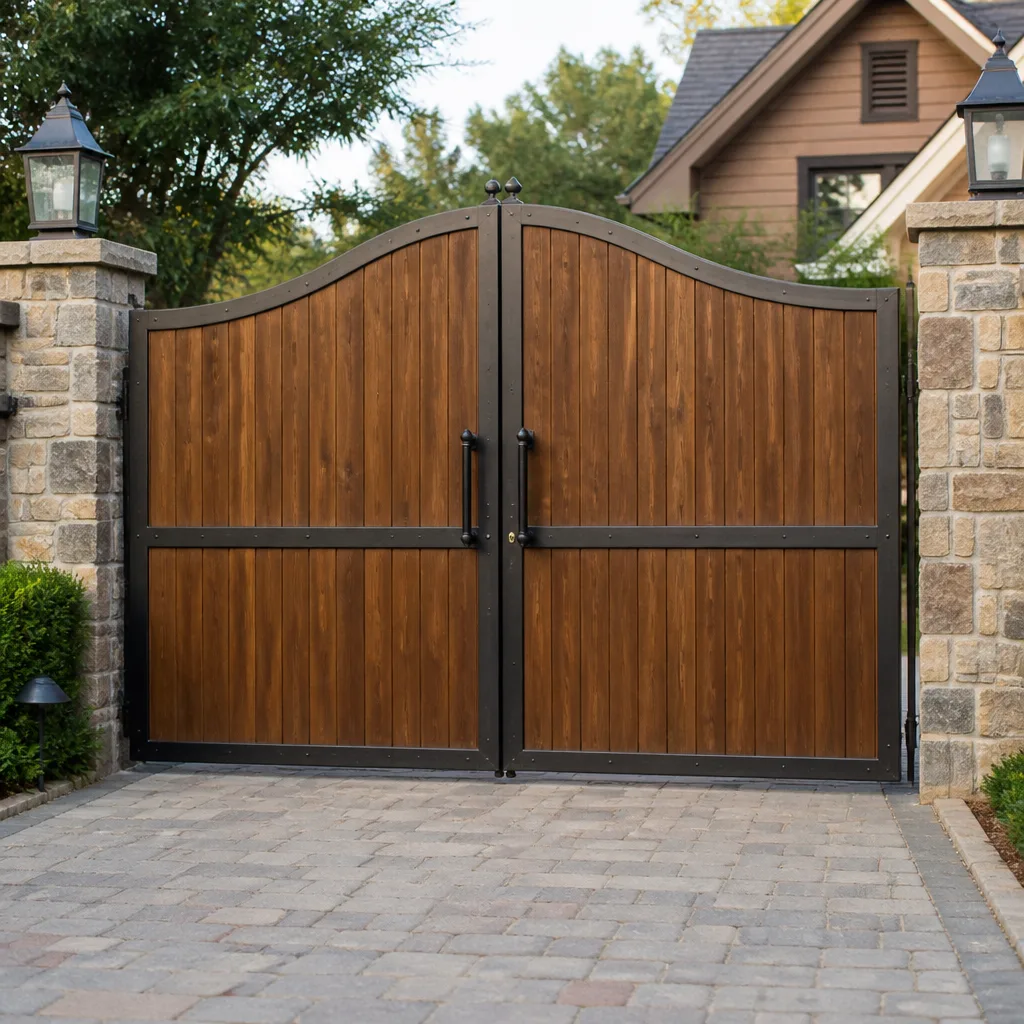 Wood & steel frame
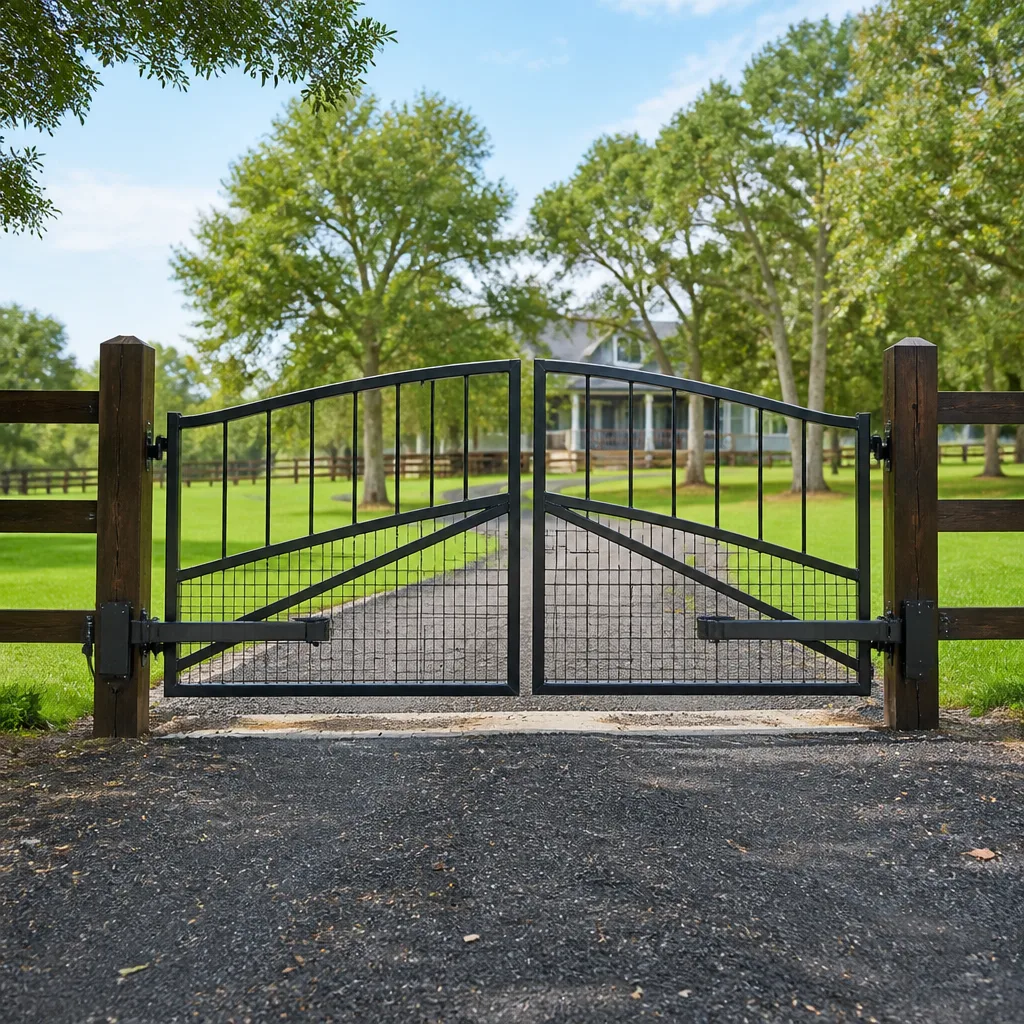 Farm & ranch
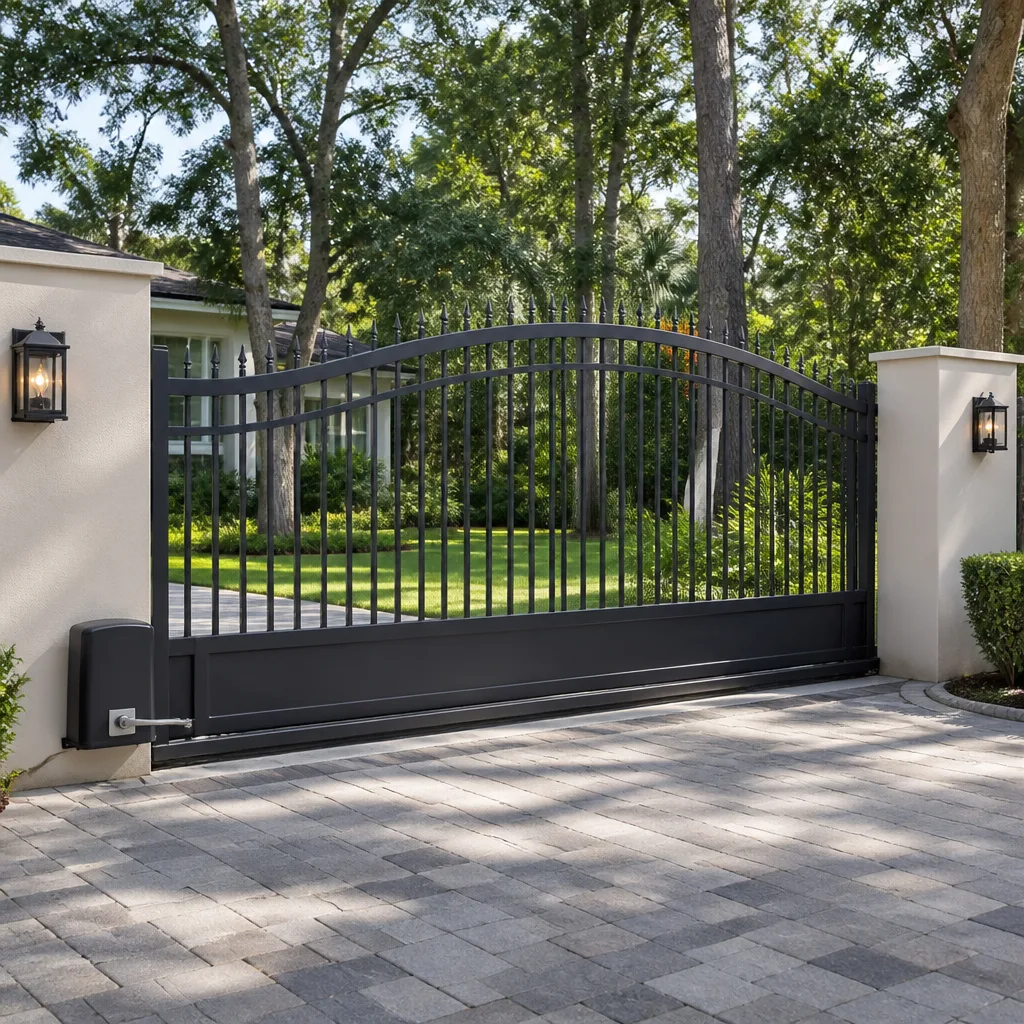 Sliding driveway gates
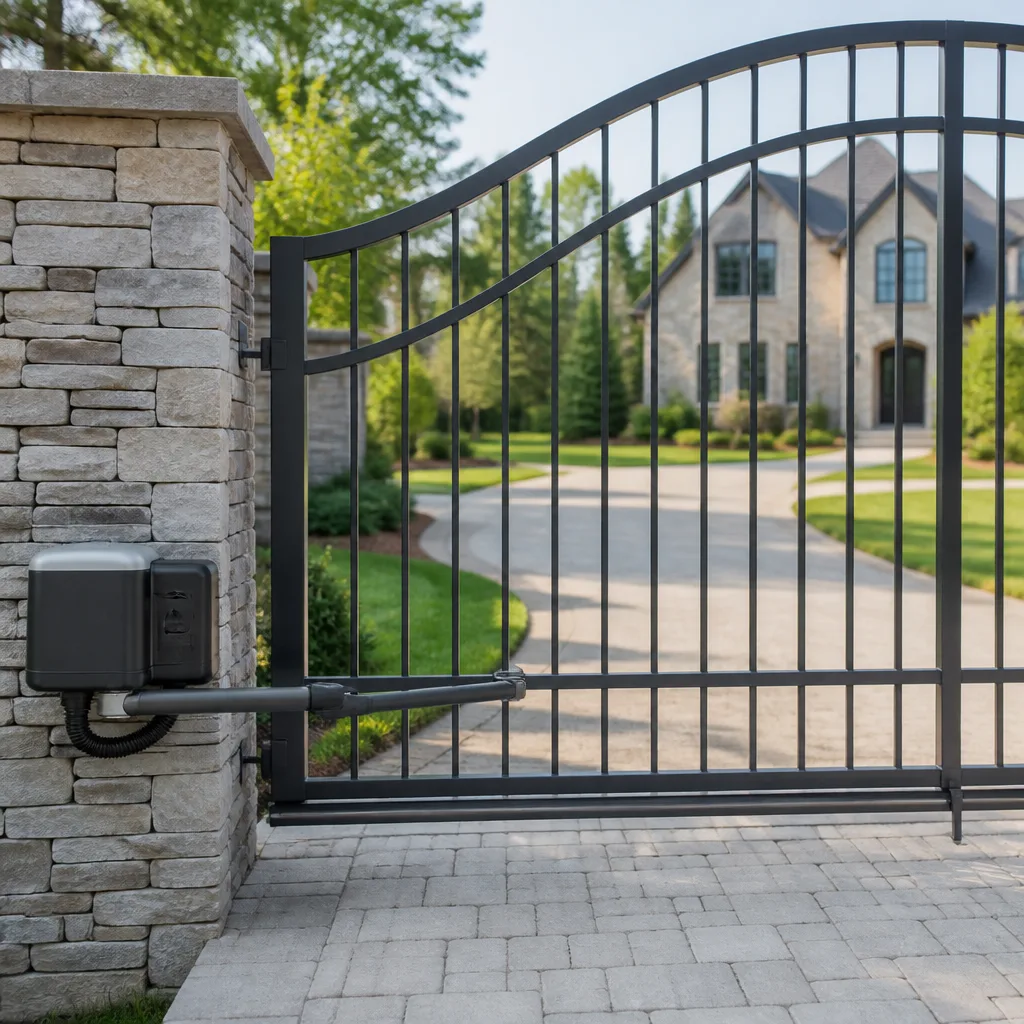 LiftMaster operators
Free on-site gate assessment - hinges, posts, and your LiftMaster or Nice gate operator checked before anything is quoted
The assessment is free and the quote is the invoice.
Get your free estimateThe Complete Guide to Gate Repair in Tampa
Most Tampa gate failures are diagnosed wrong the first time. A technician replaces a circuit board when corroded terminals were the actual culprit, and the board fails again within a season. This guide maps the failure patterns specific to Tampa’s salt air, subtropical humidity, and storm-season power surges so you can understand what is actually happening to your gate, what it costs to fix, and which problems genuinely require a specialist versus which ones you can address yourself. By the end, you will know more about your gate than half the generalist technicians who get sent out to look at it.
Styles & brands we work with
Quick Answer
Gate repair in Tampa typically costs $150 to $450 for mechanical or electrical fixes, with most issues diagnosed and repaired in a single visit by a technician who knows your specific operator brand. The most common culprits in this area are salt-air corrosion on terminal connections, control board failure from summer lightning surges, and misaligned safety sensors. A dedicated gate specialist can identify the root cause in the first service call instead of replacing parts that are not actually broken.
Table of Contents
- Why Tampa’s Climate Creates Gate Failures Other Cities Never See
- The Three Categories of Gate Failure: Structural, Mechanical, Electrical
- Brand-Specific Failure Patterns We See Across Tampa
- Storm Season and Your Gate: Why June Through September Is Hardest on Control Boards
- What You Can Legally Fix Yourself vs. What Requires a Florida Contractor
- What Gate Repair Actually Costs in Tampa
- Repair or Replace: How to Make the Right Call
- Common Mistakes to Avoid
- When to Call a Professional
- Frequently Asked Questions
- The Bottom Line
Why Tampa’s Climate Creates Gate Failures Other Cities Never See
Tampa sits on a peninsula between Tampa Bay and the Gulf of Mexico. That geography means everything metal outside your home is exposed to salt-laden air moving inland from two directions. For a gate with dozens of electrical connections, terminal blocks, and exposed actuators, that airborne salt is a slow-moving corrosive agent working every single day, even when the gate is not in use.
Salt corrosion attacks gates at the connection points first. A terminal that carries low-voltage control signals corrodes quietly, building up resistance until the operator board reads a fault and locks the gate in place. Homeowners in South Tampa, Davis Islands, and anywhere within a mile or two of the bay see this pattern more acutely than properties in Temple Terrace or New Tampa, though the difference is one of speed, not kind. The same corrosion cycle eventually reaches every outdoor gate in the Tampa metro.
Humidity compounds the corrosion problem. Tampa’s average relative humidity runs above 70% for most of the year, which means the thin oxide layer that would normally passivate a metal surface stays wet and electrochemically active instead. The result is corrosion that never really stops. We have pulled terminal strips off a two-year-old LiftMaster operator near Bayshore Boulevard that looked worse than a ten-year-old unit installed inland.
The third factor is heat. Summer days in the low-to-mid 90s push surface temperatures on a dark-colored gate to 130 degrees or more. Operator housings trap that heat, and when an actuator or control board runs hot day after day, its service life shortens measurably. Heat expansion and contraction also works bolts and hinges loose over the course of a year, which is why seasonal mechanical tightening is a recurring part of Gate Repair in Tampa for manual and automatic systems alike.
The Three Categories of Gate Failure: Structural, Mechanical, Electrical
Every gate problem falls into one of three buckets, and treating the wrong bucket is the single most common reason customers pay for repeat repairs. Here is how each category works and how to tell them apart before you call anyone.
- Structural failures involve the physical gate itself: bent frames, sagging hinges, cracked welds, a post that has shifted out of plumb. These problems usually announce themselves visually. The gate scrapes the ground, hangs unevenly, or binds mid-swing. In Tampa, structural issues are often accelerated by two things: soft sandy soil that lets posts drift during heavy rain, and the daily expansion/contraction cycle of heat that works metal joints loose.
- Mechanical failures involve the moving parts between the operator and the gate: drive chains, gear reductions, actuator arms, rollers, track wheels, and limit switches. A mechanical failure sounds wrong. Grinding, clicking, chattering, or a gate that starts and stops in jerks all point here. These are often repairable, but the repair has to address why the part failed. A worn gear in a FAAC operator is sometimes just age, but it can also mean the gate is binding against a misaligned track and overloading the drive every cycle.
- Electrical failures involve the control board, safety sensors, keypads, loop detectors, intercom wiring, and power supply. The symptom is usually a dead gate, a gate that reverses for no reason, or an operator that loses its limit settings. Electrical failures spike during Tampa’s summer storm season, and the majority involve either surge damage or corroded low-voltage connections, not a genuinely failed board. A technician who replaces the board without checking the terminals and ground path fixes the symptom, not the problem.
In our experience, maybe one in three service calls we take in Tampa starts with a customer who believes the operator is dead when the real fault is in the low-voltage side: a photo eye out of alignment, a corroded terminal, a loop detector that has drifted out of tolerance. The repair is often simple once the right category is identified. For electric gate issues specifically, our Electric Gate Repair in Tampa page walks through the diagnostic process in detail.
Brand-Specific Failure Patterns We See Across Tampa
Different operators fail in different ways, and knowing your brand narrows the diagnosis dramatically. Kingston Gate Repair works across nine major gate brands, and after years of service in this market, certain patterns have become predictable.
LiftMaster
LiftMaster’s residential and light-commercial operators are common around Tampa, and most of them are solid machines. The pattern we see most is relay degradation on units that have cycled more than a few thousand times, plus limit-switch drift after power interruptions. LiftMaster’s newer boards include basic surge suppression, which helps, but nothing survives a direct nearby lightning strike. The most avoidable LiftMaster failure is corrosion on the accessory terminal block, which is easy to access and clean during routine service but rarely touched until it fails.
Elite
Elite operators, especially their slide-gate actuators, are popular with Tampa’s gated communities and light-commercial properties. They are built for high-cycle use and generally hold up well, but the electrolytic capacitors on older control boards age faster in heat and humidity. An Elite that worked perfectly all winter and then started faulting out in June is often a capacitor problem that looks like a mysterious board failure. Elite’s heavy linear actuators also need more frequent limit-switch attention when they run hot and cold through a Tampa year.
Mighty Mule and Ghost Controls
These entry-level, homeowner-installed brands show up frequently on single-family driveways in Brandon, Riverview, and Westchase. The most common failure mode is not the operator itself but the installation wiring: undersized gauge, poorly sealed splices, and wire run too close to irrigation lines. A Mighty Mule with a dead battery every two weeks in Tampa is almost always a charging circuit fighting a corroded connection, not a bad battery. These systems are also less forgiving of voltage fluctuation than professional-grade equipment, which makes surge protection more important on them, not less.
DoorKing systems, common on Tampa commercial properties and larger estates, have their own signature issue: ground loops on long control-wire runs and photo-eye alignment drift after heavy rain shifts the mounting pad. The point here is that every brand fails in a signature way, and a technician who works on all of them daily can usually tell you what is wrong from a phone description before ever seeing the gate.
Storm Season and Your Gate: Why June Through September Is Hardest on Control Boards
Tampa’s afternoon thunderstorms do not just soak your yard; they push thousands of volts through the power grid and into anything connected to it. Gate operators that sit fully wired to a 120v or 240v line, with low-voltage loops and sensors radiating into the ground, create multiple paths for surge current to enter. The result is the single highest-volume failure category we see from June through September: fried control boards, blown transformers, and scrambled memory on operator brains.
Surge damage does not always kill a board instantly. More often, a near-miss strike or grid surge weakens the board’s components, and the failure shows up a week later as a gate that starts randomly, loses its limits, or refuses to respond to the remote. Homeowners misdiagnose this as “the remote battery died” or “the keypad is broken” when the actual casualty is the board’s radio receiver or a voltage regulator.
The brands that handle surge best are the professional-grade ones designed for commercial duty cycles: FAAC, BFT, and DoorKing all build more robust power-supply filtration into their boards. LiftMaster’s mid-tier lineup is adequate for most residential use. Entry-level Mighty Mule boards are the most vulnerable, which is why we strongly recommend a dedicated surge suppressor on the operator’s power feed for any Tampa installation within ten miles of the bay or in an area with frequent afternoon lightning.
Here is the actionable sequence for storm-season gate protection:
- Install a quality surge suppressor at the operator’s disconnect, not just at the panel. This costs a fraction of a control board replacement.
- Make sure the operator chassis is properly earth-grounded. Many Tampa installs skip this, especially on retrofit jobs.
- After a known close strike, test the gate’s full cycle: open, pause, close, reverse on the safety edge. Any odd behavior means a board-level check is warranted.
- If the gate does fail, do not keep cycling the operator hoping it will reset. Repeated attempts on a damaged board can fry the replacement-charge side and make the repair more expensive.
What You Can Legally Fix Yourself vs. What Requires a Florida Contractor
Florida law regulates gate work at the point where it intersects with electrical and building codes. The line is not always obvious, so here is a practical breakdown of what a Tampa homeowner can do without a license and what should go to a professional.
Work a homeowner can reasonably do themselves:
- Cleaning photo-eye lenses and realigning them so the beam connects
- Tightening visible hinge bolts and greasing the gate’s pivot points with a proper outdoor lubricant
- Replacing remote batteries and reprogramming remotes when the operator manual explains the procedure
- Clearing debris from the track path on a slide gate
- Trimming vegetation that blocks sensors or physically interferes with travel
Work that belongs with a licensed and qualified technician:
- Replacing or rewiring a control board. The board is the brain of the whole system, and a wrong connection burns out components downstream.
- Any work on the gate’s line-voltage power feed. This is 120v or 240v work and carries serious shock risk.
- Adjusting or replacing torsion springs on a self-closing or spring-loaded gate assembly. Gates do not use the same high-tension springs as garage doors, but spring-loaded hinges and closers still store enough energy to cause real injury if they let go under tension.
- Welding repairs on a bent or cracked gate frame. Structural welding done wrong weakens the gate further, and a falling gate section is a hazard to anyone in its path.
- Programming safety loops, reversing edges, and intercom integration. These are life-safety devices, and an incorrectly configured reversing mechanism can crush a person or pet.
One note specifically for Tampa: fence and gate permits can apply in certain zoning situations, especially on corner lots and community-entry gates. Before a new gate goes in, the permit question should be answered by someone familiar with Hillsborough County and city of Tampa requirements. For a full walkthrough of what installation involves, see our Gate Installation in Tampa page. For a broader look at repair diagnostics, start with Kingston Gate Repair home.
What Gate Repair Actually Costs in Tampa
Gate repair pricing in Tampa varies by the part, the brand, and the site, but having a general range helps you recognize a fair quote. The most common repairs we perform fall into predictable bands:
| Repair Type | Typical Tampa Range | What It Includes |
|---|---|---|
| Photo eye / safety sensor realignment or replacement | $95 – $250 | Sensor, mounting bracket, wiring connector check |
| Remote or keypad programming | $75 – $150 | Transmitter, receiver programming, battery |
| Limit switch adjustment or replacement | $120 – $280 | Switch, cam adjustment, full travel test |
| Corroded terminal repair and cleaning | $100 – $220 | Terminal strip replacement, sealant application |
| Control board replacement | $280 – $650 | Board, surge protection check, programming |
| Actuator arm or drive chain replacement | $220 – $550 | Part, alignment, full cycle testing |
| Hinge and structural tightening service | $130 – $300 | All pivots, gate re-leveling, lubrication |
| Full diagnostic visit | $85 – $150 | Complete system check, written findings, exact quote |
These ranges reflect genuine Tampa market pricing for reputable gate specialists, not marketing teaser rates. The spread within each range depends on the operator brand, the gate’s size and weight, and how accessible the components are. A control board on a DoorKing slide-gate operator with a buried conduit run costs more to service than the same repair on a surface-mounted Mighty Mule beside the post.
The important thing to understand about gate repair pricing is that the quote is agreed before any work starts. A reputable Tampa gate company diagnoses the problem, explains exactly what needs replacement and why, and gives you a firm number before turning a wrench. If a technician wants to start work before stating a price, that is a red flag. You should never get an invoice larger than the figure you approved.
Repair or Replace: How to Make the Right Call
Every gate reaches a point where continuing to repair it is a poor investment. The decision is usually straightforward when you look at two things: the structural condition of the gate itself and the age of the operator.
If the gate frame is still straight, the hinges are solid, and the problem is an operator component, repair is almost always the right financial decision. A control board, limit switch, or actuator arm costs a fraction of a full operator replacement, and a rebuilt operator with clean terminals and fresh surge protection can run for many more Tampa seasons.
Replace the operator when any of these are true:
- The operator is more than 12 to 15 years old and parts are discontinued or only available used
- The board has failed twice in 18 months, indicating a deeper problem or obsolete engineering
- The operator is an entry-level unit that has been asked to cycle far beyond its design spec on a heavy gate
- The gate’s use case has changed: more traffic, additional users, or a need for intercom and access-control integration
Replace the gate itself when the frame is rusted through in multiple places, the post has shifted so far that every repair fights the geometry, or a vehicle impact has bent the structure beyond what welding can safely correct. A new gate paired with the right operator is sometimes the most economical answer, and the numbers are usually worth comparing before throwing more money at a frame that is already failing.
Common Mistakes to Avoid
- Replacing the control board without addressing surge exposure. In Tampa’s storm climate, a board that dies once will die again unless a surge suppressor is installed or the ground path is corrected. This single mistake is responsible for more repeat failures than any other.
- Ignoring a gate that scrapes or binds. A gate dragging on the driveway is not a cosmetic issue; it is a mechanical one that overloads the operator every cycle. Every month you ignore it shortens the operator’s life and enlarges the eventual repair bill.
- Using indoor-grade electrical tape on outdoor splices. Tampa heat turns cheap tape to goo and humidity corrodes the splice beneath it. Outdoor-rated shrink tubing and sealed junction boxes are the only things that hold up here.
- Adjusting the safety sensors outward to stop false reversals. That “fix” usually means the sensors are now pointed past each other instead of at each other, which can disable the gate’s reversing protection entirely. The sensor should stop exactly on its reflector or receiver.
- Not asking whether the technician knows your operator brand. A generalist who is learning your LiftMaster or FAAC on your driveway is paying for an education with your money and your time. Brand-specific experience means the right part and the right diagnosis in one visit.
- Putting off a gate that reverses for no reason. False reversals are usually a sensor, loop, or wiring issue, but they are also the signal that a safety system is not functioning correctly. A gate that behaves unpredictably should be locked out and replaced with pedestrian access until it is inspected.
When to Call a Professional
Call a gate specialist when your gate stops mid-travel and will not reset, when you hear grinding or chattering from the operator, when the gate reverses on its own, or when the keypad and remotes all stop working at once. These are all signs of a component-level problem that parts-swapping will not solve. You should also call before any storm season if your gate has never had its ground connection and surge exposure checked, since a $100 surge suppressor can save you a $600 board replacement in July. Kingston Gate Repair offers free estimates in Tampa and works on LiftMaster, FAAC, BFT, Linear, Viking, Ghost Controls, DoorKing, Elite, and Mighty Mule. Call (877) 752-3303 and tell us which brand is on your gate; that single detail tells us a lot before the truck even rolls.
Frequently Asked Questions
Rain intrusion is the likely answer, and the usual entry point is a cracked wire jacket, an unsealed splice, or a photo-eye housing that has lost its weather gasket. Water bridges the low-voltage circuit and the operator interprets it as a fault. The fix is to find and seal the wet connection, not to keep drying out the board. In Tampa’s rainy season, a gate that fails during heavy rain but works again after a dry day is the classic signature of water intrusion at a splice or sensor.
Control board replacement in Tampa typically runs $280 to $650 depending on the operator brand and whether the technician also addresses the underlying surge or corrosion issue that caused the failure. A LiftMaster or Elite board on the low end of that range assumes the board is the only thing wrong and the install is accessible. Call (877) 752-3303 with your operator’s brand and model; we can usually give you a tighter number over the phone.
Yes, in many cases. A clear description of the brand, the symptom, and when it started narrows the problem to one or two likely components. We have worked on enough Tampa gates across all nine supported brands that a customer saying “my FAAC opens halfway and stops” points toward a specific set of limit-switch and load issues before we ever see the gate. The diagnostic visit confirms the call’s conclusion instead of starting from a blank sheet.
Most gate repairs are completed in one visit, usually within one to two hours on site. The variable is parts availability; a stock control board for a common LiftMaster or Mighty Mule is faster to source than a specialty DoorKing accessory board. A gate specialist carries common parts and supplies on the truck, which is a meaningful advantage over a generalist who sees one or two gates a month.
Coverage depends on your policy and the cause of the damage. Storm-related damage, including lightning strikes and fallen debris, is often covered under the windstorm or named-peril provisions of a Florida homeowner’s policy, subject to your deductible. General wear and tear, corrosion, and mechanical breakdown are typically not covered. It is worth reviewing your policy’s language on “other structures” and then calling (877) 752-3303 for a repair scope and written estimate to submit with any claim.
We handle all three scenarios: gate-only replacement when the frame fails but the operator is sound, operator replacement when the gate structure is fine, and full gate-plus-operator replacement when both have reached the end of their service life. The decision comes down to a structural inspection of the gate and an honest look at the operator’s age, brand, and parts availability. For a detailed walkthrough of replacement options, see our Gate Installation in Tampa page.
Kingston Gate Repair is brand-qualified across nine operator lines: LiftMaster, FAAC, BFT, Linear, Viking, Ghost Controls, DoorKing, Elite, and Mighty Mule. That coverage spans entry-level consumer units on up through heavy-duty commercial operators and access-control systems, so the technician who arrives already knows your specific equipment instead of learning it in your driveway. For electrical and automation-specific diagnostics, see Electric Gate Repair in Tampa.
The Bottom Line
Gates in Tampa fail for a predictable set of local reasons: salt-air corrosion eating connection points, summer storm surges killing control boards, and heat cycling loosening mechanical joints. The right diagnosis is everything. A specialist who knows your brand can usually identify the problem in the first visit, fix it before a small issue becomes a big bill, and advise you honestly on repair versus replacement. Kingston Gate Repair has been serving the Tampa market as a dedicated gate specialist, working across nine major operator brands and every type of gate from manual driveway swings to commercial access-control systems. If your gate is acting up or simply due for a pre-season check, call (877) 752-3303 for a free estimate. Tell us the brand. We will take it from there.
Written by the team at Kingston Gate Repair, serving Tampa since 2013.
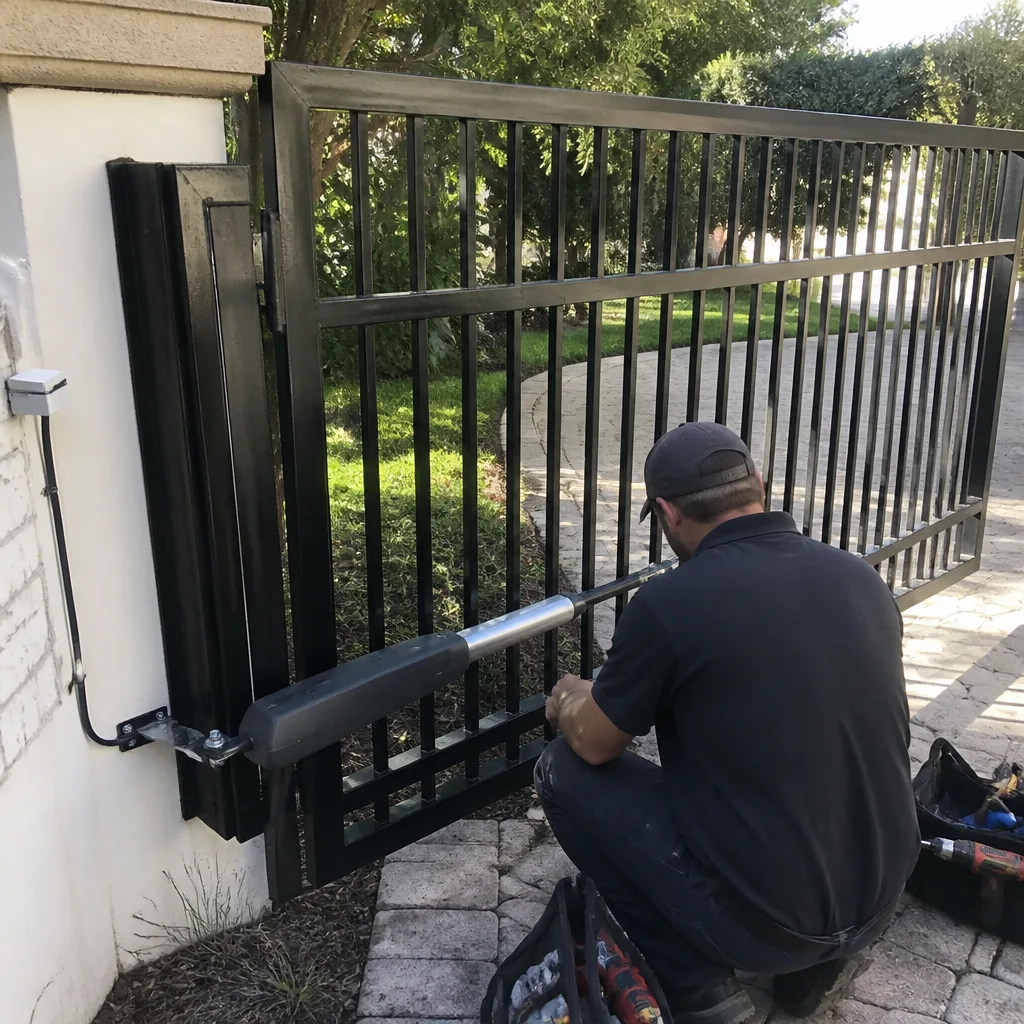
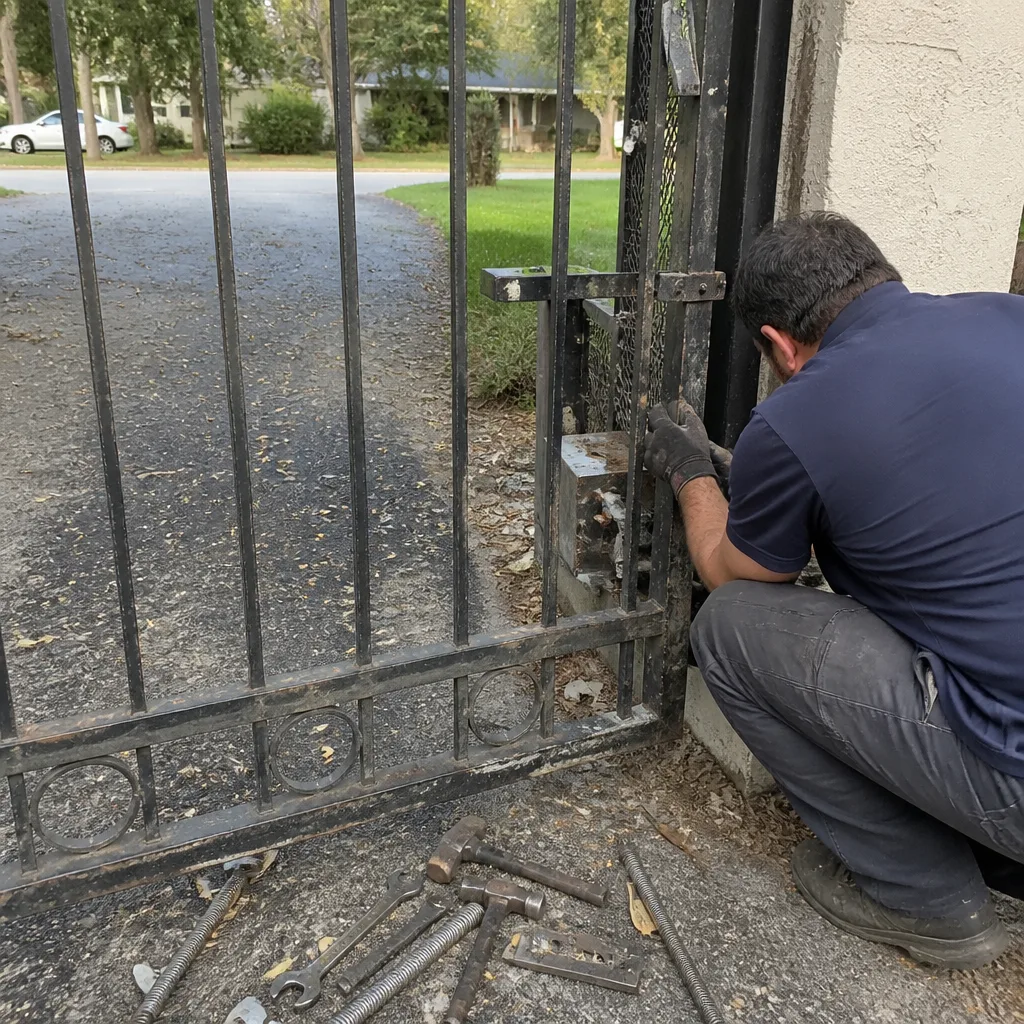
See the difference
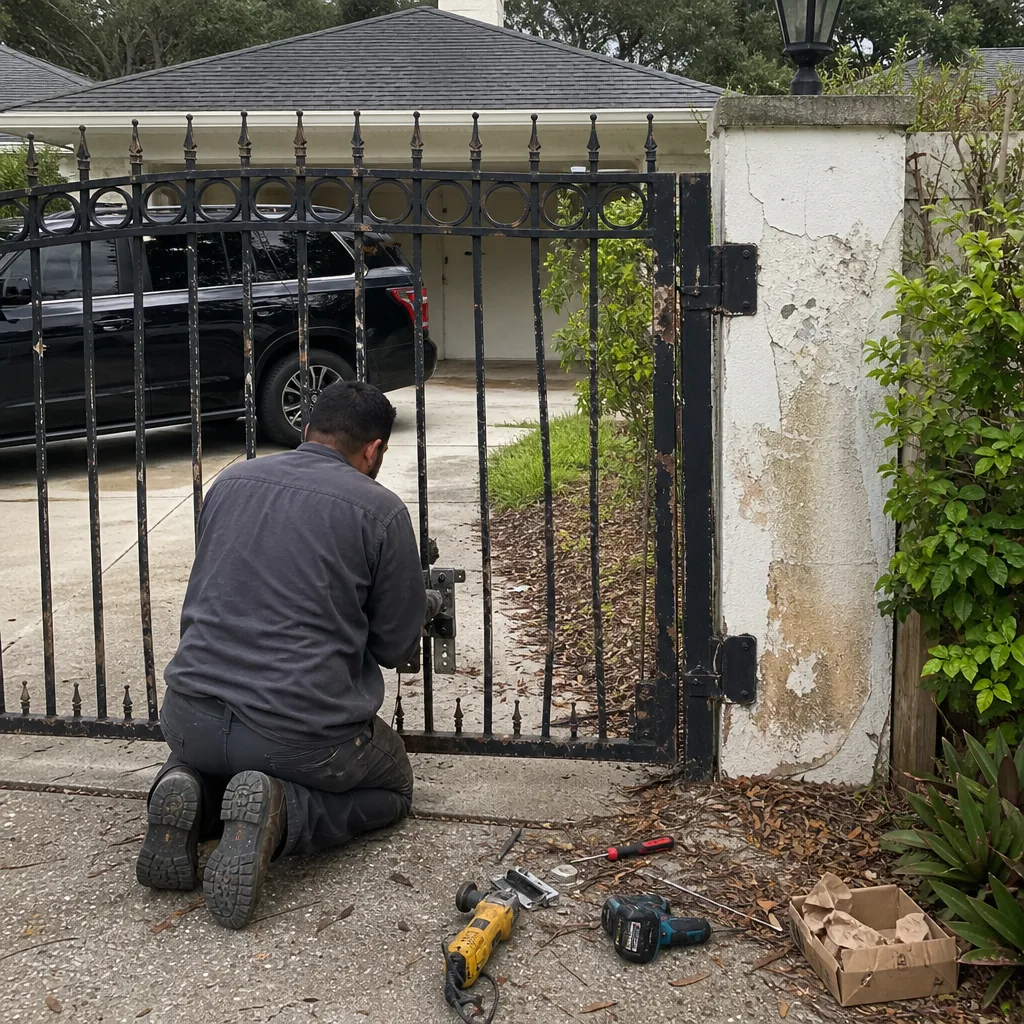 Before
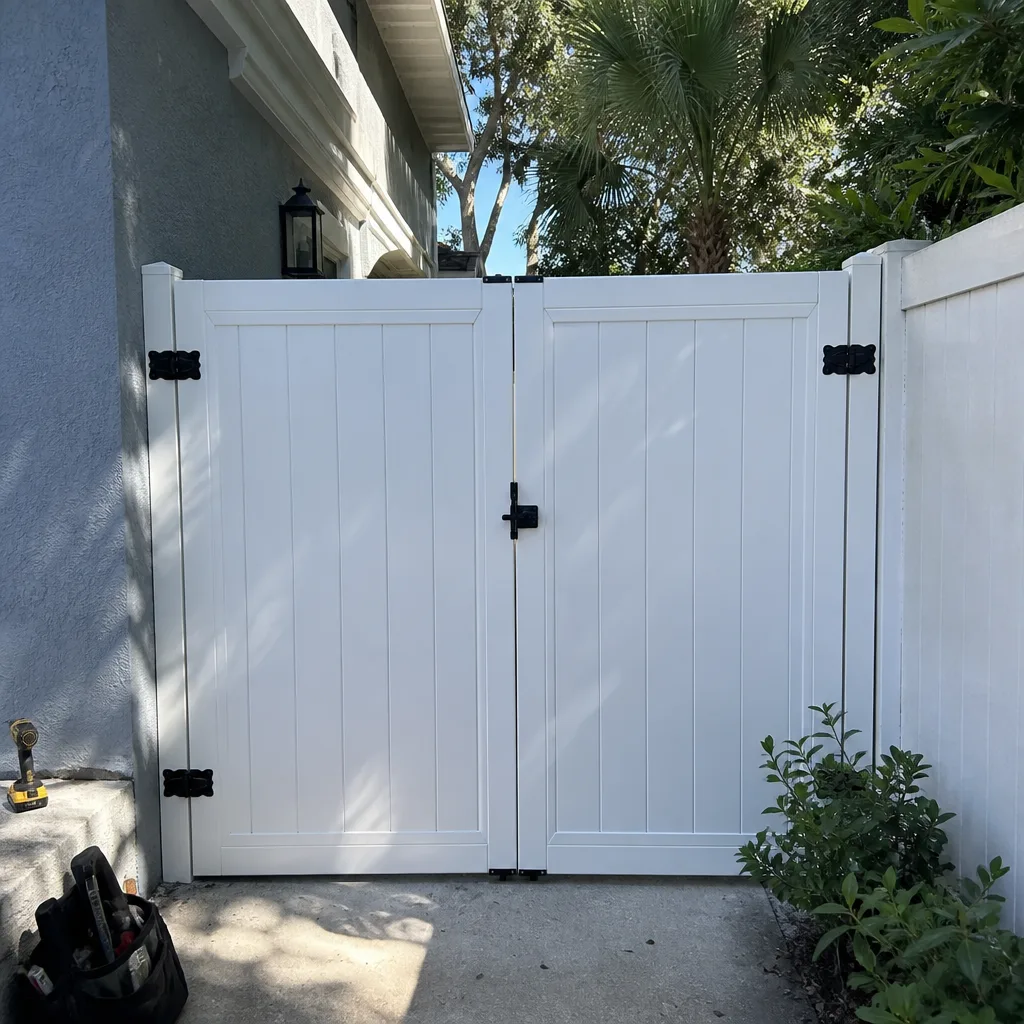 After
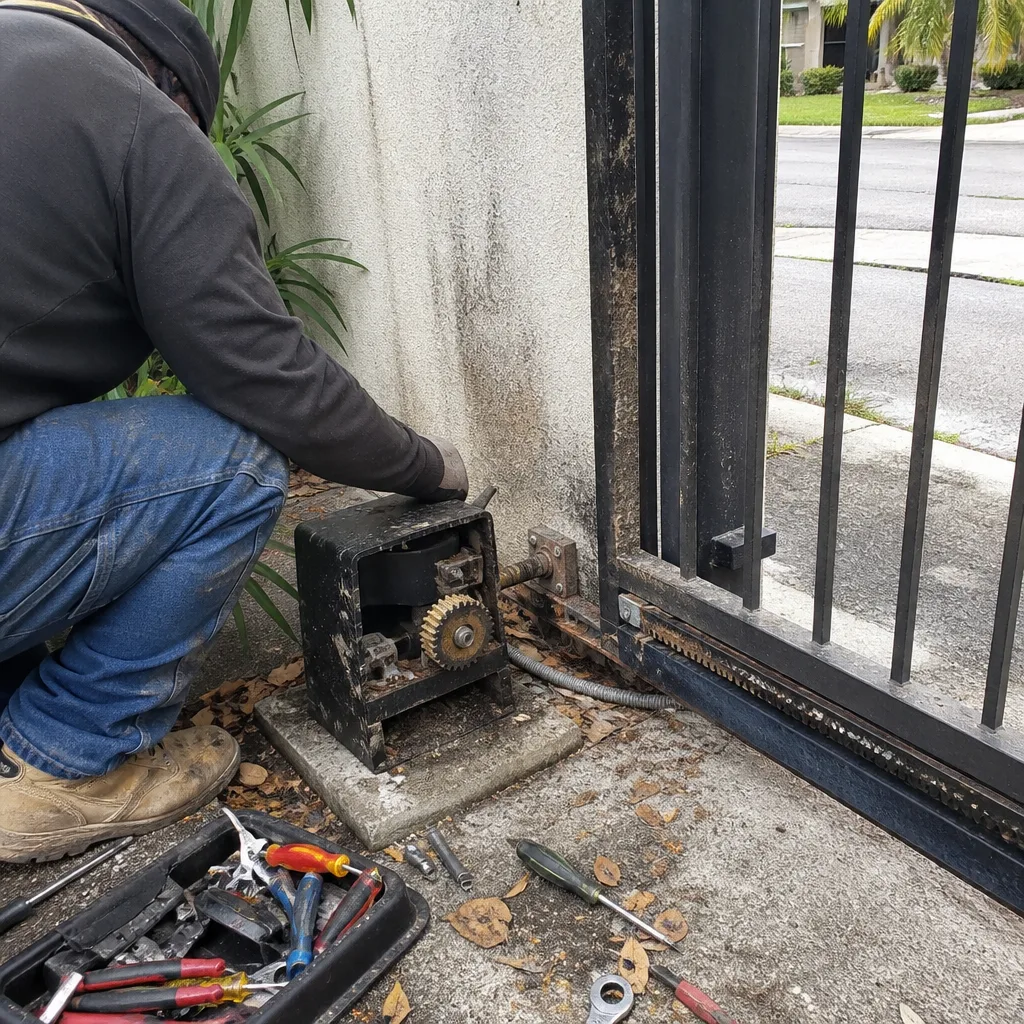 Before
 After
 Before
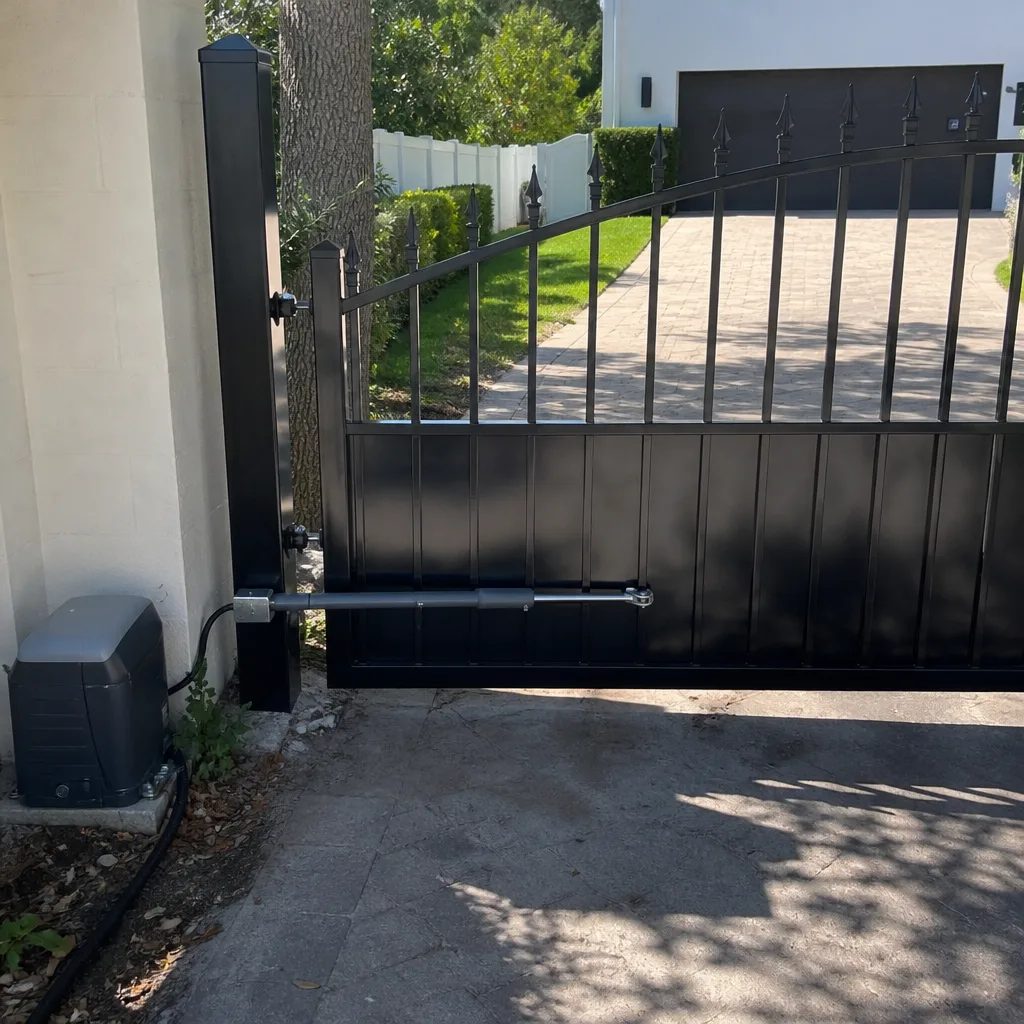 After