
Last updated October 31, 2026
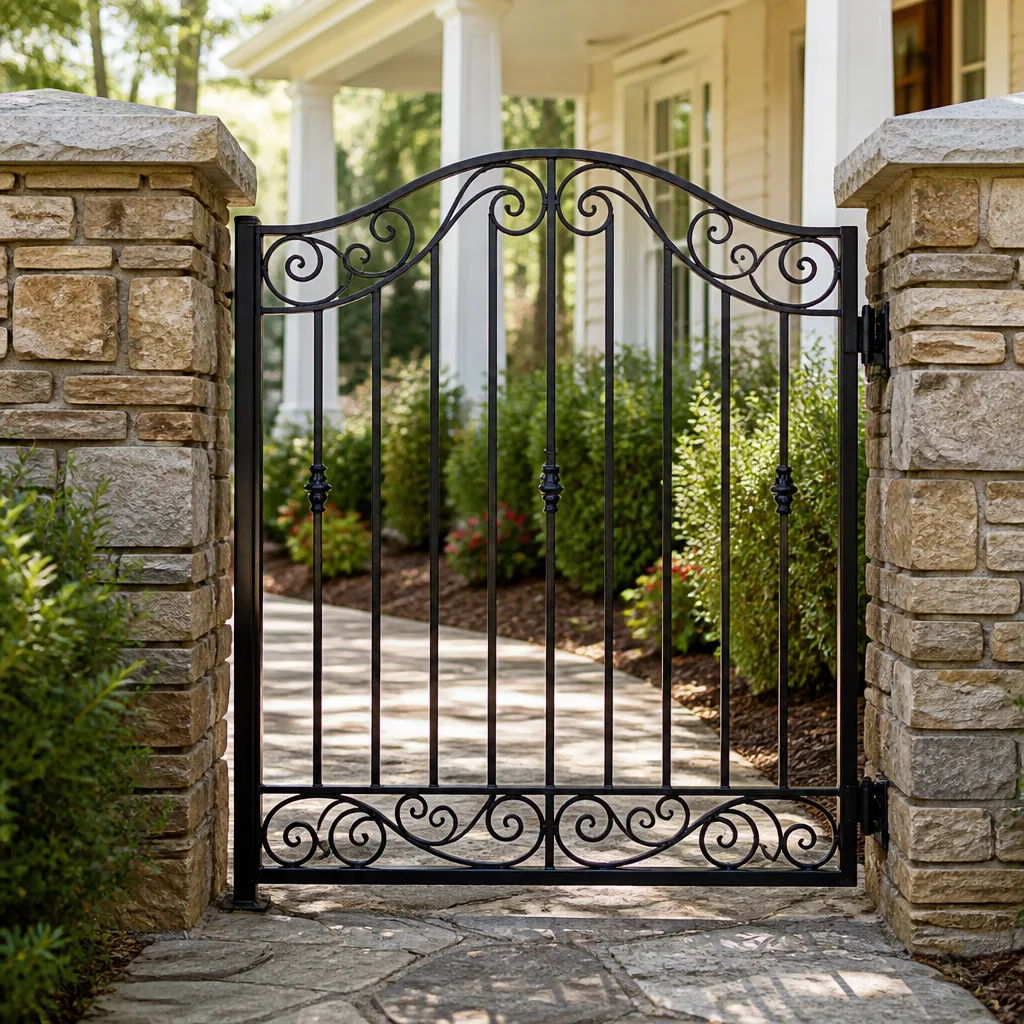 Wrought iron
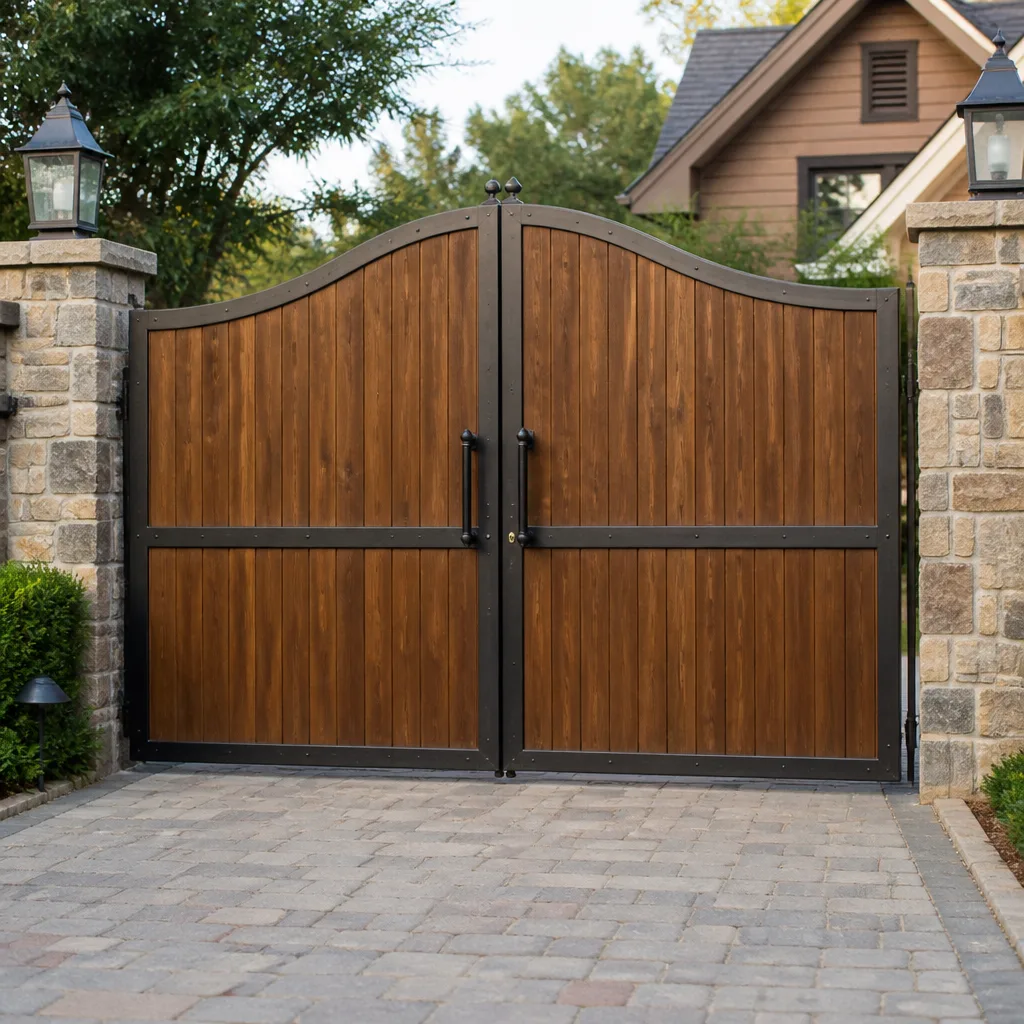 Wood & steel frame
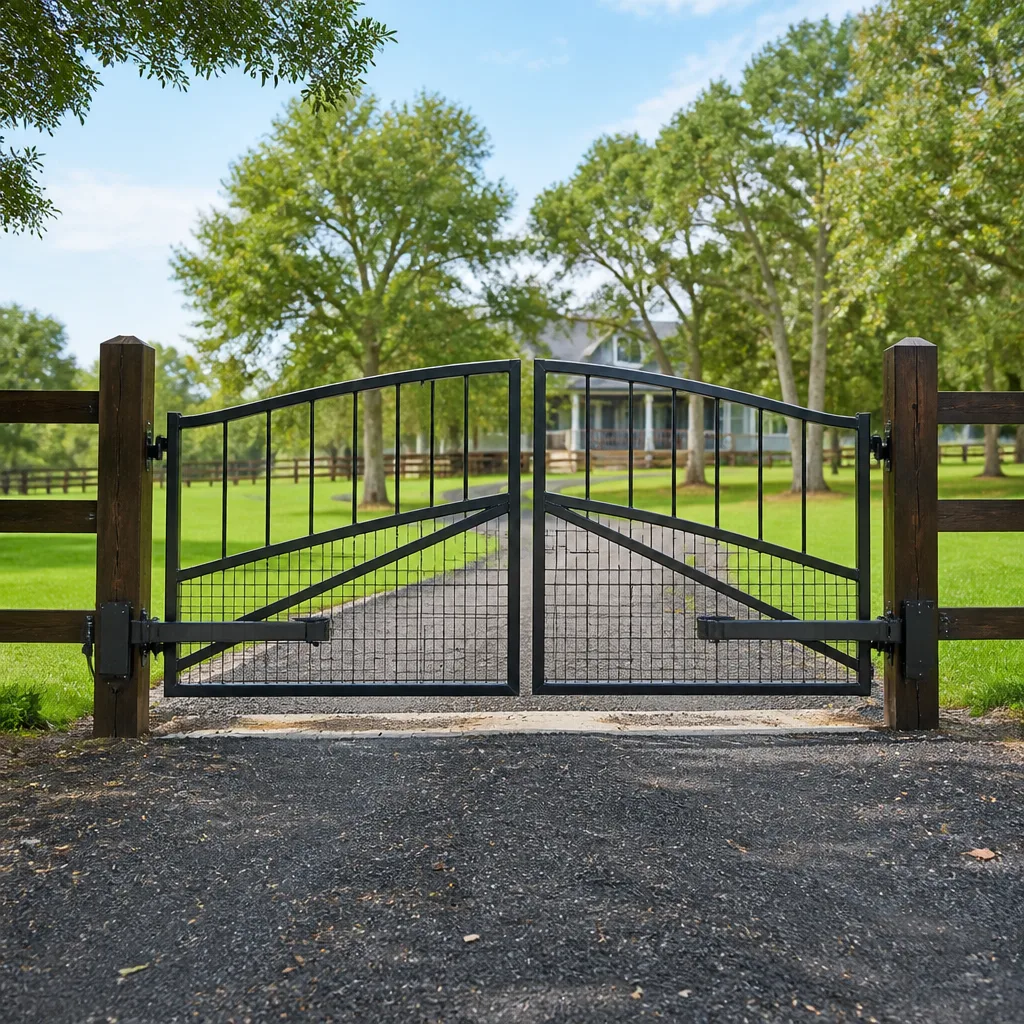 Farm & ranch
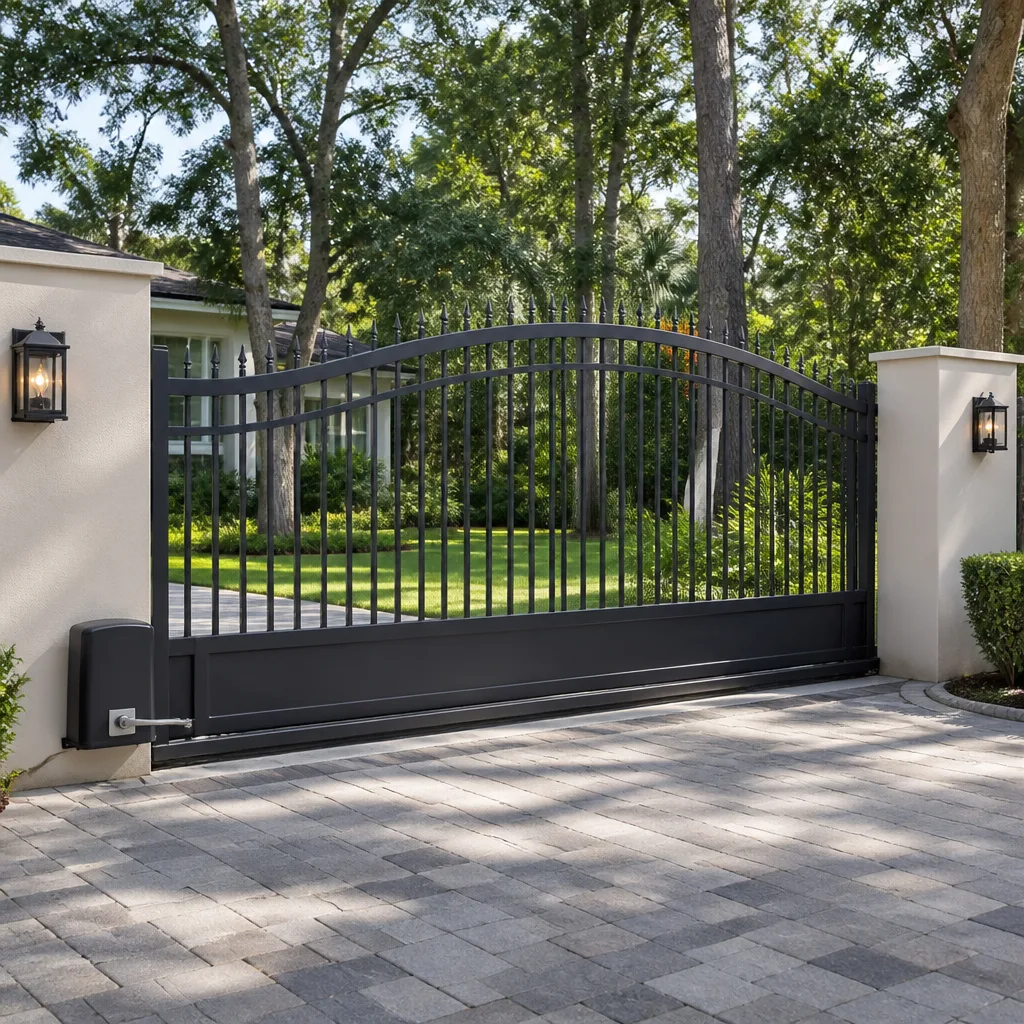 Sliding driveway gates
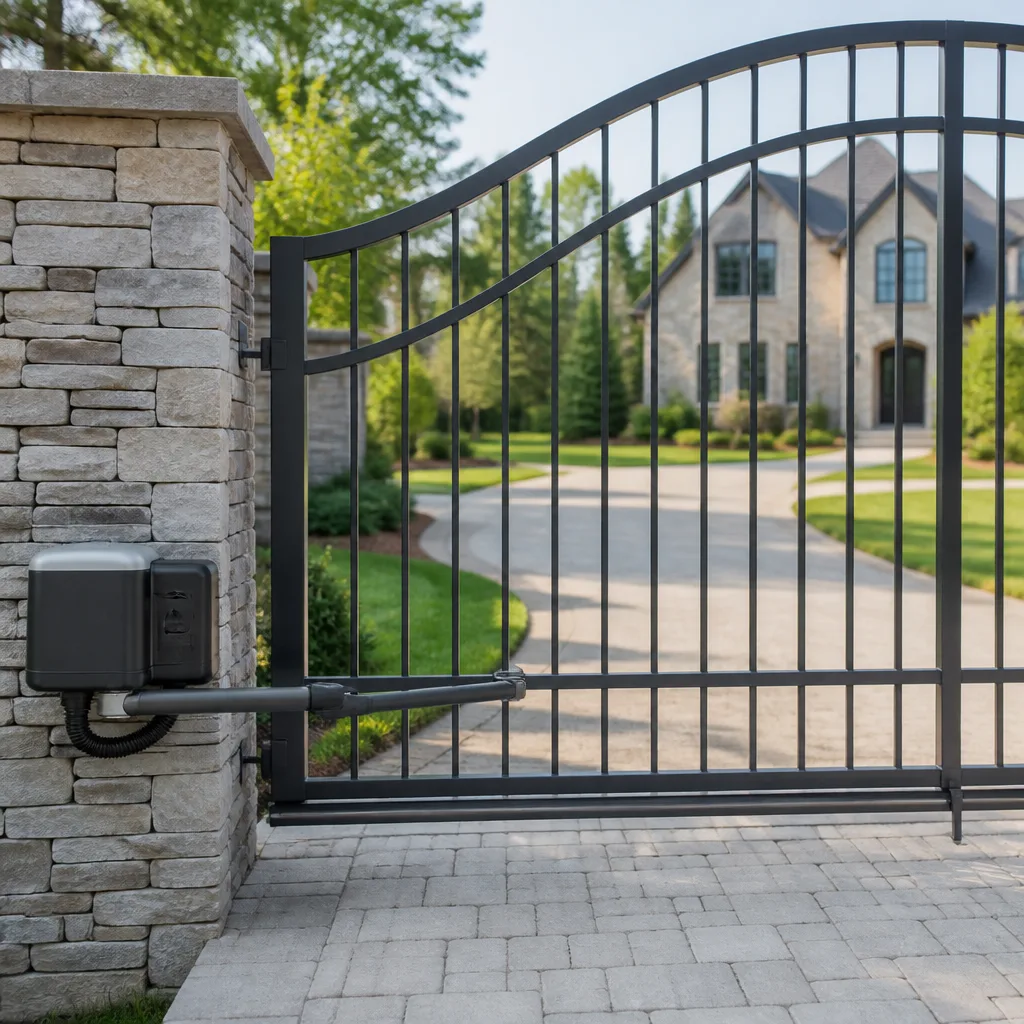 LiftMaster operators
Free on-site gate assessment - hinges, posts, and your LiftMaster or Nice gate operator checked before anything is quoted
The assessment is free and the quote is the invoice.
Get your free estimateGate Repair Permits, Codes & Inspections in FL: What You Need to Know
Replacing a gate operator in Florida can trigger an electrical permit requirement that neither the homeowner nor the contractor pulls – and that unpermitted work shows up as a defect on a home inspection years later. It happens in Tampa more often than you’d think. A buyer’s inspector flags the gate, the title company asks for permits, and the seller is suddenly negotiating a credit over a gate that worked fine for five years. This guide draws the actual line between routine maintenance that needs no permit and the specific jobs that do, so you don’t over-permit a hinge repair or unknowingly skip the paperwork on a job that will come back to haunt you at resale. For related reading, see our Gate Repair Warning Signs: A Tampa Homeowner’s Reference Guide.
Quick Answer
Most Gate Repair services in Florida – hinge replacements, wheel swaps, sensor realignment, control board replacements – are routine maintenance that requires no permit. You typically need a permit only when the work involves structural changes (new footings, widening the opening, installing a new gate where none existed) or new electrical work (a new operator, a new power run, a new intercom or access control system). In Tampa and Hillsborough County, local thresholds can be stricter than state minimums, especially for electrical work on automatic gates.
Styles & brands we work with
Table of Contents
- The Actual Line: Permit Work vs. Routine Maintenance
- What the Florida Building Code Says About Gates
- Hillsborough County and City of Tampa Specifics
- Electrical Permits for Automatic Gate Operators
- HOA Gate Standards vs. Municipal Code
- Commercial Access Control and Florida Fire Code
- Unpermitted Gate Work at Resale: What Happens and How to Fix It
- What the Inspection Process Actually Looks Like
The Actual Line: Permit Work vs. Routine Maintenance
Florida Building Code (FBC) chapter 1, section 105 lists the work that requires a permit. Gates are not named as a category, which is exactly why so many people get this wrong. The trigger is not “gate work” – the trigger is what the work involves: structural alteration, electrical addition, or a change to the building envelope. Here is the practical version we use when a Tampa homeowner asks us whether their job needs a permit.
Routine maintenance and repair – no permit needed:
- Replacing a worn hinge or roller on an existing gate leaf
- Replacing a failed gate wheel or track component on a slide gate
- Adjusting limit switches, safety loops, or photo-eye sensors
- Replacing a control board with a drop-in board from the same brand (BFT, Linear, or Viking boards are all straight swaps in our service area)
- Replacing a remote, keypad, or receiver
- Welding a cracked picket or reinforcing an existing frame member without changing the opening
- Rebalancing a swing gate leaf on its existing hinges
Work that does require a permit:
- Installing a new gate where one did not exist – a new opening in a fence or wall is an alteration to the site
- Installing new posts or footings that change the structural support of an existing gate
- Widening or relocating a gate opening
- Adding a new automatic operator to a gate that was previously manual – this is an electrical installation
- Running a new electrical circuit to a gate, even a low-voltage one
- Installing a new intercom, keypad entry, or access control system that ties into building electrical
The distinction matters. Over-permitting a hinge replacement wastes money and time. Under-permitting a new operator can create a resale defect. We’ve seen both mistakes in Tampa’s gate repair market, and the second one costs far more to fix.
What the Florida Building Code Says About Gates
The Florida Building Code is a statewide code, enforced locally. That means the same section can be interpreted slightly differently depending on which municipality you’re standing in. For gates, the relevant sections fall under three headings: structural (chapter 16), electrical (chapter 27 and the National Electrical Code incorporated by reference), and life safety (chapter 10, chapter 33).
The structural side is straightforward: a gate post set in concrete is a foundation element. If you are setting new posts, the FBC requires the work to meet wind-load standards that are specific to Florida’s hurricane exposure. Tampa sits in a 140 mph wind zone; gate posts for a swing or slide gate must be sized and embedded accordingly. This is not a paperwork technicality. An undersized post snaps in a tropical storm and the gate leaf becomes a projectile.
The electrical side is where most permit questions actually land. The FBC incorporates the NEC for all electrical installations, and a gate operator is a listed appliance with a dedicated circuit requirement. The NEC Article 300 covers the wiring method, and Article 430 covers the motor. When a Tampa homeowner adds a BFT or Viking operator to an existing manual gate, the FBC treats that as a new electrical installation, not a repair. The difference matters because new electrical installations in Florida require a permit and an inspection.
One more FBC item that trips people up: any gate that is part of a required means of egress falls under life safety provisions. Most residential driveway gates are not in this category, but a gate across a fire lane or a gate that blocks the only path from a back door can be. Commercial properties get the full weight of code chapter 10, which is its own conversation we cover below.
Hillsborough County and City of Tampa Specifics
Hillsborough County and the City of Tampa both have building departments that issue permits, and they do not always mirror each other. If you live inside Tampa city limits on Davis Islands, your gate project talks to the City of Tampa Construction Services. If you’re in Carrollwood or Plant City, you’re under Hillsborough County Development Services. The forms are different, the fee schedules are different, and the inspector’s field checklist is different.
Three local specifics we deal with regularly:
- Electrical permit threshold. Tampa requires an electrical permit for any new circuit or new hardwired appliance, including low-voltage gate operators. Hillsborough County’s threshold is essentially the same, but the county has an expedited electrical permit process for single-item work like a gate operator swap, while the City of Tampa typically takes the standard review path unless you use a licensed electrical contractor with standing approvals.
- Fence and wall permits. Hillsborough County requires a permit for any fence or wall over 6 feet in height, and for any gate installed within a required front-yard setback. Tampa’s zoning code has its own height and setback maps. A gate installed on a nonconforming fence line can trigger a zoning review even if the gate itself is maintenance-free.
- Right-of-way gates. Gates that swing over a sidewalk or into a public right-of-way require additional review in both jurisdictions. This is not a small item: a gate leaf that swings out over a public walkway in Tampa is a liability claim waiting to happen, and the permit process is designed to catch it.
If you’re not sure which jurisdiction governs your property, the county property appraiser’s website has a jurisdiction lookup by address. It takes thirty seconds and prevents a permit application filed with the wrong office.
Electrical Permits for Automatic Gate Operators
Here is the scenario we see most often in Tampa: a homeowner has a manual gate, buys a Ghost Controls or Mighty Mule kit online, and has a handyman install it. The operator works. Five years later the house is under contract, the home inspector sees an automatic gate, the buyer’s agent asks for the electrical permit, and there is no permit. The seller now pays twice: once for the retroactive permit and inspection, and once for the contractor who has to correct whatever the handyman did wrong. This is not theoretical. It is the single most common gate-related resale defect we are called to remediate.
The FBC and NEC make the rule clear: a new automatic operator is an electrical installation. The permit is an electrical permit. The work must meet these requirements:
- A dedicated circuit to the operator with proper overcurrent protection
- UF-rated or conduit-protected wiring for underground runs
- A required ground-fault circuit interrupter (GFCI) on the branch circuit serving the operator, per NEC 210.8(A)
- Proper bonding of all metal parts, including the gate frame itself
- UL 325 compliance for the operator, which is a federal standard incorporated into Florida code
UL 325 is worth calling out separately because it is not optional. It is the safety standard that requires automatic gates to have obstruction sensors, and it mandates specific entrapment protection zones. Any operator installed in Florida without UL 325 compliance is not just unpermitted – it is unsafe and noncompliant even if a permit was somehow issued. We regularly see electric gate repair calls in Tampa that are really UL 325 remediation jobs.
HOA Gate Standards vs. Municipal Code
Florida HOAs have deed-restriction authority over gates, and that authority sometimes conflicts with what the municipal code requires. The classic Tampa conflict is a gated community entrance: the HOA wants a gate style that matches the community aesthetic, while the fire marshal requires the gate to open automatically on fire department signal. The HOA does not win that argument in Florida. Fire code preempts aesthetic preference.
The more common residential conflict is simpler. An HOA approves a specific gate design in its architectural review committee. The homeowner builds it. Then the county or city requires a permit for something the HOA never mentioned, or the HOA requires a style that the municipality will not approve at all. We have seen HOAs in South Tampa and Westchase require opaque gates for privacy on front yards where Tampa code restricts vision-obstructing gates near driveways and intersections. The result is a homeowner stuck between two authorities.
How to navigate it:
- Get the HOA’s written approval first, including any design standards for gate height, material, color, and orientation.
- Check the municipal zoning rules for your property using the jurisdiction lookup we described above.
- If the two conflict, file the municipal permit and attach the HOA approval. Most building departments will note the conflict and request a variance or modification from the HOA before issuing the permit.
- Never skip the HOA step. HOA enforcement in Florida can place a lien, and gate disputes are one of the most common enforcement actions in Hillsborough County.
Commercial Access Control and Florida Fire Code
If you manage a commercial property in Tampa, the gate conversation changes entirely. Automatic gates at commercial vehicle entrances, loading docks, and parking garage entries are covered by the Florida Fire Prevention Code, which adopts NFPA 1 and NFPA 101. A gate across a fire lane is not just a code issue – it is a life safety issue with direct enforcement authority from Tampa Fire Rescue.
Commercial access control gates must meet these standards:
- Emergency override: every automated gate on a required fire access road must open automatically on fire department activation, typically through a Knox key switch or an optical sensor system.
- Fail-safe operation: the gate must fail in the open position on power loss, or have a manual release mechanism that is accessible from both sides.
- Annual inspection: commercial gate operators and their safety devices must be inspected at least annually, with documentation retained. Tampa Fire Rescue can request these records during a fire marshal inspection.
- Entrapment protection: UL 325 requirements are stricter for commercial operators, and the fire marshal will check the photo-eyes and reversing edges during a site visit.
Failure to meet these standards is not a deferred maintenance item. It is a citationable fire code violation, and repeated violations can result in operational restrictions on the gate. We service commercial operators from Linear, DoorKing, and Elite across the Tampa area, and the first thing we do on a commercial call is check whether the gate is on a fire route and whether the inspection paperwork exists. If not, the repair comes second; the safety compliance comes first.
Unpermitted Gate Work at Resale: What Happens and How to Fix It
Florida is a disclosure state. The standard FAR/BAR residential contract asks the seller to disclose unpermitted work, and buyers’ inspectors are trained to look for it. An automatic gate is one of the first exterior items an inspector checks because it is visible, it is code-relevant, and it is easy to spot. If the inspector flags an unpermitted gate operator, here is the sequence that follows in a typical Tampa transaction:
- The buyer requests a permit search from the local jurisdiction. No permit means the item goes on the inspection response.
- The buyer requests remediation: retroactive permit plus licensed correction, or a seller credit at closing.
- If the seller chooses to fix it, the work must be done by a licensed electrical contractor, inspected, and the permit closed before closing.
- If the seller credits instead, the buyer assumes the risk, and that risk is now a negotiating point against them when they eventually sell.
Retroactive permitting is possible in both Tampa and Hillsborough County, but it is not free and it is not instant. The jurisdiction will require an inspection of the existing installation, and the inspector will cite every defect found. In our experience, a handyman-installed operator typically needs a correction list that includes wiring method, GFCI placement, bonding, and UL 325 sensor placement. The fix usually costs more than the original installation.
One more resale-adjacent note: some Florida insurance carriers now ask about automatic gates on the underwriting questionnaire, especially on waterfront properties or homes with pools. An unpermitted operator can complicate an insurance renewal, not just a sale. We have had Tampa homeowners call us to remediate a gate operator specifically because their insurer asked for a permit record.
What the Inspection Process Actually Looks Like
If your gate project needs a permit, here is the field sequence you will go through. This applies whether the work is a new gate installation or an electrical upgrade to an existing gate.
- Permit application: Your contractor files the permit with the jurisdiction (City of Tampa or Hillsborough County, depending on location). The application includes a scope of work, a site plan showing the gate location, and electrical diagrams if an operator is involved.
- Plan review: Most residential gate permits clear plan review in a few days. Commercial projects with fire code implications can take longer and may require a site visit from the fire marshal.
- Rough inspection: For new gates, the inspector checks the post footings before concrete is poured. They verify depth, diameter, and reinforcement. This is the inspection that gets skipped most often, and it is the hardest to retroactively pass because the work is underground.
- Electrical inspection: For automatic gates, the inspector checks the circuit, the GFCI protection, the bonding, and the operator’s UL 325 compliance. Some inspectors check which brand of operator is installed; a recognized brand like BFT or Ghost Controls will pass an electrical inspection faster than an unlisted import.
- Final inspection: The inspector verifies that the gate swings or slides correctly, the safety sensors reverse on obstruction, and the manual release works. Then the permit is closed and the record is permanent.
The entire residential process typically takes two to three weeks from permit application to final sign-off in Tampa, depending on jurisdiction workload. A licensed gate contractor handles all of it; if you are doing it yourself, you are your own general contractor and you own every missed inspection.
Common Mistakes to Avoid
- Assuming all gate work needs a permit. Hinge replacements, wheel swaps, and board replacements are maintenance. Pulling a permit for these wastes money and time.
- Assuming no gate work needs a permit. The opposite mistake is worse. A new operator without an electrical permit becomes a resale defect every single time.
- Using a handyman for electrical gate work. Florida requires a licensed electrical contractor for electrical installations. A handyman cannot legally pull an electrical permit in Tampa, and the work they do without one is unpermitted by definition.
- Filing with the wrong jurisdiction. A City of Tampa address filed with Hillsborough County delays the project by weeks. Check the property appraiser’s jurisdiction lookup before filing.
- Ignoring the HOA. HOA noncompliance on a gate is an enforcement action waiting to happen in many Hillsborough County communities. The municipal permit does not override the deed restriction.
- Skipping the UL 325 compliance check. An operator without proper entrapment protection is unsafe and noncompliant even with a permit. This is not a paperwork issue.
- Not keeping the permit record. When you sell, the buyer will want the permit. If you can produce it, the transaction moves. If you cannot, the transaction stalls.
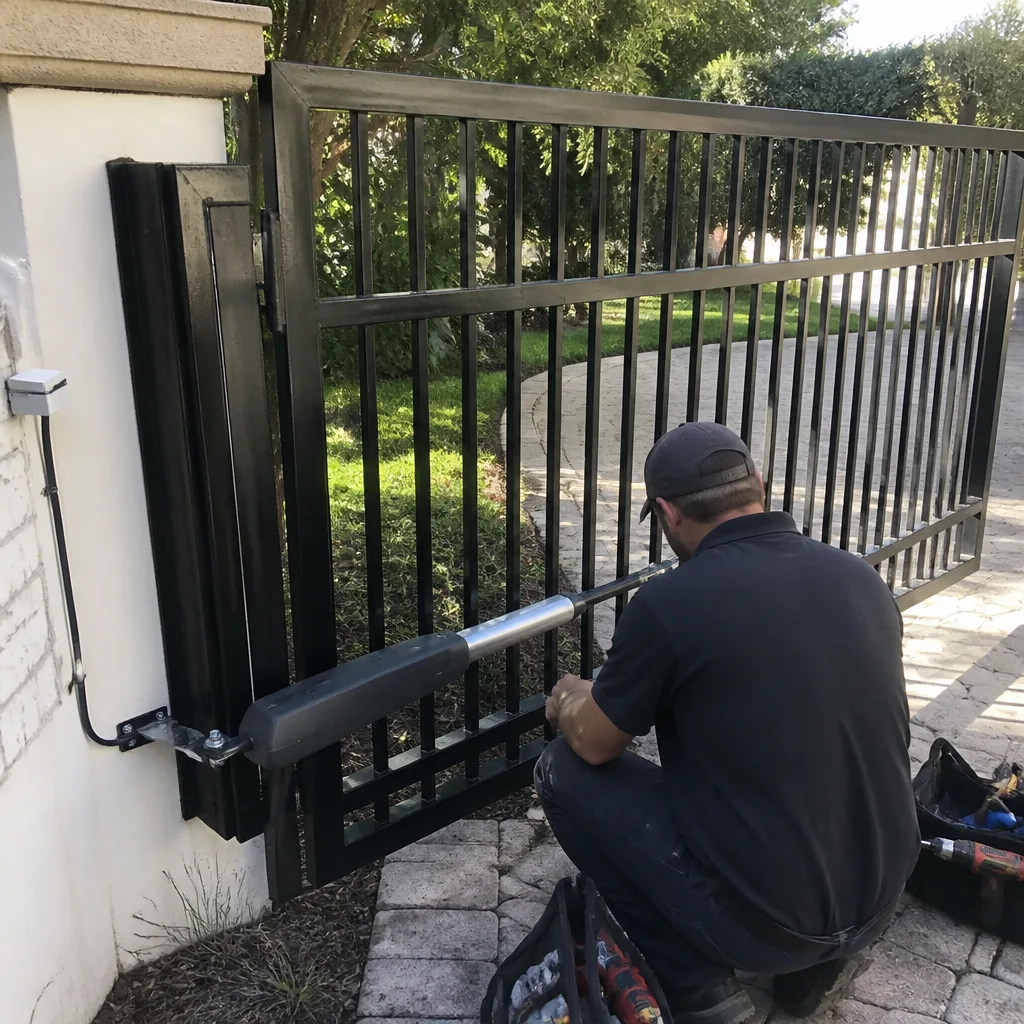
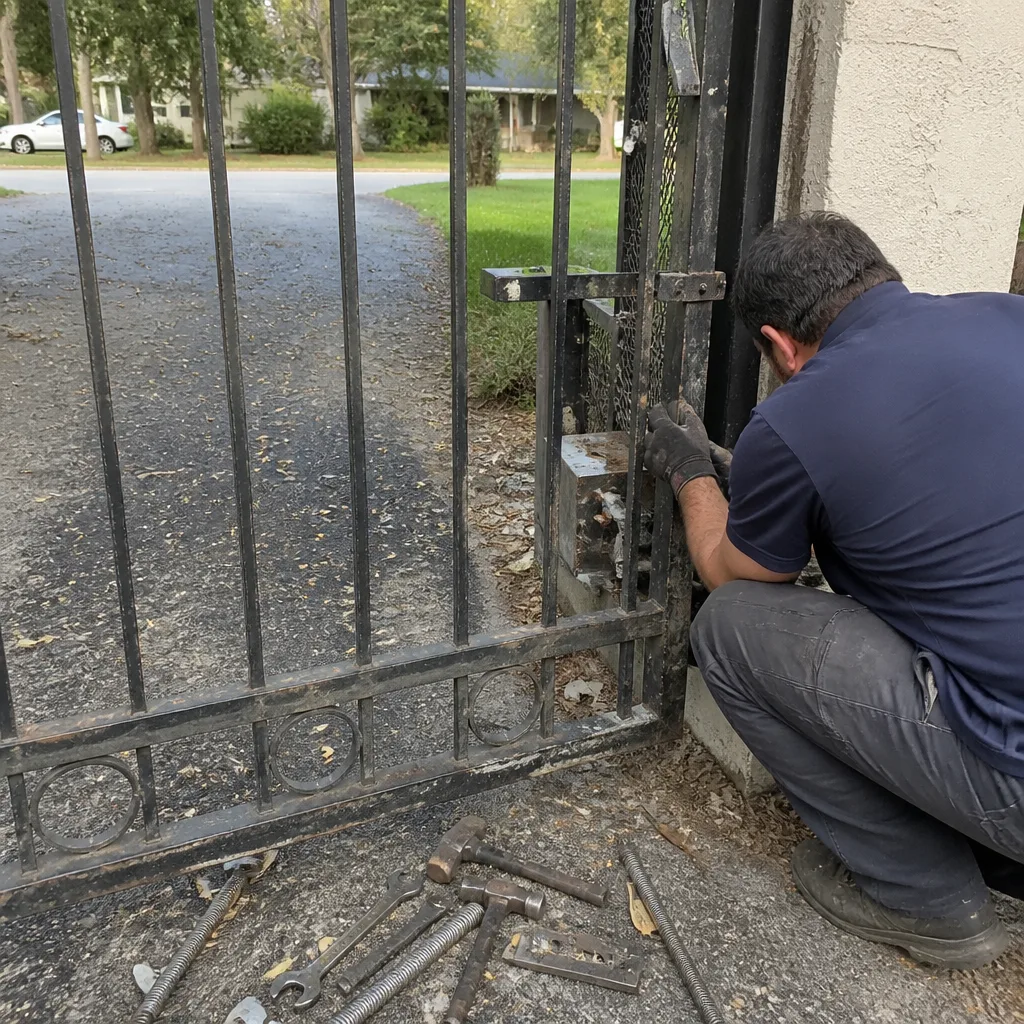
See the difference
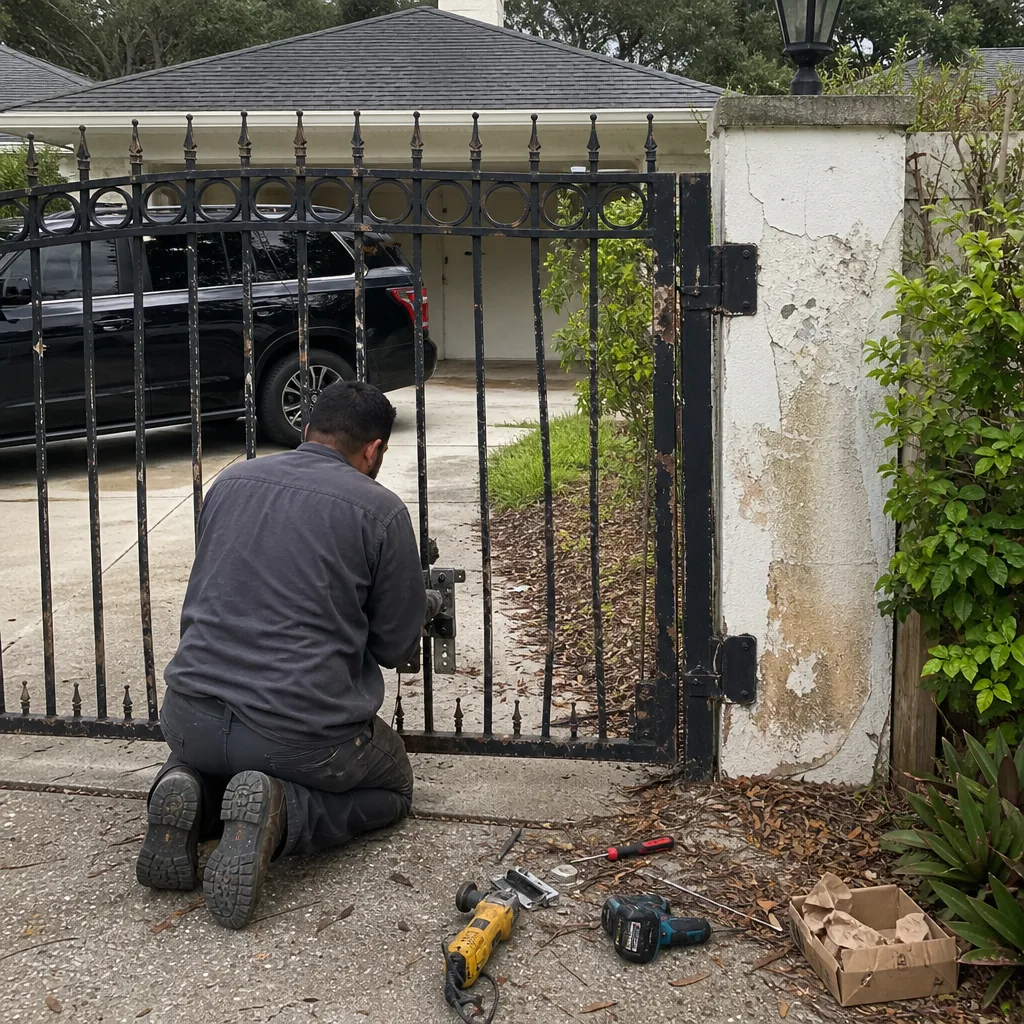 Before
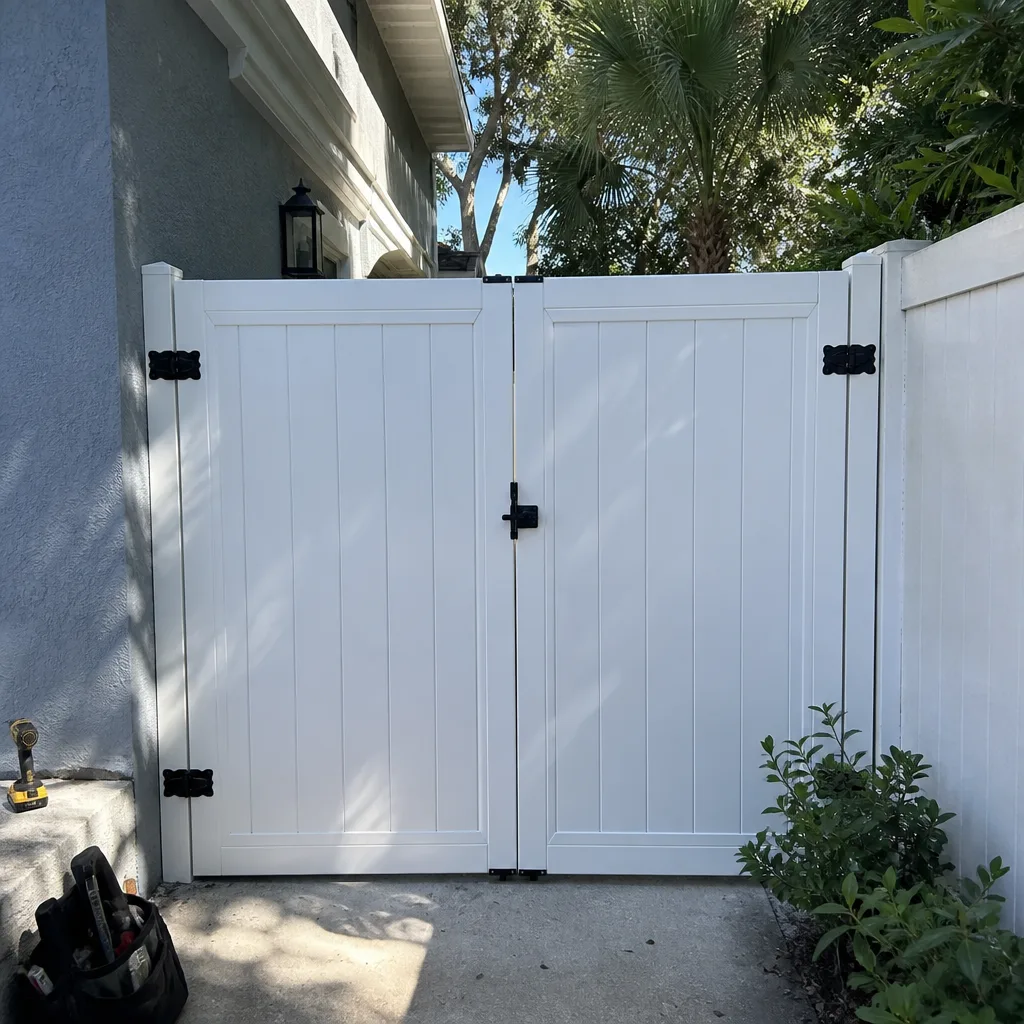 After
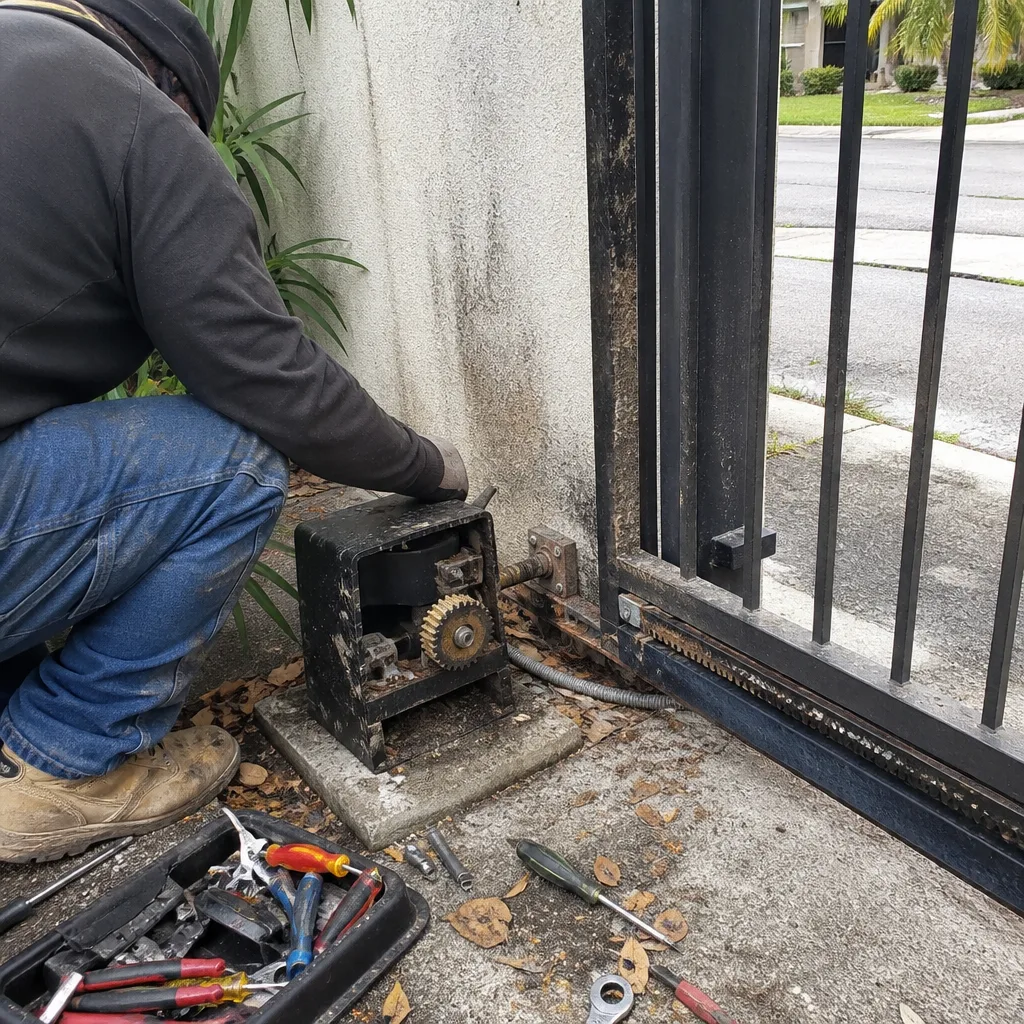 Before
 After
 Before
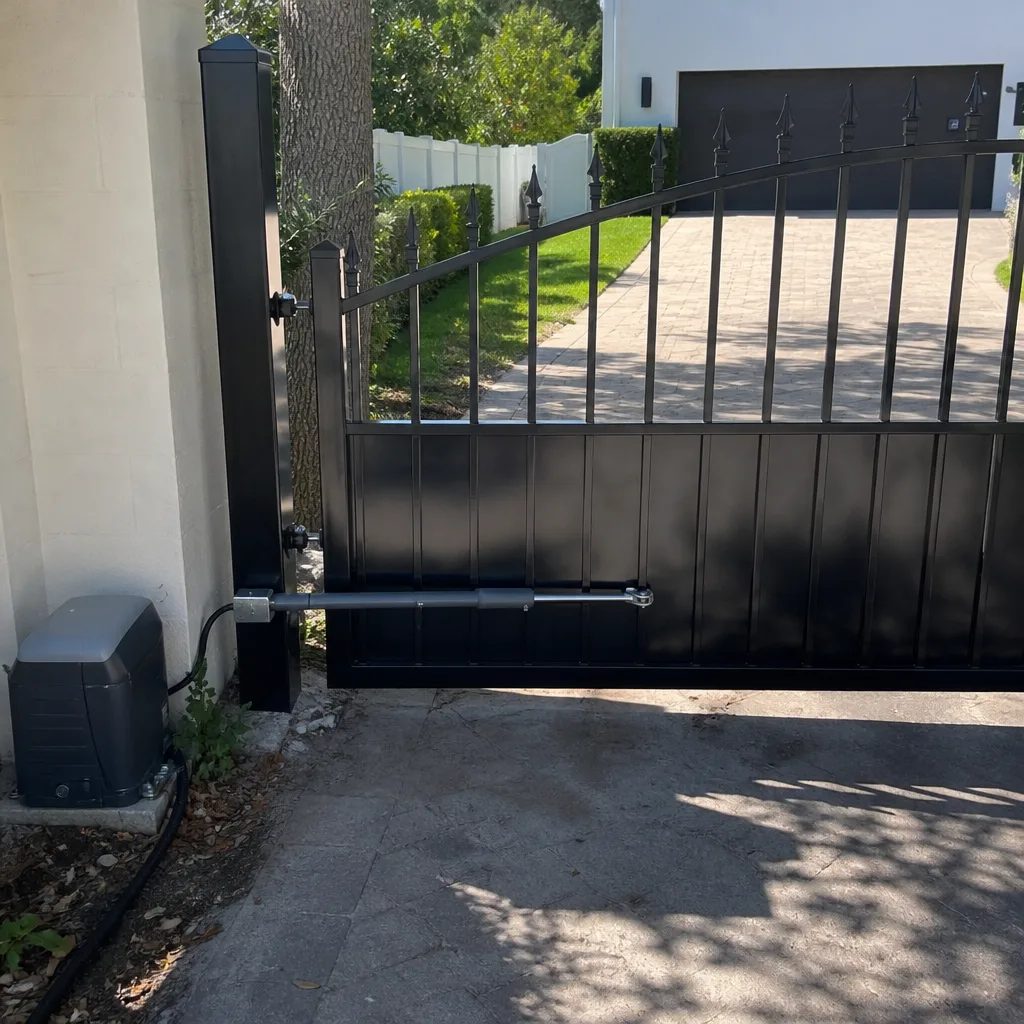 After
When to Call a Professional
You can replace a gate wheel or adjust a sensor without a permit or a contractor. But if the job involves any of the following, call a licensed gate specialist before you start: a new automatic operator, a new electrical run, a gate that is on a fire route, a commercial access control system, or any retroactive permit remediation. These are not DIY jobs, and the permit process requires a contractor’s license to file correctly. Kingston Gate Repair offers free estimates in Tampa – call (877) 752-3303 and we will tell you whether your job needs a permit, what it will cost, and which jurisdiction you need to file with. From the control board to the hinge, we work on your brand – BFT, Linear, Viking, Ghost Controls, and more.
Frequently Asked Questions
Yes, replacing a gate operator is an electrical installation and requires an electrical permit in Tampa and Hillsborough County. A drop-in control board replacement on an existing permitted operator is maintenance, but a new operator, a new circuit, or a conversion from manual to automatic is permit-required work. Call (877) 752-3303 for a free estimate and we’ll handle the permit paperwork.
No, hinge repairs, wheel replacements, and other routine maintenance on an existing gate do not require a permit because they are not structural alterations or electrical installations. The permit trigger is change, not repair.
The buyer’s inspector flags it, the buyer requests a retroactive permit or a credit, and the transaction stalls until the work is brought into compliance. Retroactive permitting in Tampa requires a licensed contractor, a correction of any code defects, and an inspection.
Only if it is a new gate installation, a structural change to an existing opening, or a gate installed on a new fence or wall that itself requires a permit. Routine repair of a manual gate is maintenance with no permit requirement.
Yes. Commercial gates on fire routes must meet Florida Fire Prevention Code standards, including fail-safe operation, emergency override, and annual inspection documentation. Residential gates do not carry the same fire code burden.
Residential electrical permits for gate operators typically fall in the $75 to $200 range in Tampa, depending on the scope and valuation. Structural permits for new gates run higher because they include plan review fees. A licensed contractor will itemize the permit costs in your estimate.
The Bottom Line
The line between maintenance and permit-required work is clear, but you have to know where to draw it. Routine gate repair needs no permit. New operators, new circuits, new footings, and new gate installations do. The expensive mistakes are always the ones where the line is ignored – an unpermitted operator that surfaces at resale, or a commercial gate that gets a fire marshal citation. If you are in Tampa or Hillsborough County and you are not sure which side of the line your project falls on, the safe move is a free consultation with a specialist who files these permits weekly, or explore our more guides & resources. The consultation costs nothing; guessing wrong costs thousands.
Written by the team at Kingston Gate Repair, serving Tampa since 2013.