
Last updated October 31, 2026
 Wrought iron
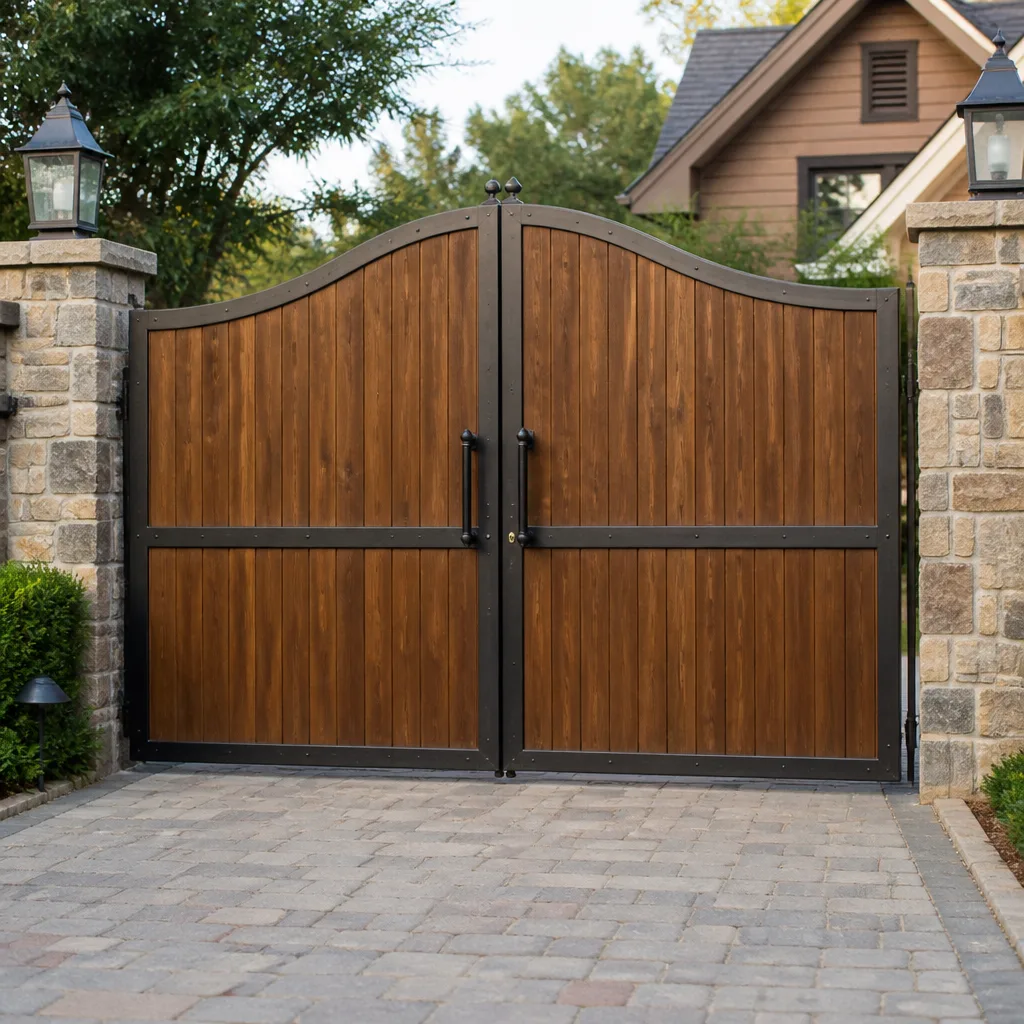 Wood & steel frame
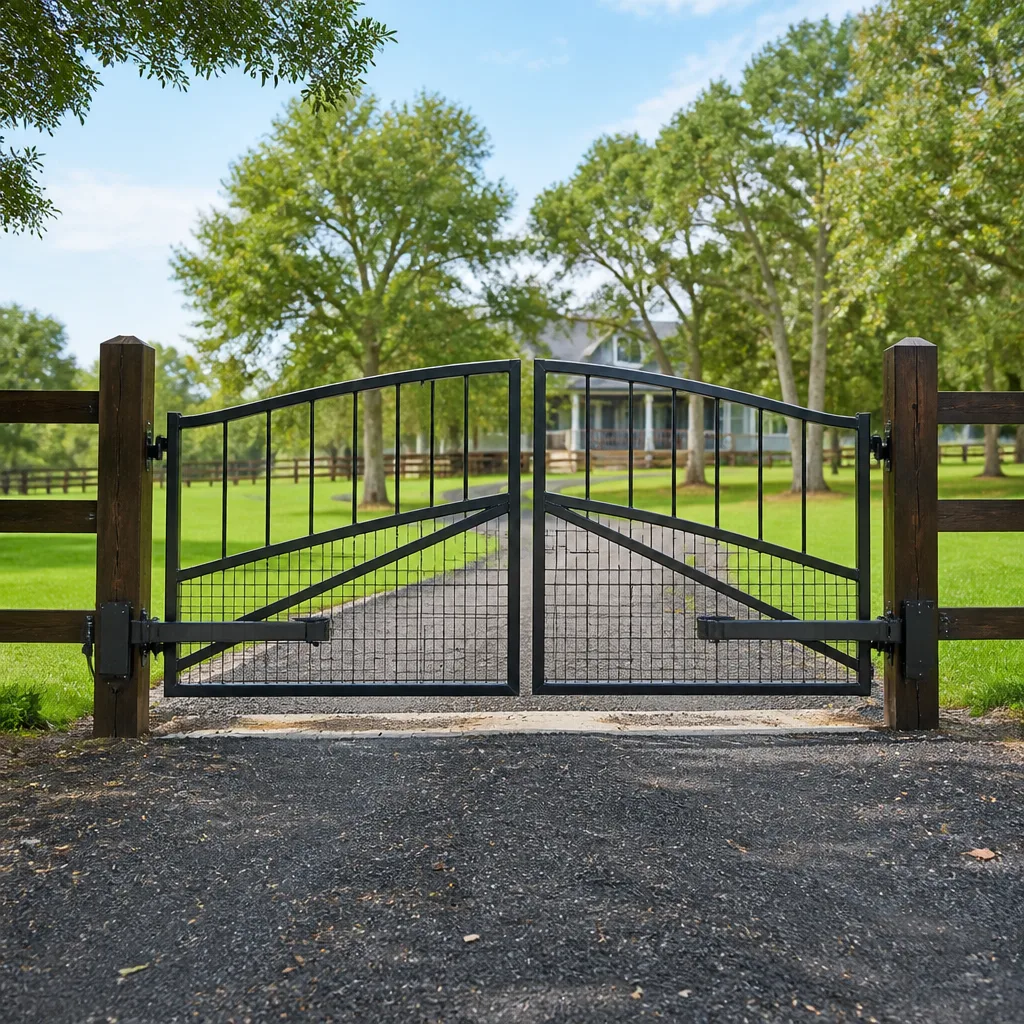 Farm & ranch
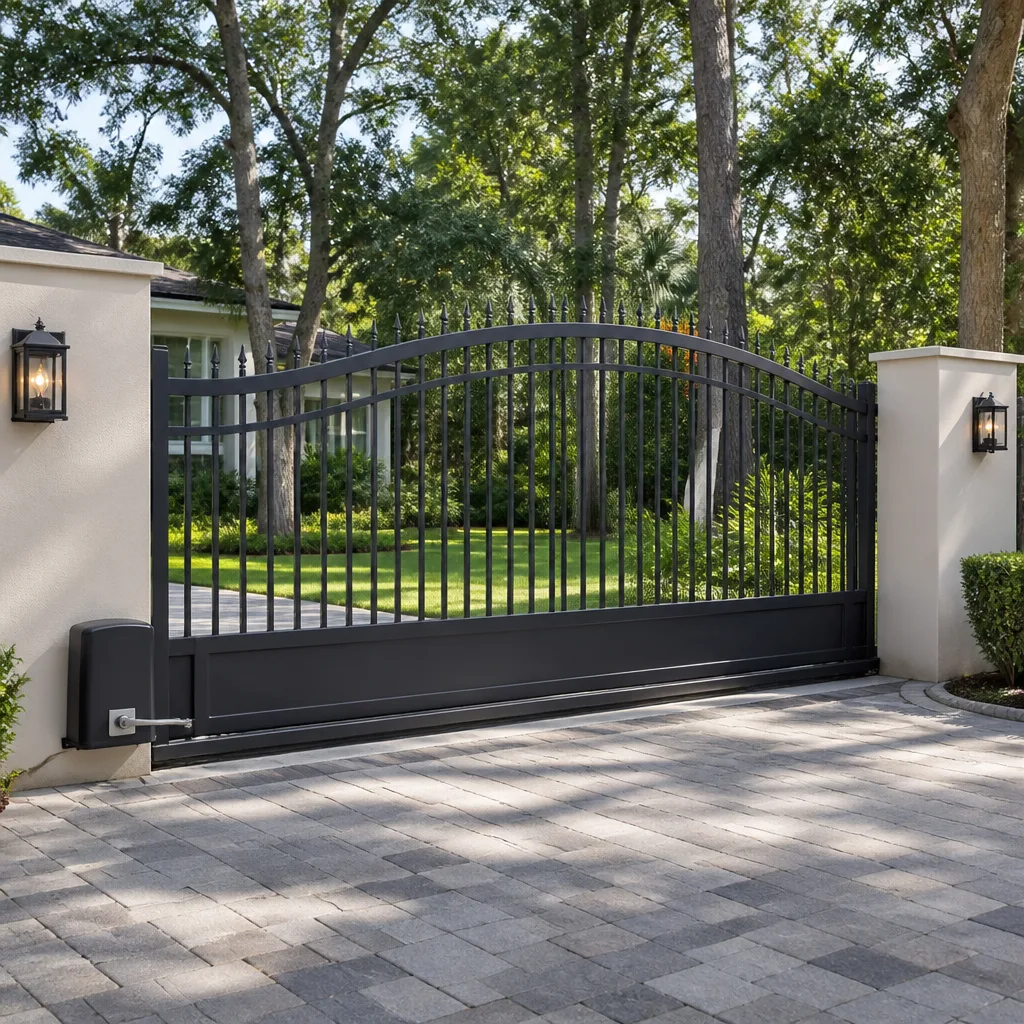 Sliding driveway gates
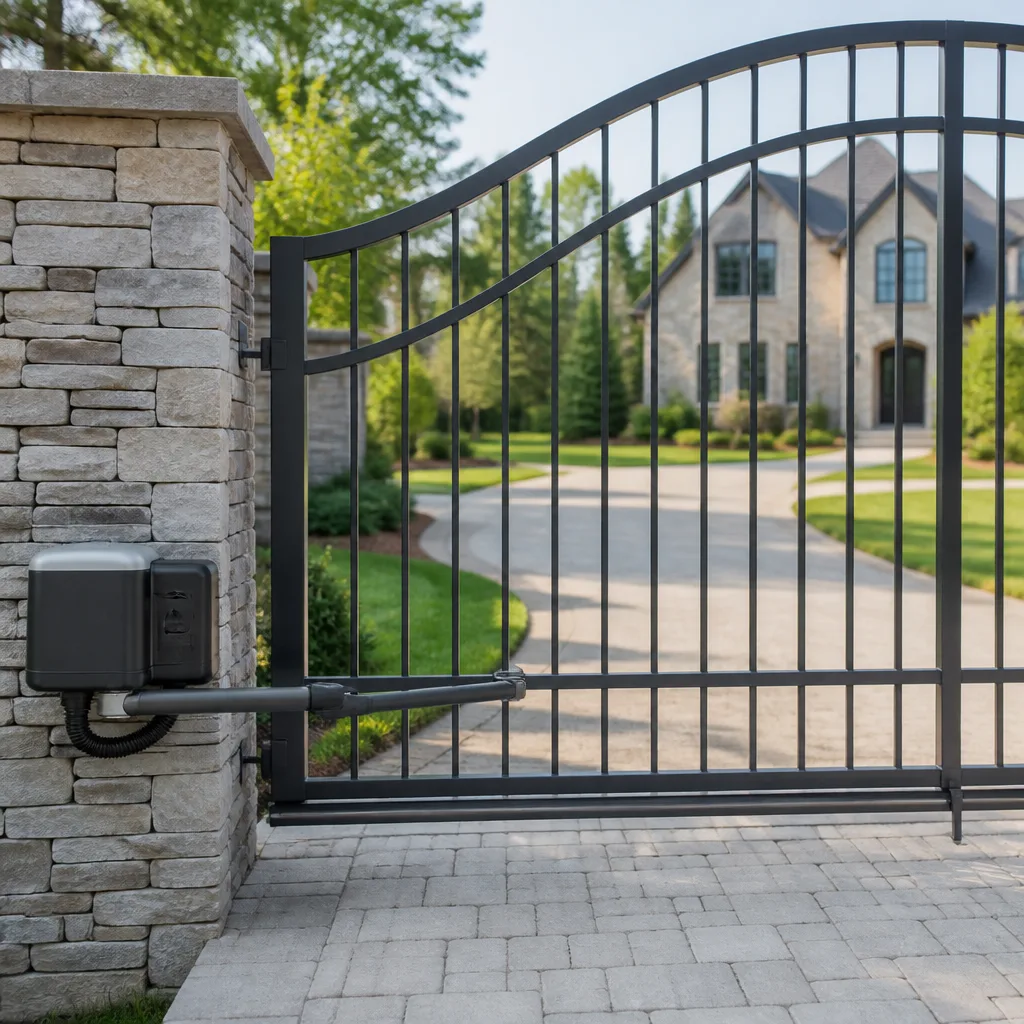 LiftMaster operators
Free on-site gate assessment - hinges, posts, and your LiftMaster or Nice gate operator checked before anything is quoted
The assessment is free and the quote is the invoice.
Get your free estimateGate Repair Emergency Preparedness Guide for Tampa Homes
After Hurricane Ian tracked across Florida, thousands of Tampa homeowners tried to open their driveway gates only to discover their battery backup systems had quietly died months earlier. The gate had worked fine on normal power, so nobody noticed. Then the grid went down, the backup did nothing, and families were trapped on their own property while emergency crews navigated blocked streets. This guide covers the two distinct emergencies every Tampa gate owner faces: the storm itself, and the unrehearsed failure of the equipment you assumed would work. You’ll learn the manual release procedures for the operators most common in Tampa, how to test your battery backup in under ten minutes, what to inspect before powering your gate back on after flooding, and how to secure a gate that won’t close while you wait for repairs.
Styles & brands we work with
Quick Answer
When your gate fails during or after a Tampa hurricane, the correct sequence is: release the operator manually to regain access, assess whether water or debris compromised the electrical system, do not power the gate back on until the operator box is dry, and secure the gate with a chain, lock, or physical stops if it won’t close. If the operator box took on water or the control board shows signs of damage, call a gate specialist in Tampa before restoring power. Gate repair in Tampa after a storm is always safer when a technician confirms the system is dry and intact first.
Table of Contents
- Why Tampa Storms Hit Gates Differently
- Manual Release: How to Open Your Gate When the Power Is Out
- Battery Backup in Florida Heat: Why It Fails and How to Test It
- Post-Storm Damage Assessment Checklist
- How to Temporarily Secure a Gate That Won’t Close
- Pre-Storm Prep in Under 30 Minutes
- Common Mistakes to Avoid
- When to Call a Professional
- Frequently Asked Questions
- The Bottom Line
Why Tampa Storms Hit Gates Differently
Tampa sits in a unique position for gate failures. The city’s soil is sandy in places and clay-heavy in others, both of which shift when saturated. A gate that swung freely in February can bind in August after three consecutive days of afternoon thunderstorms. Hurricanes compound this because the water table rises, the ground softens under the hinge posts, and the gate’s weight shifts just enough to strain the operator. In some Tampa neighborhoods, like Seminole Heights or South Tampa near Bayshore, salt air adds a corrosion layer that inland Hillsborough County homes don’t face. Salt accelerates rust on hinges, brackets, and control board connections. We’ve opened operator boxes in Tampa where the circuit board looked like it had been misted with sea spray, even though the homeowner lived a mile from the bay.
Storm surge and freshwater flooding are different threats. Surge is salty and conductive; freshwater flooding is deceptive because it looks less dangerous but still shorts low-voltage wiring just as effectively. Tampa’s flat geography means water pools in neighborhoods that don’t show up on flood maps. A gate operator mounted 12 inches off the ground can sit in water for hours during a stalled storm band. That’s why the most important storm decision for any Tampa gate owner is when to cut power, not whether to cut it.
Manual Release: How to Open Your Gate When the Power Is Out
Every automatic gate operator in Tampa, from a residential LiftMaster to a commercial FAAC, has a mechanical release that disconnects the gate from the operator’s drive system. Knowing how to use it before you need it saves you from climbing a fence in the rain. The procedure varies by operator brand, but the principle is the same: you are disengaging a clutch, crank, or lever so the gate moves by hand instead of by motor.
Here are the manual release steps for the operators we service most often in the Tampa market:
- LiftMaster gate operators: Locate the manual release handle, usually a red or yellow knob on the side of the operator housing near where the arm connects. Pull it straight out and rotate it a quarter turn until it locks in the disengaged position. The gate should now swing or slide by hand. If it doesn’t move, check for debris in the track or a bent hinge before forcing it.
- FAAC operators: FAAC swing operators use a manual release key. Insert the key into the small circular lock on the operator housing, turn it counterclockwise, and pull the release lever toward you. On FAAC slide operators, look for the release handle under a weather cover near the drive wheel.
- BFT operators: BFT swing gates typically have a release lever behind a small access panel on the operator body. Slide the panel open, push the lever downward until it clicks, and the gate disengages. Some BFT slide models require a release key stored in a small tube welded to the gate frame.
- Mighty Mule and Ghost Controls openers: These consumer-grade operators use either a pin-style release or a pull-to-release mechanism on the actuator arm. Pull the pin or the handle straight out and the gate swings free. If corrosion makes the pin stick, don’t hammer it; penetrating oil and a firm grip usually work.
- Elite and Viking operators: Elite slide operators have a hand chain release, usually red, hanging inside the operator cover. Pull the chain sharply and the motor disengages. Viking swing operators have a wheel-style release on the side of the unit that you rotate a half turn.
If you cannot find the release, call a technician. Do not cut the operator arm, do not try to pry the gate open with a car, and do not disconnect electrical wires while the system is powered. In Tampa after storms, we’ve seen more damage from frustrated homeowners forcing gates than from the storm itself.
Battery Backup in Florida Heat: Why It Fails and How to Test It
Battery backups in gate operators are supposed to carry the gate through 50 to 200 open and close cycles after a power loss, depending on the operator model. But those numbers assume the battery sits in a temperature-controlled environment. In Tampa, where summer heat pushes enclosure temperatures well past 100 degrees, sealed lead-acid and lithium backup batteries degrade roughly 40% faster than manufacturer estimates suggest. A battery rated for three years in a cooler climate often falls below functional capacity in under two years in a Tampa sunwall installation.
Testing your battery is a five-minute job:
- Locate the battery inside the operator housing. It’s typically a small rectangular block about the size of a motorcycle battery.
- Check the physical condition. If the case is swollen, cracked, or leaking, replace it before the next storm season.
- Test under load, not just with a meter. Turn off the breaker to the operator, then attempt to open and close the gate five full cycles using the backup battery only. If the gate slows noticeably, the battery is weak.
- Write the test date on the battery with a marker. If twelve months pass without a test, that’s too long in the Florida heat.
If you’re not comfortable opening the operator housing, any electric gate repair in Tampa technician can run this test during a routine service call. The battery itself is inexpensive insurance against the worst-case scenario: a locked gate, a dead battery, and a family that can’t get a vehicle out while evacuation orders are in effect.
Post-Storm Damage Assessment Checklist
After the storm passes and before you do anything else, complete this inspection. It takes ten minutes and prevents the most common post-storm mistake in Tampa: powering on a wet operator and destroying the control board. Water is the fastest killer of gate electronics. Finding moisture before energizing the system is the difference between a $75 drying-out service call and a $600 control board replacement.
- Visually inspect the operator box. Look for water line marks inside and out. If you see any standing water or obvious wetness inside the housing, keep the breaker off.
- Check the gate’s movement path. Walk the full arc of a swing gate or the full length of the track on a slide gate. Look for sand, leaves, branches, or displaced gravel that could obstruct movement.
- Inspect the hinges and brackets. Push the gate gently by hand in manual mode. If it grinds, scrapes, or binds, mark the binding point and stop.
- Look for displaced posts. In Tampa’s saturated post-storm soil, gate posts can shift or lean. A gate that sags on one end stresses the operator and will self-destruct if run in that condition.
- Check the safety loops and photo eyes. Buried induction loops that flooded may read false obstructions for days. Photo eyes caked with debris or mud will prevent the gate from closing. Clean the lenses with a soft cloth if safe to do so.
- Inspect wiring and connections. Exposed wires at ground level or connections pulled loose by wind-driven rain are common. Do not touch wire connections that have been submerged unless the breaker is off.
Only after everything is dry and the gate moves freely by hand should you restore power and test the operator. If the gate hesitates, clicks without moving, or opens then immediately reverses, stop and call for service.
How to Temporarily Secure a Gate That Won’t Close
A gate that opens but won’t close after storm damage is a real problem in Tampa, where an unsecured driveway invites post-storm looting and lets kids and animals wander toward flood-damaged areas. The temporary fix doesn’t need to be elegant; it needs to hold until a gate repair technician arrives.
The method depends on the gate type:
- Slide gate stuck open: Position a car or heavy object in the closing path to at least slow forced entry, then chain the leading edge to a fixed post if possible. If the chain has any slack, thread it through a cinder block or similar weight to keep the gate from swinging in the wind.
- Swing gate stuck open: Run a chain or heavy cable from the gate’s free edge to the gate post on the opposite side of the opening. Use the strongest padlock you own. If the distance is too far for a chain, park a vehicle across the opening temporarily.
- Swing gate that closes halfway: A gate that binds partway often still provides visual deterrence. Lock it where it stops, then add a chain to the fixed post to prevent manual swinging in either direction.
- Slide gate that jumps the track: If the gate leans severely, chock the wheels with bricks or wood blocks and chain the gate to the closest solid structure. A leaning gate can fall over completely given enough wind, and a fallen gate is a much bigger repair.
None of these methods are long-term solutions. They buy you time while the ground dries and the repair queue moves. In Tampa after major storms, gate repair companies prioritize customers whose gates won’t close over those whose gates won’t open, for exactly the security reasons above.
Pre-Storm Prep in Under 30 Minutes
Florida homeowners are familiar with hurricane prep: shutters, sandbags, water, batteries. But gates are routinely forgotten until the storm is two hours out, at which point most prep is already too late. The good news is that gate-specific prep is fast. Most of these steps can be completed in under half an hour, and they materially reduce post-storm repair costs.
- Protect the operator with a waterproof cover. Specialized covers exist for most major gate brands and cost under $40. If you don’t have one, a heavy-duty contractor trash bag secured with bungee cords works in a pinch. The goal is keeping wind-driven rain out of the control board area. A LiftMaster, FAAC, or Elite operator that stays dry through the storm usually needs nothing more than a visual inspection afterward.
- Check the surge protector. The operator should be plugged into a surge protector rated for outdoor equipment. If the little “protected” light is out, the surge protector is already spent and offering zero protection against the spikes that come with Tampa’s storm-related power flickers.
- Lubricate the manual release. The release mechanism that sat unused all year will be the hardest to operate during a storm if it’s seized from corrosion. Work it back and forth a few times with a spray lubricant a few days before the storm arrives.
- Clear the gate path. Walk the swing arc or slide track and remove anything that would become a projectile in high winds. That includes toys, planters, trash cans, and unsecured outdoor furniture near the gate’s path.
- Test the battery backup. Run the five-cycle test described earlier in this guide. If the gate slows down or the battery looks swollen, replace it before the storm instead of discovering the problem during it.
- Photograph the gate and operator. Insurance claims move faster with documentation. A quick video of the gate operating normally, with the date visible, is strong evidence of pre-storm condition.
Common Mistakes to Avoid
- Powering on a flooded operator. Water inside the operator housing conducts electricity and fries control boards immediately. If the housing shows any sign of water, keep the breaker off until a technician can dry and inspect it. This is the single most common costly mistake we see in Tampa after hurricanes and tropical storms.
- Forcing the gate manually. When the gate binds, the instinct is to push harder. That bends hinges, twists brackets, and can snap the operator arm clean off. If moderate pressure won’t move the gate, the problem is mechanical, not motivational.
- Ignoring battery backup maintenance. Florida heat kills backup batteries faster than almost anywhere in the continental U.S. If the battery is more than 18 months old and you’ve never tested it, assume it may not work when you need it.
- Surge protector neglect. Tampa’s storm season delivers power surges from lightning, downed lines, and grid reconnection events. A cheap indoor surge strip is worse than nothing because it looks protective while doing nothing for outdoor gate equipment.
- Postponing repairs for minor problems. A gate that closes a little too hard or hesitates on opening is already failing. Storm winds and saturated ground turn minor problems into major ones. In Tampa’s climate, the window between “a little off” and “not working” closes fast.
- Attempting board-level electrical repairs. Control boards carry live voltage even when the operator appears off. Without proper training and tools, probing a board after a storm is dangerous. This is not a DIY moment.
When to Call a Professional
Some gate problems are designed to be fixed by the homeowner: cleaning photo eye lenses, clearing debris from the track, testing the manual release. But the line between maintenance and damage is a bright one. Call a technician when the operator box has taken on water, when the control board shows burn marks or smells of ozone, when the gate post has visibly shifted, when the operator runs but the gate doesn’t move, or when the gate behaves erratically after a power restoration. These are symptoms of deeper damage that will be made worse by guesswork. Kingston Gate Repair works on your specific operator brand, whether it’s a residential LiftMaster, a Mighty Mule on a farm gate in Plant City, or a commercial FAAC or Elite system in a Tampa office complex. Our technicians diagnose and repair gate problems the first visit. If your gate needs more attention than a repair can solve, we also handle gate installation in Tampa. Kingston Gate Repair offers free estimates in Tampa – call (877) 752-3303.
Frequently Asked Questions
First, locate and use the manual release to disengage the operator from the gate, then move the gate by hand carefully. Check for obvious debris blocking the gate path before forcing anything. If the gate moves freely in manual mode but not in automatic, the problem is electrical, not mechanical. For a professional diagnosis, call gate repair in Tampa at (877) 752-3303.
Expect a gate battery backup in Tampa to last roughly 18 to 24 months before it needs replacement, significantly shorter than the 3- to 5-year rating many manufacturers print on the box. The heat inside a black operator housing in the Florida sun degrades battery chemistry faster than laboratory test conditions assume. Test your battery every six months during storm season.
Most residential gate operators can run on a properly sized portable generator, but you must use a generator with clean, stable output. Inverter generators are the safest choice. Standard construction generators produce voltage spikes that damage gate control boards. If you’re unsure, run the gate in manual mode until a technician can advise you on your specific operator.
Look for visible water lines or puddles inside the operator housing, condensation on the control board, or a burnt electrical smell when the unit is powered. Any of these signals means the breaker should stay off until a professional inspects the system. Water-damaged boards sometimes work briefly and fail permanently days later.
A gate that reverses mid-close usually means a safety sensor, photo eye, or induction loop is detecting a false obstruction. In Tampa after storms, this is often caused by wet ground messing with buried loops or debris caked on photo eye lenses. Clean the lenses and check the gate path. If the problem persists, the safety system itself needs professional attention to avoid being bypassed unsafely.
Post-storm electric gate repair in Tampa costs span a wide range. A simple drying-out, battery replacement, or photo-eye realignment typically runs $150 to $400. Control board replacement usually lands between $400 and $900 depending on the operator brand and model. Bracket or hinge repairs after a gate gets yanked around by wind cost $250 to $700. The price is always quoted and agreed before any work starts. Call (877) 752-3303 for an exact quote on your specific gate and operator.
The Bottom Line
Tampa’s storm season is the stress test that every gate system faces sooner or later. The difference between a minor inconvenience and an expensive emergency is preparation: knowing your manual release, testing your battery backup, protecting your operator from water, and cutting power before flooding happens. If your gate does fail during or after a storm, work the checklist in this guide, don’t power a wet system, and don’t force a gate that resists. For repairs that require professional attention, Kingston Gate Repair is a pure-play gate specialist serving Tampa with certified service across nine operator brands, including LiftMaster, FAAC, Elite, Mighty Mule, and BFT. Estimates are free before any repair or home service visit.
Written by the team at Kingston Gate Repair, serving Tampa since 2013.
See the difference
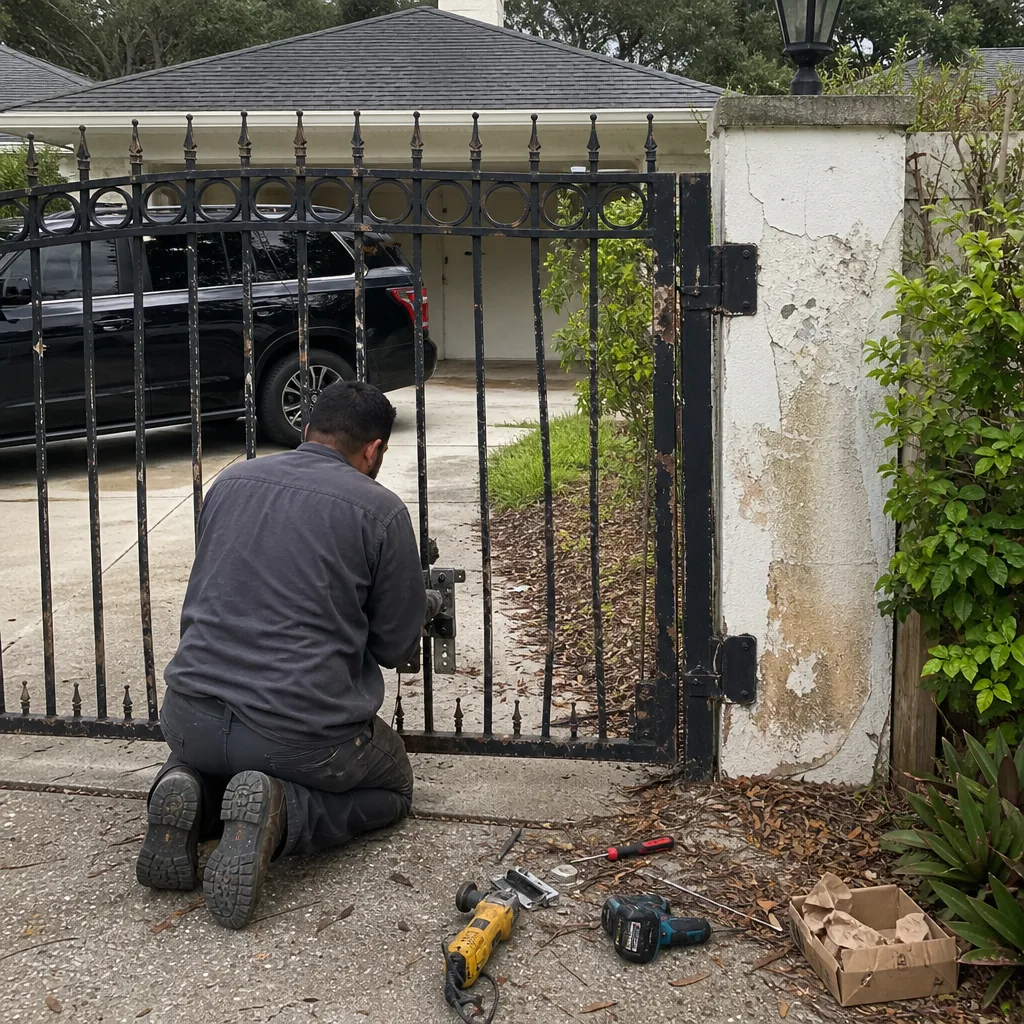 Before
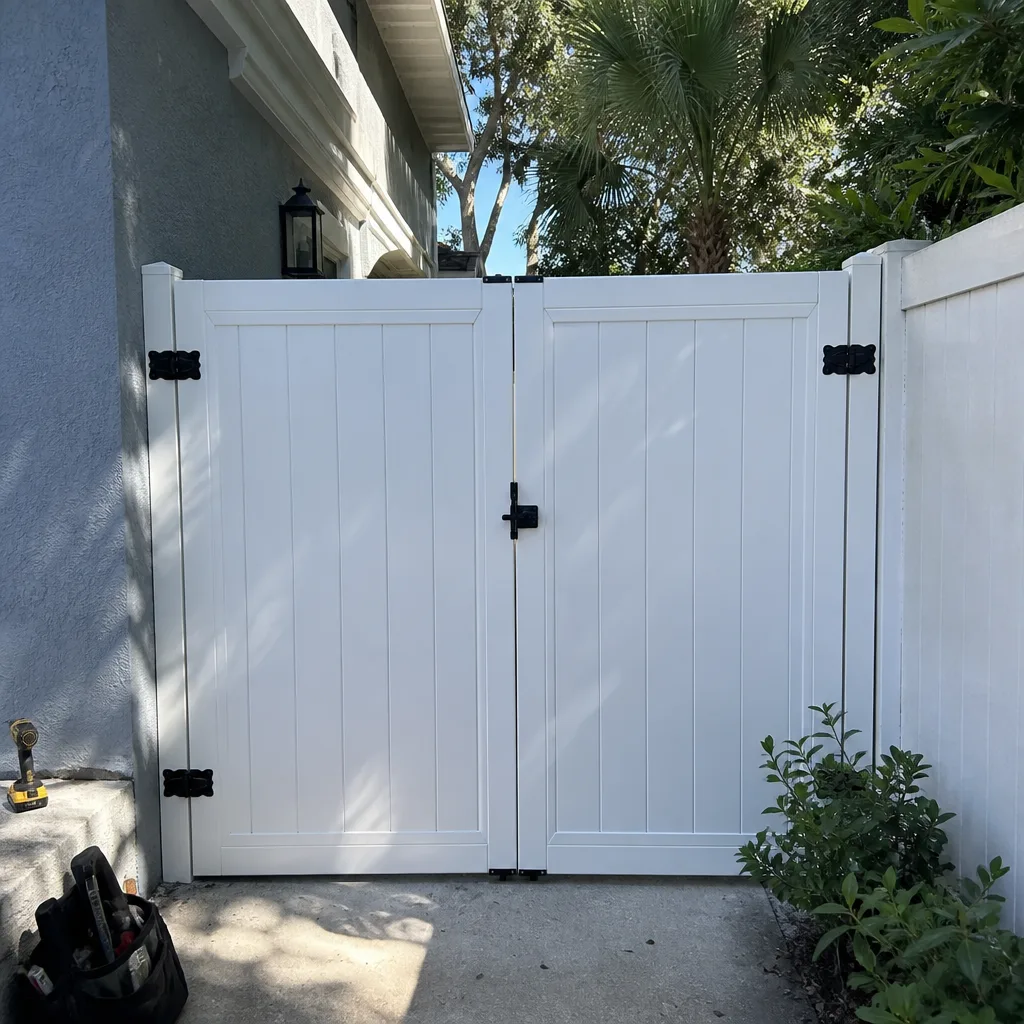 After
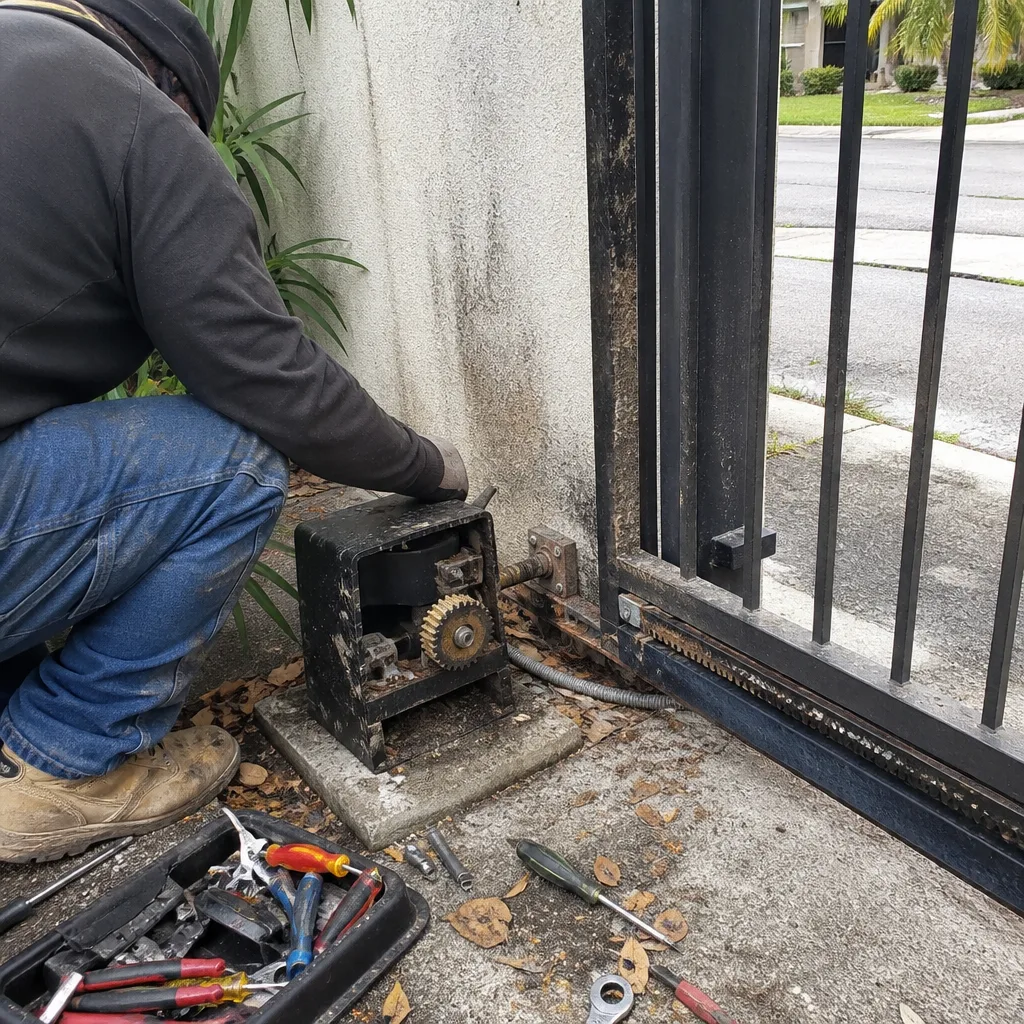 Before
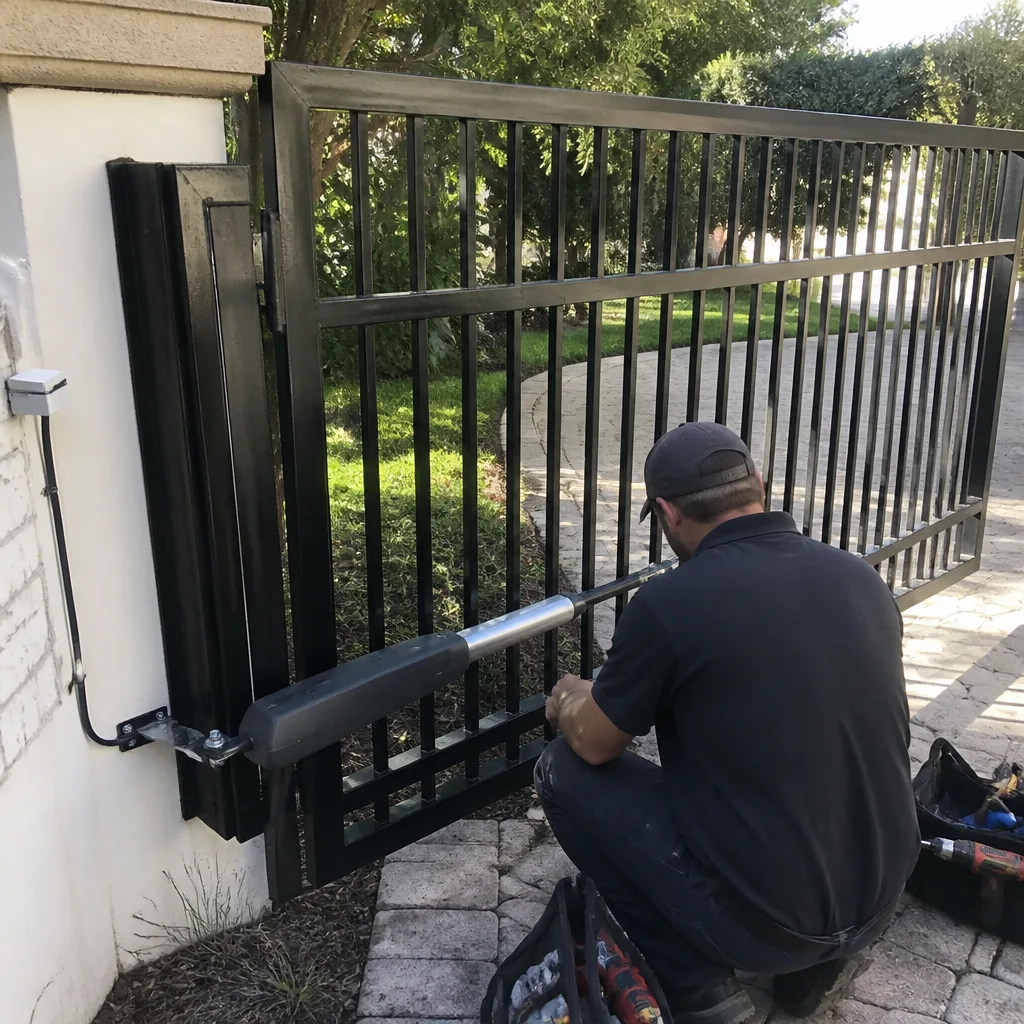 After
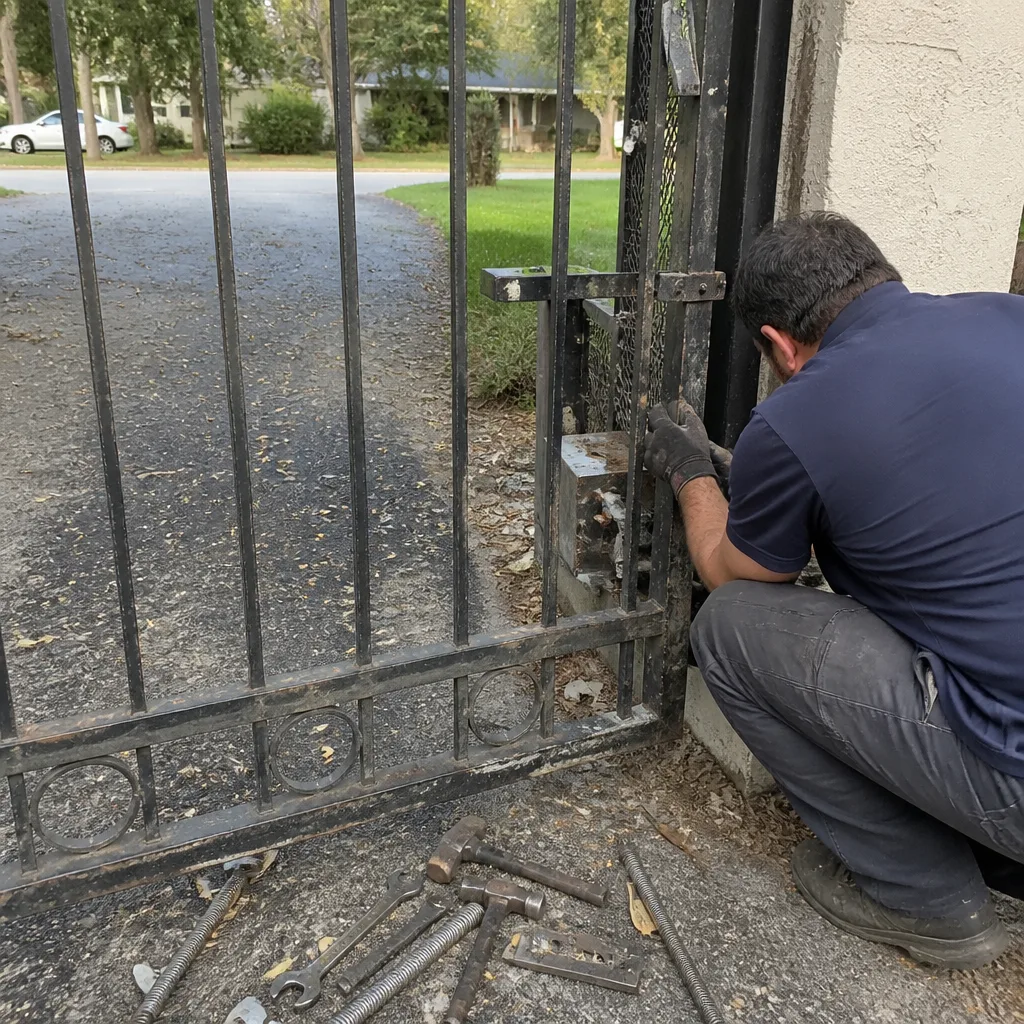 Before
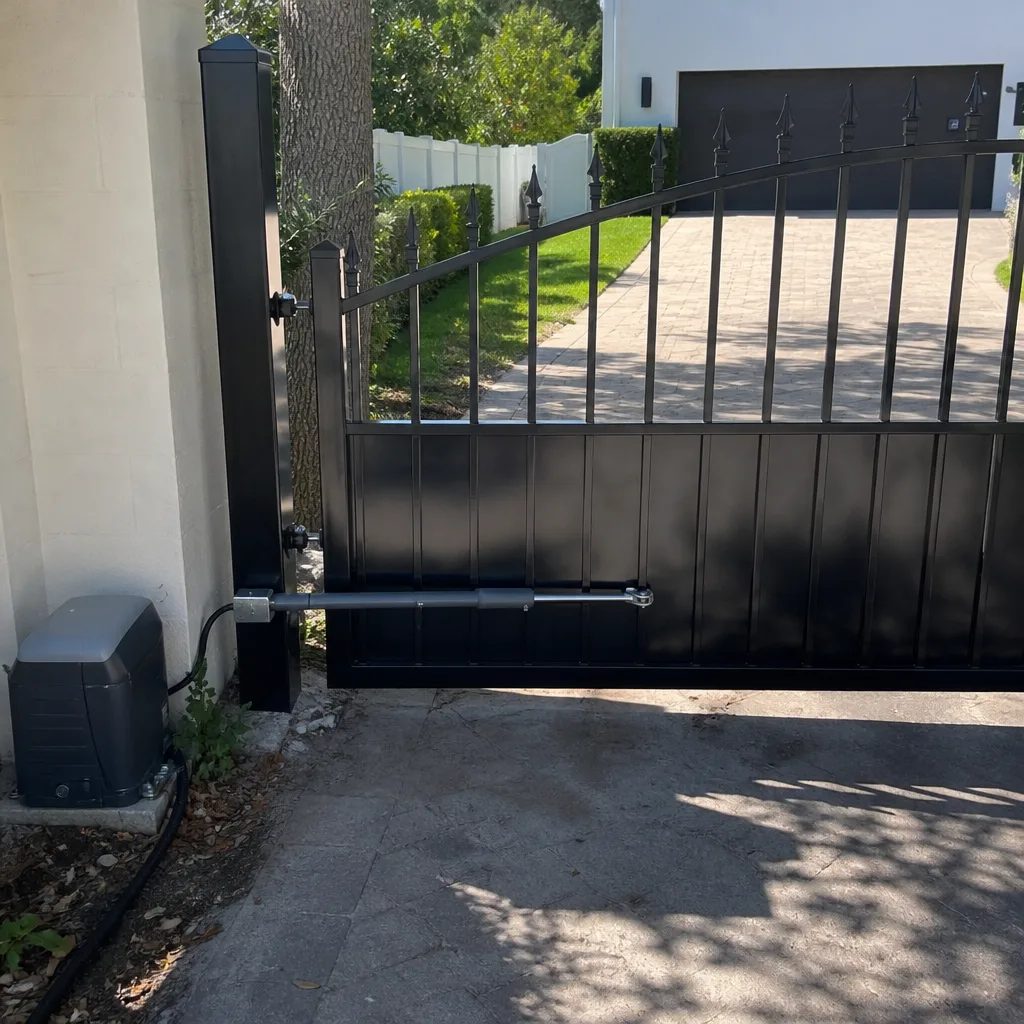 After